

OpenAI has claimed that its artificial intelligence has solved the Navier-Stokes existence and smoothness problem, one of the seven Millennium Prize Problems. The announcement has ignited a fierce debate over credit, methodology, and what counts as a mathematical proof.
The Clay Mathematics Institute posed the Navier-Stokes problem and offers a $1 million prize for a rigorous solution. OpenAI says it has produced both an analytical proof and a formalization in Lean, a proof assistant. But the problem is not officially solved until the mathematical community scrutinizes and accepts the work.
Find Original, High-end Home Decor that spark conversation at Grand Goldman Shop.
What OpenAI Actually Announced
OpenAI published a proof of the Navier-Stokes existence and regularity problem, according to its own statement. The company also released a formalization of the proof in Lean. Formal verification in Lean is a significant step because it checks the logical steps mechanically, but it does not replace peer review by domain experts.
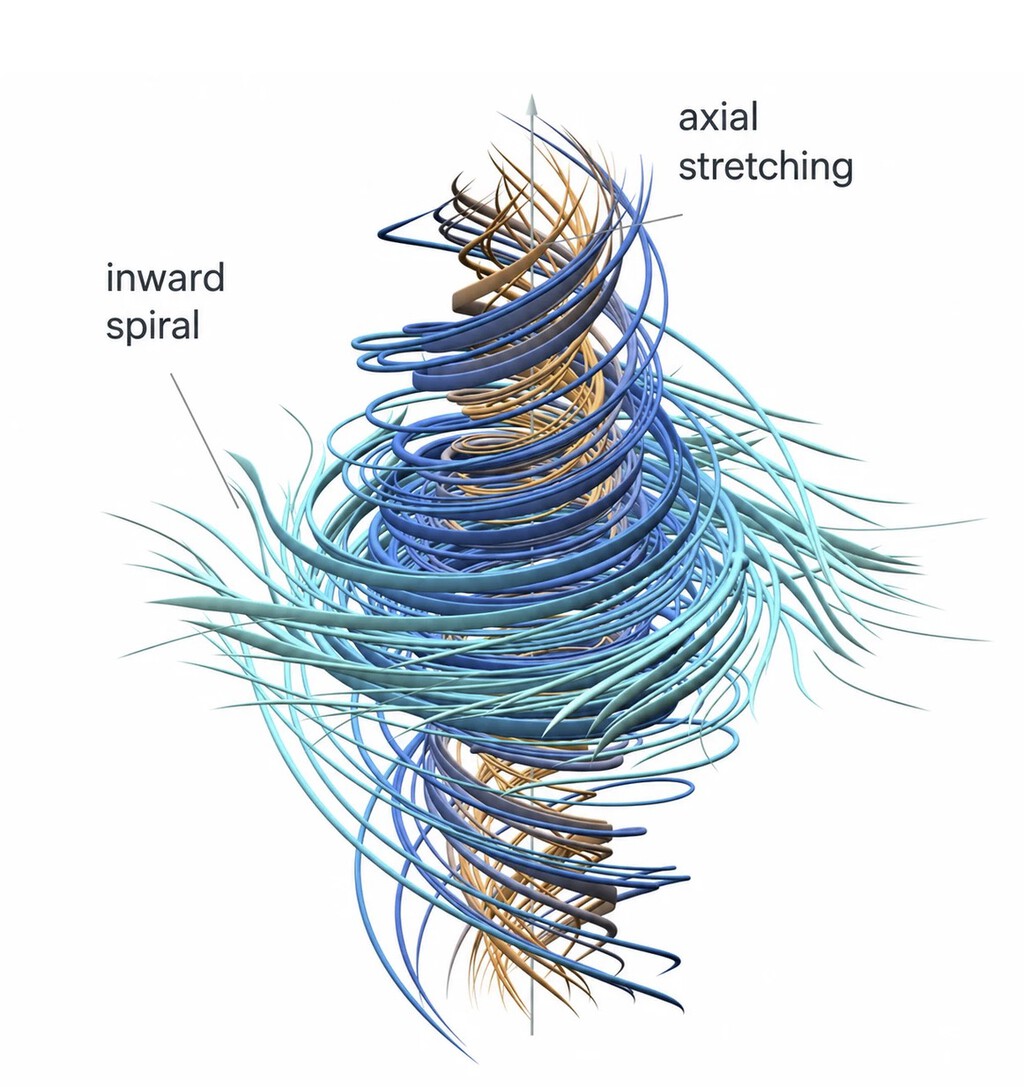
The proof, if valid, would resolve a question about whether solutions to the Navier-Stokes equations always exist and remain smooth in three dimensions. These equations describe fluid flow and are central to physics and engineering.

The AI Model Behind the Claim
OpenAI did not use its public model GPT-6 Astra for this task. Instead, it employed an internal model described as "significantly more capable" than GPT-6 Astra, and that model is still being trained. The project reportedly used about 10,000 coordinated agents working for 88 hours.
The compute cost ran into millions of dollars, according to the source. This scale of AI-driven mathematics is unprecedented and raises questions about reproducibility and access.
The Human Predecessors and the Credit Dispute
The controversy centers on prior work by human mathematicians. Tristan Buckmaster of New York University and Levent Alpöge, who works at Anthropic, had been making significant progress on related problems for months. They did not start from scratch, and their research likely laid groundwork that the AI system built upon.
Because OpenAI's announcement did not clearly delineate the contributions of Buckmaster and Alpöge, the credit for the discovery remains murky. This has sparked a backlash, with critics arguing that human mathematicians' prior insights were overshadowed.
Why the Mathematical Community Is Skeptical
Mathematicians are wary of AI-generated proofs for several reasons. First, the proof must be checked line by line by experts, a process that can take months or years. Second, the use of 10,000 agents and massive compute raises questions about whether the proof is understandable or merely a black-box output. The longer history behind the story is traced in OpenAI Claims AI Solved a Millennium Prize Problem: Backlash Explained.
Third, the formalization in Lean is a strong signal but not a guarantee of correctness; errors can occur in the translation from informal proof to formal code. Finally, the credit dispute threatens to undermine trust in the announcement. The background to this story is set out in Top Mathematicians Slam AI's Reckless Race to Solve Millennium Prize Problems. A related thread runs through Einstein's 90-Year Math Puzzle Solved by Spanish Researcher. Earlier coverage in OpenAI Leader Warns of Persistent AI Cyber-Attacks shows how the argument developed.
Key Takeaways
- OpenAI claims its AI solved the Navier-Stokes Millennium Prize problem, but official acceptance requires community review.
- The AI system used an internal model more capable than GPT-6 Astra, with 10,000 agents and 88 hours of compute.
- Human mathematicians Tristan Buckmaster and Levent Alpöge had made prior progress, and credit is disputed.
- The proof was formalized in Lean, which provides mechanical verification but not full peer review.
- The backlash highlights tensions over AI's role in mathematical discovery and attribution.
Comparison: AI vs. Traditional Mathematical Proof
| Aspect | AI-Generated Proof (OpenAI) | Traditional Human Proof |
|---|---|---|
| Verification method | Lean formalization plus community review | Peer review and logical scrutiny |
| Compute resources | 10,000 agents, 88 hours, millions of dollars | Human time, typically years |
| Credit attribution | Disputed due to prior human work | Clearly attributed to authors |
| Reproducibility | Depends on access to internal model | Proof is public and checkable |
| Community acceptance | Pending | Required for publication |
What to Watch Next
The mathematical community will now scrutinize the proof. If it holds up, it would be a landmark achievement for AI in mathematics. If flaws are found, it could set back trust in AI-generated proofs. A closer look at the same subject appears in Meryl Streep as Aslan: Christian Right Backlash Explained. Anyone following the wider picture can start with George Russell: Mercedes Engine Problem Solved for Hungarian. The same theme surfaces in Think Like a Physicist: Heat Transfer Puzzle Solved, which takes a different angle.
The credit dispute may also lead to new norms for acknowledging human contributions when AI systems build on prior work. OpenAI has not yet responded to requests for comment on the attribution concerns. Context on how this played out before sits in Mercedes Engine Problem Solved: George Russell Eyes Forward. A companion piece, Ai Video: latest articles, approaches the same subject from another angle.
FAQ
Did OpenAI really solve the Navier-Stokes Millennium Prize problem?
OpenAI claims it has a proof, but the problem is not officially solved until the mathematical community verifies and accepts it. The proof has been formalized in Lean, which is a strong step, but peer review is still pending.
Who are Tristan Buckmaster and Levent Alpöge?
They are mathematicians who had been working on related problems for months. Buckmaster is at New York University, and Alpöge works at Anthropic. Their prior progress is at the center of the credit dispute.
What is Lean, and why does it matter?
Lean is a proof assistant that mechanically checks mathematical proofs. OpenAI formalized its proof in Lean, which reduces the chance of logical errors, but it does not replace expert review of the proof's significance and originality.
Why is there a backlash?
The backlash stems from concerns that OpenAI's announcement did not adequately credit the human mathematicians whose prior work contributed to the solution. Critics argue that the AI's achievement is built on human insights that were not fully acknowledged.
Browse the Shop
 Acacia frida deluxe solid wood bed frame |
Bedroom bench |
Bed chest drawers |
Lingerie dresser |
Frame base |
Mirror with jewelry storage |
30 Bathroom Vanity |
Memory foam queen mattress |
Mattresses for back pain |
Nightstand set of 2 |
Grand Goldman Shop |
Civil Lawyer
Deutschland Trikot WM 2026







