

The humanoid robot market is barely a reality, yet Unitree just debuted on the Shanghai stock exchange with a valuation of $50 billion. The Chinese robotics company raised about $904 million in its IPO, and its shares surged more than 600% during the session before closing up nearly 460%. Retail investor demand was thousands of times oversubscribed, but the fundamental question remains: where are the humanoid robots that justify this valuation?
Unitree is one of China's most important robot manufacturers. It dominates the affordable quadruped robot segment, having already distributed thousands of units. Reuters reports that 18,000 humanoid robots had been distributed by July. The problem is that its stock market valuation does not reflect its current business but rather the expectation that the humanoid robot market will grow extraordinarily in the coming years.
Find Original Home Decor sparking conversation at Grand Goldman Shop.

Unitree's IPO: A Bet on the Future
The company's CEO, Wang Xingxing, acknowledges the current state of affairs. He speaks of a future "ChatGPT moment" for robotics—a time when robots can understand general instructions and execute new tasks without being specifically programmed. That vision is what investors are buying into, not the current revenue from quadrupeds and limited humanoid sales.
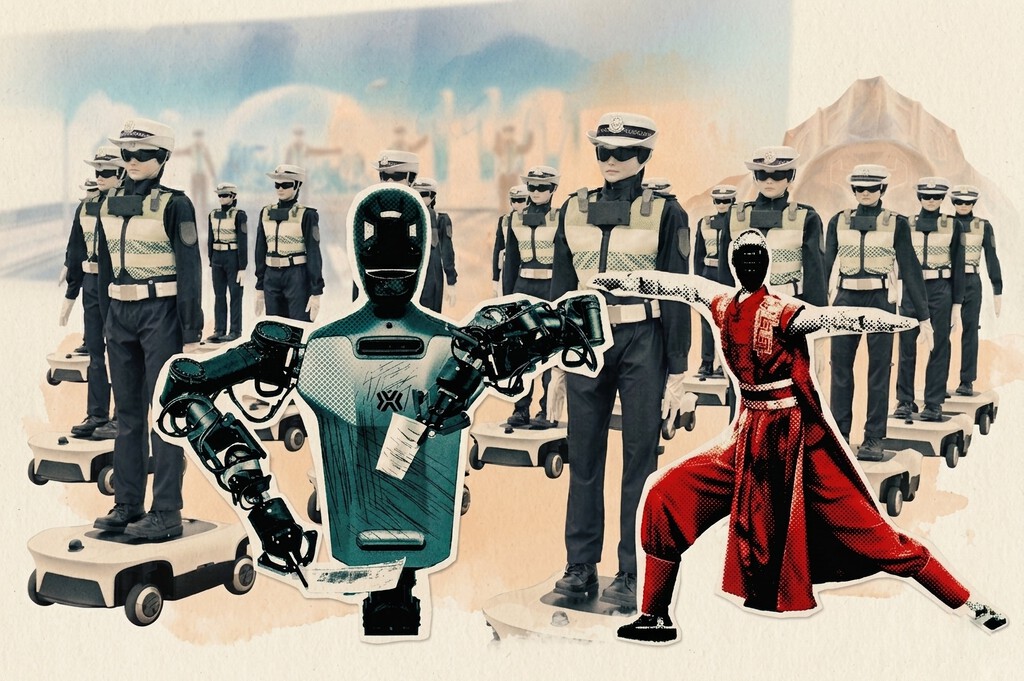
Unitree's strength lies in its affordable quadruped robots, which have found applications in research, education, and entertainment. However, the humanoid robot market is still in its infancy, with few commercial deployments and unclear demand. The IPO valuation assumes a future where humanoid robots become ubiquitous, but that future is far from certain.
Why the Humanoid Robot Market Doesn't Exist Yet
Despite advances in AI and robotics, humanoid robots remain expensive, limited in capability, and largely confined to labs and demonstrations. The technology to make them truly useful—capable of navigating unstructured environments and performing diverse tasks—is still years away. Unitree's own humanoid robots, like the H1, are impressive feats of engineering but not yet commercially viable at scale.
The market for humanoid robots is often compared to the early days of personal computers or smartphones, but the analogy may be premature. Unlike those devices, humanoid robots face immense technical challenges and safety concerns. Moreover, the use cases are not yet clear: will they be used in factories, homes, or somewhere else? Until these questions are answered, the market remains speculative.
- Valuation disconnect: Unitree's $50 billion valuation is based on future potential, not current revenue.
- Quadruped dominance: The company's current business is strong in quadruped robots, not humanoids.
- Early-stage market: Humanoid robots are still mostly in R&D and pilot programs.
- CEO's vision: Wang Xingxing predicts a "ChatGPT moment" for robotics, but timing is uncertain.
- Investor enthusiasm: Retail demand was thousands of times oversubscribed, signaling hype.
Unitree's Business: Quadrupeds vs. Humanoids
Unitree's current revenue comes primarily from quadruped robots, which are used in research, education, and entertainment. These robots are affordable and have found a niche market. The company has shipped thousands of units, establishing itself as a leader in this segment. However, the humanoid robot business is still nascent, with only 18,000 units distributed by July—a fraction of what would be needed to justify a $50 billion valuation.
The table below compares Unitree's current business with the expectations baked into its valuation.
| Aspect | Current Reality | Market Expectation |
|---|---|---|
| Primary revenue source | Quadruped robots | Humanoid robots |
| Humanoid units distributed | 18,000 (by July) | Millions annually |
| Market maturity | Early-stage, R&D | Mass adoption |
| Valuation basis | Current sales and growth | Future potential |
What the CEO Says About the Future
Wang Xingxing's vision of a "ChatGPT moment" for robotics is compelling. He envisions a time when robots can understand natural language instructions and adapt to new tasks without reprogramming. That would indeed revolutionize the industry and open up vast markets. However, achieving that level of general-purpose intelligence is a massive technical challenge. Current AI systems, while impressive, are still narrow and brittle.
Unitree is investing heavily in AI research to make this vision a reality. But the timeline is uncertain. It could be years or even decades before humanoid robots become as capable as Wang imagines. In the meantime, the company must continue to grow its existing businesses to sustain investor confidence. The background to this story is set out in Unitree Humanoid Robot Shares Surge 600% on Market Debut. A related thread runs through Chinese Humanoid Robots at IFA: What I Saw Behind the Hype. Earlier coverage in Chinese Tesla Rivals Race to Flood Market With Affordable Humanoid Robots shows how the argument developed.
Risks and Opportunities for Investors
Investing in Unitree at its current valuation is a bet on the future of robotics. The potential upside is enormous if humanoid robots become ubiquitous, but the risks are equally significant. The technology may take longer to mature than expected, or competitors may emerge. Moreover, the company faces regulatory and ethical challenges, as well as the difficulty of scaling production. A closer look at the same subject appears in China's Humanoid Robot Market Dominance: 97% of Global Shipments. Anyone following the wider picture can start with Unitree Robots: From Viral Stunts to a Billionaire Founder. The same theme surfaces in Unitree's Self-Evolving Robots: China-US Humanoid Race Enters New Phase, which takes a different angle.
On the other hand, Unitree has a strong track record in quadruped robots and a visionary CEO. If anyone can crack the humanoid market, it might be them. But investors should be aware that they are paying for a future that may not arrive as soon as the market hopes. Context on how this played out before sits in Unitree's World-Model Humanoid Robot Achieves Full Autonomy. A companion piece, China's Humanoid Robots Ride Robot Horses at World Robot Conference, approaches the same subject from another angle.
FAQ
What is Unitree's valuation after its IPO?
Unitree's market capitalization reached $50 billion after its shares surged nearly 460% on the first day of trading. The company raised about $904 million in the IPO.
Does the humanoid robot market exist yet?
No, the humanoid robot market is still in its early stages. Most humanoid robots are used in research and pilot programs, and commercial adoption is limited. Unitree itself has distributed only 18,000 humanoid units by July.
What is the "ChatGPT moment" for robotics?
Unitree's CEO, Wang Xingxing, uses the term to describe a future when robots can understand general instructions and perform new tasks without specific programming. This would require significant advances in AI.
Why did Unitree's stock surge so much?
The surge was driven by intense retail investor demand, which was thousands of times oversubscribed. Investors are betting on the future potential of humanoid robots, not current sales.
Browse the Shop
 Acacia frida deluxe solid wood bed frame |
Bedroom bench |
Bed chest drawers |
Lingerie dresser |
Frame base |
Mirror with jewelry storage |
30 Bathroom Vanity |
Memory foam queen mattress |
Mattresses for back pain |
Nightstand set of 2 |
Grand Goldman Shop |
Civil Lawyer
Deutschland Trikot WM 2026







