

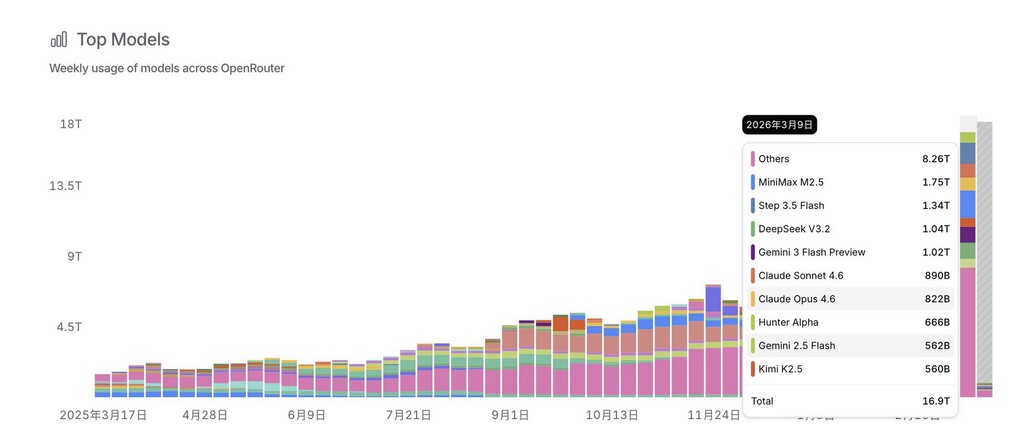
The US chip blockade on advanced AI chips to China was meant to cripple China's AI ambitions, but the result has been the opposite: China's AI models are now winning globally through a strategy called token export. Last month, Chinese AI models surpassed American ones in usage on OpenRouter, a platform that tracks AI model trends, and the shift has accelerated this month.
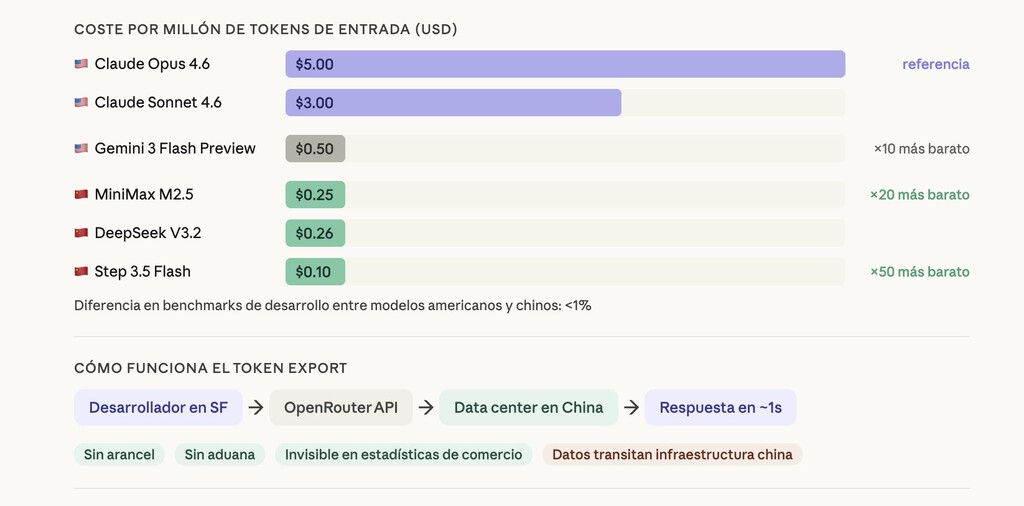
Despite US efforts to block China from competing, the Asian giant found a key tactic: exporting AI tokens that are immune to tariffs. While Chinese models may lag in performance and quality, they are far cheaper to use, and China is convincing the world with a familiar recipe: if a product is good enough and cheap, it wins.
Find Original Home Decor sparking conversation at Grand Goldman Shop.

How Token Export Bypasses US Tariffs
The US government's trade war and aggressive tariff policy disrupted globalization and hit Chinese exports. But China found a workaround: AI models can be used worldwide without being subject to tariffs. When we use energy, we consume kilowatts; when we use AI, we consume model tokens. China's AI tokens are extremely competitive, and for many tasks, those models are sufficient.
This token export phenomenon allows China to sidestep trade barriers entirely. Developers and businesses outside China can access these models via APIs, paying per token, with no physical goods crossing borders. The result is a growing global user base for Chinese AI, especially in cost-sensitive markets.
Chinese AI Models Gain Ground on OpenRouter
OpenRouter provides a window into AI model usage trends. The platform recently confirmed that Chinese models have overtaken American ones in usage, a milestone that underscores the effectiveness of the token export strategy. This shift is not just about price; it reflects a broader trend of commoditization in AI, where many tasks don't require the absolute best model, just a sufficiently good and affordable one.
For many applications—from chatbots to content generation—Chinese models offer a compelling value proposition. As a result, they are gaining traction among startups and enterprises looking to cut costs without sacrificing too much quality.
Why Cheap Tokens Matter in the AI Race
In the AI industry, cost per token is a critical metric. Chinese models are priced aggressively, often undercutting American counterparts by significant margins. This price advantage is particularly attractive for high-volume applications where even small savings per token add up quickly.
Moreover, the US chip restrictions have forced Chinese AI companies to optimize their models for efficiency, leading to innovations in model architecture and training techniques. These optimizations, combined with lower operational costs, make Chinese tokens even more competitive.
Implications for the Global AI Market
The rise of Chinese AI models via token export has several implications. First, it challenges the assumption that chip restrictions can effectively contain China's AI progress. Second, it accelerates the commoditization of AI, potentially eroding the pricing power of American AI firms. Third, it creates a bifurcated global AI market, with some regions and industries gravitating toward Chinese models due to cost considerations.
For US policymakers, this development raises questions about the effectiveness of export controls. For businesses, it means more choices and potentially lower costs, but also new considerations around data privacy, security, and reliance on foreign AI providers. The background to this story is set out in Alibaba Qwen3.8-Max Challenges US AI Chip Restrictions. A related thread runs through Sweden Election Result: Progressive Parties Must Seize Opportunity. Earlier coverage in US Chip Restrictions Backfire as China Hits 35% Domestic Equipment shows how the argument developed.
What to Watch Next
As Chinese AI models continue to improve and proliferate, watch for several trends. First, whether American AI companies respond with price cuts or new value propositions. Second, how US regulations evolve to address the token export phenomenon, if at all. Third, whether Chinese models can close the quality gap for more demanding tasks. A closer look at the same subject appears in Manchester Mayoral Result Key to Progressive Politics Future. Anyone following the wider picture can start with Manchester Mayoral Result Reveals Progressive Bloc Politics. The same theme surfaces in Strait of Hormuz Blockade Threatens Samsung and TSMC Chip Supply, which takes a different angle.
The AI landscape is shifting rapidly, and the token export strategy is a key driver. Stakeholders should monitor OpenRouter and similar platforms for usage trends, as they provide early signals of market shifts. Context on how this played out before sits in China Tightens Grip on AI Talent and Research Exports. A companion piece, China's AI Token Rewards: Free Tokens for Coffee and Credit Cards, approaches the same subject from another angle.
FAQ
What is token export in AI?
Token export refers to the practice of providing AI model access via APIs, where users pay per token consumed. This allows Chinese AI companies to serve global users without physical exports subject to tariffs.
Why are Chinese AI models gaining popularity?
Chinese AI models are often significantly cheaper per token than American models, making them attractive for cost-sensitive applications. While they may be slightly inferior in quality, they are sufficient for many tasks.
How did the US chip blockade backfire?
The US restricted advanced AI chip exports to China to slow its AI progress. Instead, China optimized its models for efficiency and leveraged token export to gain global market share, bypassing the restrictions.
What is OpenRouter and why does it matter?
OpenRouter is a platform that provides access to various AI models and tracks usage trends. It recently showed Chinese models surpassing American ones in usage, indicating a shift in the AI market.
Browse the Shop
 Acacia frida deluxe solid wood bed frame |
Bedroom bench |
Bed chest drawers |
Lingerie dresser |
Frame base |
Mirror with jewelry storage |
30 Bathroom Vanity |
Memory foam queen mattress |
Mattresses for back pain |
Nightstand set of 2 |
Grand Goldman Shop |
Civil Lawyer
Deutschland Trikot WM 2026







