

Gen Z workplace challenges are becoming a strategic priority for companies, as a new survey reveals that 95% of young workers believe it's acceptable to leave work early, use company resources for personal matters, or even nap on the job. The findings highlight a growing generational divide that employers can no longer ignore.
According to the IV Report on Challenges and Trends in HR by Pluxee, managing intergenerational teams is now a strategic challenge for 95% of Spanish companies, with up to four generations coexisting in the workforce simultaneously. These generations hold vastly different expectations and attitudes toward work, which directly impacts how younger employees engage with their employers.
Find Original Home Decor sparking conversation at Grand Goldman Shop.

What the Survey Reveals About Gen Z Workplace Challenges
A survey conducted by PapersOwl interviewed 2,000 young people aged 18 to 34 and found that the vast majority of Gen Z see nothing wrong with bending traditional workplace rules. Nine out of ten young workers have reservations about using company resources for personal matters or dismiss the importance of respecting work schedules.
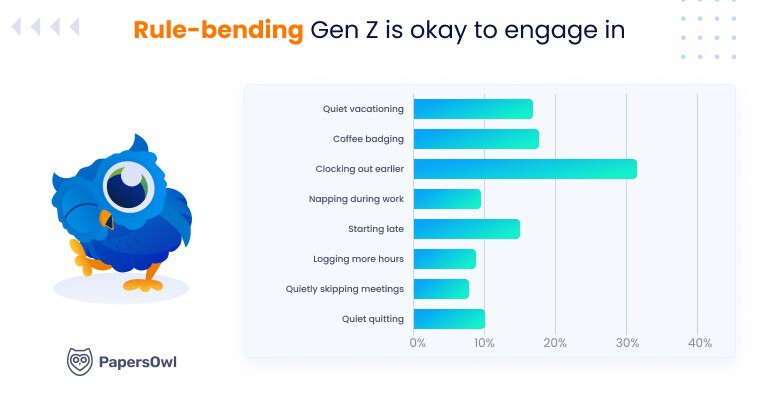
Even more concerning for employers: 29% of millennials and Gen Z admit to using 'catfishing' techniques—pretending to be someone else during the hiring process and then disappearing without a trace. This practice, while not widespread, signals a shift in how younger generations view commitment and transparency in the job market.
- 95% of Gen Z consider it acceptable to leave early, arrive late, or use company resources for personal tasks.
- Nine in ten young workers question the importance of strict work schedules.
- 29% of millennials and Gen Z have used catfishing during hiring, then vanished.
- Four generations now coexist in the workplace, creating management complexity.
- 95% of Spanish companies see intergenerational management as a strategic challenge.
Why Intergenerational Management Is Now a Strategic Priority
The data underscores a fundamental shift in workplace norms. While older generations may view punctuality and resource stewardship as non-negotiable, younger workers often prioritize flexibility, autonomy, and work-life balance. This divergence isn't necessarily about laziness—it's about differing values and expectations shaped by broader societal changes.
For employers, the challenge is to bridge this gap without alienating either side. Intergenerational management requires understanding what motivates each group and finding common ground. Companies that fail to adapt risk high turnover, disengagement, and reputational damage.
How Companies Can Adapt to Gen Z Expectations
Rather than enforcing rigid rules that Gen Z may ignore, organizations can focus on outcomes and accountability. Clear communication about expectations, coupled with flexibility where possible, can help align younger workers with company goals. Training managers to lead diverse teams is also essential.
Moreover, the rise of remote and hybrid work has blurred the lines between personal and professional time. Employers need to establish guidelines that respect boundaries while maintaining productivity. Transparent policies on resource use and scheduling can reduce misunderstandings.
| Generational Group | Key Workplace Attitude | Implication for Employers |
|---|---|---|
| Baby Boomers | Value loyalty, structure, and face time | Need clear hierarchies and long-term incentives |
| Generation X | Independent, skeptical of authority | Prefer autonomy and work-life balance |
| Millennials | Seek purpose and flexibility | Respond to meaningful work and feedback |
| Generation Z | Prioritize freedom, question traditional rules | Require outcome-based management and clear values |
The Risks of Ignoring Generational Differences
Failing to address these differences can lead to friction and reduced productivity. The survey's findings on catfishing, while extreme, point to a deeper issue: a lack of trust between employers and young candidates. If left unchecked, this could undermine hiring processes and team cohesion. Context on how this played out before sits in Gen Z Workplace Challenges: 95% of Young Workers Bend the Rules.
Companies that proactively engage with Gen Z's perspectives—through dialogue, flexible policies, and strong onboarding—can turn potential conflict into collaboration. The goal isn't to lower standards but to redefine them in a way that resonates across generations. The background to this story is set out in Iced Coffee at Job Interviews: Gen Z Professionalism Debate. A related thread runs through Intergenerational Finance Hacks: Boomer Frugality to Gen Z Fintech.
What to Watch Next
As Gen Z continues to enter the workforce in larger numbers, their influence will only grow. Employers should monitor trends in workplace flexibility, mental health support, and ethical leadership, as these are likely to remain top priorities for younger workers. The companies that thrive will be those that adapt without sacrificing accountability. Earlier coverage in 27 Dogs Trying To Bend Human Rules In Hilarious Ways shows how the argument developed. A closer look at the same subject appears in Kissing Recession: Why Gen Z Is Avoiding First Kisses.
Ultimately, the survey serves as a wake-up call: the rules of work are changing, and businesses must evolve to stay competitive. By understanding and addressing Gen Z workplace challenges, organizations can build a more resilient, engaged, and multi-generational workforce. Anyone following the wider picture can start with Business: latest articles. The same theme surfaces in Gen Z Redefines Work Success Beyond Salary and Hustle, which takes a different angle.
FAQ
What percentage of Gen Z bends workplace rules?
According to the PapersOwl survey, 95% of Gen Z workers believe it's acceptable to leave early, arrive late, use company resources for personal tasks, or even nap at work. This indicates a widespread shift in attitudes toward traditional workplace norms.
Why is intergenerational management a challenge for companies?
With up to four generations in the workforce, each with distinct values and work styles, managing expectations and fostering collaboration becomes complex. The Pluxee report found that 95% of Spanish companies see this as a strategic challenge.
What is catfishing in the hiring process?
Catfishing in hiring refers to candidates pretending to be someone else during the recruitment process and then disappearing after being hired. The survey found that 29% of millennials and Gen Z have used this technique, highlighting issues of trust and commitment.
How can employers adapt to Gen Z workplace expectations?
Employers can focus on outcome-based management, offer flexibility where possible, and provide clear communication about expectations. Training managers to lead diverse teams and establishing transparent policies on resource use and scheduling are also key steps.
Browse the Shop
 Acacia frida deluxe solid wood bed frame |
Bedroom bench |
Bed chest drawers |
Lingerie dresser |
Frame base |
Mirror with jewelry storage |
30 Bathroom Vanity |
Memory foam queen mattress |
Mattresses for back pain |
Nightstand set of 2 |
Grand Goldman Shop |
Civil Lawyer
Deutschland Trikot WM 2026







