

Honda's PathAhead startup has developed a way to turn desert sand into white asphalt, a potential game-changer for road construction in Africa. The innovation comes as Honda navigates a challenging period, with cancellations of electric vehicle launches in North America, the paused development of the Afeela with Sony, and losses around $15.7 billion. Despite these setbacks, Honda's internal incubator continues to foster experimental projects like PathAhead, which aims to address a critical infrastructure gap.
The Road Less Traveled: Africa's Paving Challenge
Only about 20% of African roads are paved, according to Honda's own data. This statistic has far-reaching economic consequences: difficult transport access raises logistics costs, limits market access, and hampers development. PathAhead's solution seeks to tackle this problem head-on by using abundant desert sand as a raw material for road pavement.
Find Original Home Decor sparking conversation at Grand Goldman Shop.

Conventional road construction materials, such as natural sand and crushed stone, vary in strength depending on their geological origin. This variability makes it difficult to ensure consistent quality. PathAhead's material aims to overcome this by providing a uniform, reliable alternative.
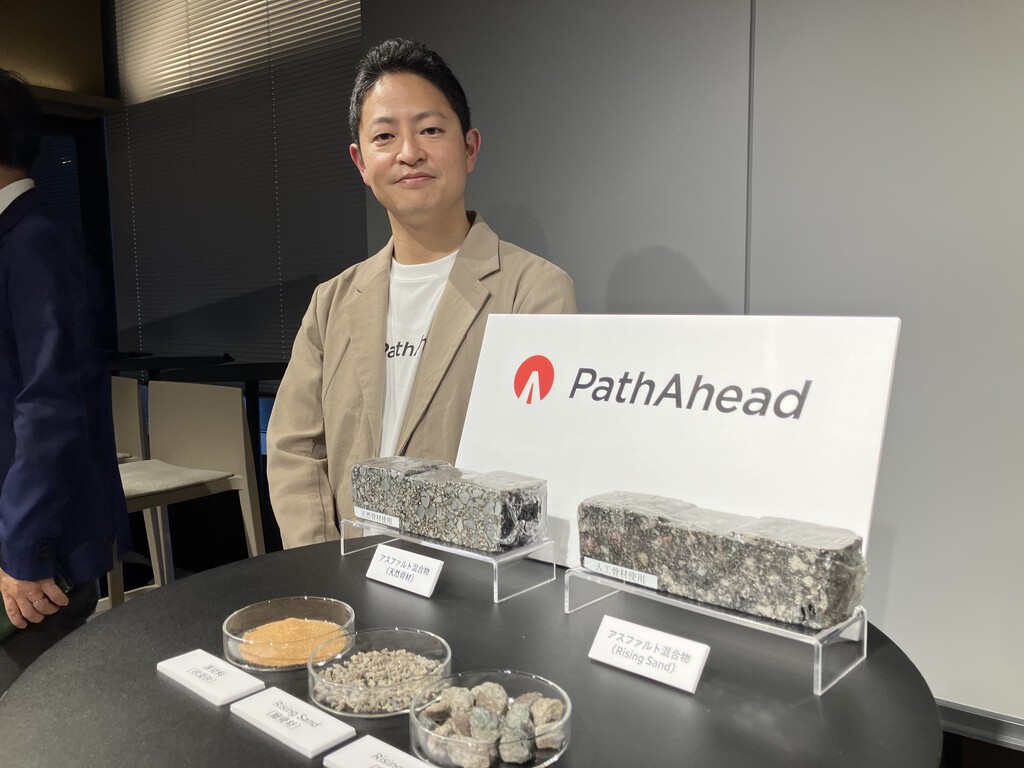
From Sand to Asphalt: The PathAhead Solution
PathAhead has developed a material that transforms desert sand into a usable aggregate for road construction. The resulting white asphalt is not only visually distinct but also offers potential performance benefits. While specific technical details are scarce, the company claims that its material addresses the strength variability issues of traditional materials.
The use of desert sand is particularly appealing because it is abundant in many regions, including parts of Africa. By tapping into this resource, PathAhead could reduce the need for importing or mining conventional aggregates, lowering costs and environmental impact.
Why White Asphalt?
White asphalt, or more accurately, a light-colored pavement, can reflect more sunlight than traditional black asphalt. This can help reduce the urban heat island effect, leading to cooler surface temperatures and potentially lower energy costs for cooling nearby buildings. Additionally, lighter pavements can improve visibility at night, enhancing safety for drivers and pedestrians.
However, the primary advantage of PathAhead's material may lie in its composition rather than its color. By using desert sand, the material could be produced locally, reducing transportation costs and creating jobs in regions where they are needed most.
Honda's Broader Challenges and the Role of Innovation
Honda's financial woes are well-documented. The company has canceled several electric vehicle launches in North America, paused the Afeela project with Sony, and reported significant losses. These setbacks have forced Honda into a restructuring phase. Yet, projects like PathAhead demonstrate that Honda is still investing in forward-thinking solutions that align with its long-term vision of mobility and sustainability.
PathAhead is a startup born from Honda's internal incubator, which suggests that Honda is encouraging entrepreneurial thinking within its ranks. This approach can lead to disruptive innovations that might not emerge from traditional R&D departments.
The Economic Impact of Paved Roads
Paved roads are a cornerstone of economic development. They reduce travel times, lower vehicle maintenance costs, and enable reliable access to markets, schools, and healthcare facilities. In Africa, where many rural areas remain isolated during rainy seasons due to unpaved roads, the ability to construct durable, all-weather roads could be transformative. Context on how this played out before sits in Honda's PathAhead Turns Desert Sand Into White Asphalt for Roads.
PathAhead's focus on Africa is strategic. The continent is experiencing rapid population growth and urbanization, driving demand for infrastructure. By providing a cost-effective and locally sourced material, PathAhead could play a role in meeting that demand. The background to this story is set out in Car: latest articles. A related thread runs through A-22 Highway Finally Connects Huesca and Lleida After 20 Years.
What to Watch Next
PathAhead's technology is still in its early stages. The company has not announced pilot projects or partnerships, and it remains to be seen whether the material can be produced at scale and meet regulatory standards. However, the concept has promise, and Honda's backing gives it credibility. Earlier coverage in Asphalt Prices Soar: A New Threat to Spain's Roads shows how the argument developed. A closer look at the same subject appears in China's Mountain-Splitting Roads: Engineering Marvels.
As Honda continues its restructuring, it will need to balance cost-cutting with investment in innovation. PathAhead is a reminder that even in tough times, companies can pursue bold ideas that address global challenges. Anyone following the wider picture can start with Desert Sand in Construction: The Secret Ingredient Is Sawdust. The same theme surfaces in Senators Urge White House AI Chief to Fix Critical Vulnerabilities, which takes a different angle.
FAQ
What is PathAhead?
PathAhead is a startup from Honda's internal incubator that has developed a construction material made from desert sand, intended for paving roads in Africa.
How does PathAhead's material differ from traditional asphalt?
PathAhead's material uses desert sand as an aggregate, which is abundant and can be sourced locally. It aims to provide consistent strength, unlike conventional materials that vary by geological origin. The resulting pavement is white, which may offer reflective benefits.
Why is Honda involved in road construction?
Honda's incubator supports innovative projects that align with its broader vision of mobility and sustainability. PathAhead addresses infrastructure challenges that affect transportation and economic development, which are relevant to Honda's core business.
What challenges does PathAhead face?
Scaling production, ensuring quality control, and gaining regulatory approval are key challenges. The company will also need to demonstrate the material's durability and cost-effectiveness compared to traditional options.
Browse the Shop
 Acacia frida deluxe solid wood bed frame |
Bedroom bench |
Bed chest drawers |
Lingerie dresser |
Frame base |
Mirror with jewelry storage |
30 Bathroom Vanity |
Memory foam queen mattress |
Mattresses for back pain |
Nightstand set of 2 |
Grand Goldman Shop |
Civil Lawyer
Deutschland Trikot WM 2026







