

The maritime industry is facing a nuclear container ship revolution as Hyundai pushes forward with plans to eliminate fossil fuel dependence. Around 80% of global trade moves by sea, and the massive container ships that carry the bulk of goods are major polluters. Hyundai's shipbuilding arm, HD Korea Shipbuilding and Offshore Engineering, has unveiled a nuclear-powered container ship design that could change everything.
Why the Maritime Industry Needs Nuclear Container Ships
Global trade relies on moving huge volumes of material efficiently. Container ships are the backbone of this system, but they consume enormous amounts of fossil fuel. The industry is under pressure to cut carbon emissions, and alternatives like hydrogen and ammonia are still in development. Nuclear power offers a compelling solution: zero emissions, long range, and high power density.
Find Original Home Decor sparking conversation at Grand Goldman Shop.

Hyundai's Nuclear Container Ship Design
In 2025, HD Korea Shipbuilding and Offshore Engineering presented a model of a nuclear-powered container ship. The design uses electric propulsion powered by a small modular reactor (SMR). The reactor type is a molten salt reactor fueled by thorium, a technology that promises enhanced safety and efficiency.
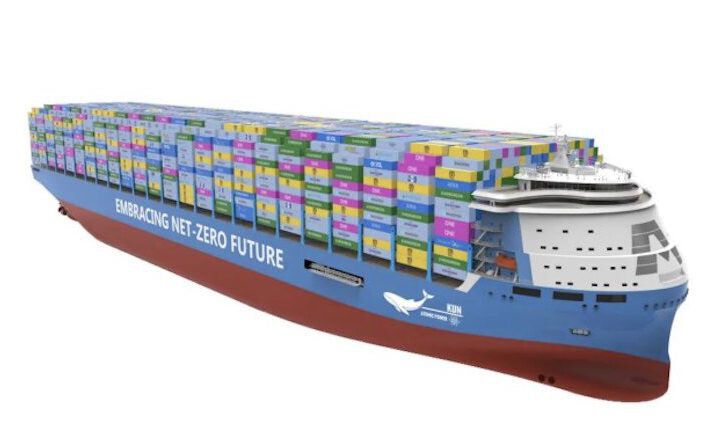
By 2026, HD and the American Bureau of Shipping (ABS) reached an agreement to jointly develop the vessel. This partnership aims to move from design to prototype, with the goal of creating the world's first nuclear container ship.
Class 16,000 TEU: A Massive Undertaking
Container ship capacity is measured in TEU (Twenty-foot Equivalent Unit). The proposed nuclear container ship is expected to be in the 16,000 TEU class, meaning it can carry 16,000 standard 20-foot containers. This is a large vessel, comparable to some of the biggest ships currently in service. Powering such a ship with nuclear energy would be a major engineering feat. The longer history behind the story is traced in Nuclear Container Ships: Hyundai's Zero-Emission Maritime Bet.
Key Takeaways
- Hyundai's nuclear container ship aims to eliminate carbon emissions from large vessels.
- The design uses a thorium-based molten salt SMR for electric propulsion.
- HD and ABS have partnered to develop the ship, targeting a 16,000 TEU capacity.
- Nuclear power could provide the range and power needed for global trade without fossil fuels.
- Regulatory and safety challenges remain before commercial deployment.
Comparison of Propulsion Technologies
| Technology | Emissions | Range | Power Density | Infrastructure |
|---|---|---|---|---|
| Fossil Fuels | High | Long | High | Established |
| Hydrogen | Zero | Short | Low | Developing |
| Ammonia | Zero | Medium | Medium | Developing |
| Nuclear (SMR) | Zero | Very Long | Very High | Early Stage |
Challenges and Opportunities
While the concept is promising, several hurdles must be overcome. Regulatory approval for nuclear-powered commercial ships is complex, requiring international cooperation. Safety concerns, public perception, and the high cost of development are also significant. However, the potential benefits—zero emissions, reduced operating costs, and energy independence—are driving investment. The background to this story is set out in Royal Mail Bulk Price Hike: NHS Facing Millions in Extra Costs. A related thread runs through Hyundai Ioniq 3 First Impressions: Design That Commands Attention. Earlier coverage in Shipping Container Solar Power: Game-Changer Revealed shows how the argument developed.
The partnership between HD and ABS is a crucial step. ABS will provide classification and safety expertise, helping navigate the regulatory landscape. If successful, this project could pave the way for a new era in maritime shipping. A closer look at the same subject appears in Car: latest articles. Anyone following the wider picture can start with Toyota Bets on Hydrogen Trucks with Hyroad Energy Deal. The same theme surfaces in World's Busiest Container Ports: The Absolute Queen of the Seas, which takes a different angle.
What to Watch Next
Keep an eye on further announcements from HD and ABS regarding the prototype timeline. Also, watch for developments in SMR technology and international regulations for nuclear-powered ships. As the industry seeks to decarbonize, nuclear container ships could become a viable option for large-scale ocean transport. Context on how this played out before sits in Rosebank Oilfield Approval: No Breach of UK Emission Targets, Insiders. A companion piece, India's 650-Ton Electric Excavator: Inside the Diesel-to-Electric Conversion, approaches the same subject from another angle.
FAQ
What is a nuclear container ship?
A nuclear container ship is a cargo vessel powered by a nuclear reactor, typically a small modular reactor (SMR), which generates electricity for propulsion. This eliminates the need for fossil fuels and reduces emissions to zero.
Why is Hyundai developing a nuclear container ship?
Hyundai aims to address the maritime industry's dependence on fossil fuels and meet decarbonization targets. Nuclear power offers a high-energy-density solution for large ships that need to travel long distances.
What is the capacity of Hyundai's nuclear container ship?
The proposed ship is in the 16,000 TEU class, meaning it can carry 16,000 standard 20-foot containers. This is a large capacity, suitable for major trade routes.
When will the nuclear container ship be ready?
The project is currently in the design and prototype phase. No specific date has been announced, but the partnership between HD and ABS aims to accelerate development. Regulatory approvals will be a key factor in the timeline.
Browse the Shop
 Acacia frida deluxe solid wood bed frame |
Bedroom bench |
Bed chest drawers |
Lingerie dresser |
Frame base |
Mirror with jewelry storage |
30 Bathroom Vanity |
Memory foam queen mattress |
Mattresses for back pain |
Nightstand set of 2 |
Grand Goldman Shop |
Civil Lawyer
Deutschland Trikot WM 2026







