

The Middle East's largest railway megaproject, Hafeet Rail, is facing a critical security challenge: it traverses a region increasingly threatened by drone attacks. This $3 billion cross-border rail network, connecting the UAE and Oman, aims to revolutionize trade and transport, but ongoing geopolitical tensions—described by some as a Third Gulf War—cast a long shadow over its construction and future operations.
What Is Hafeet Rail?
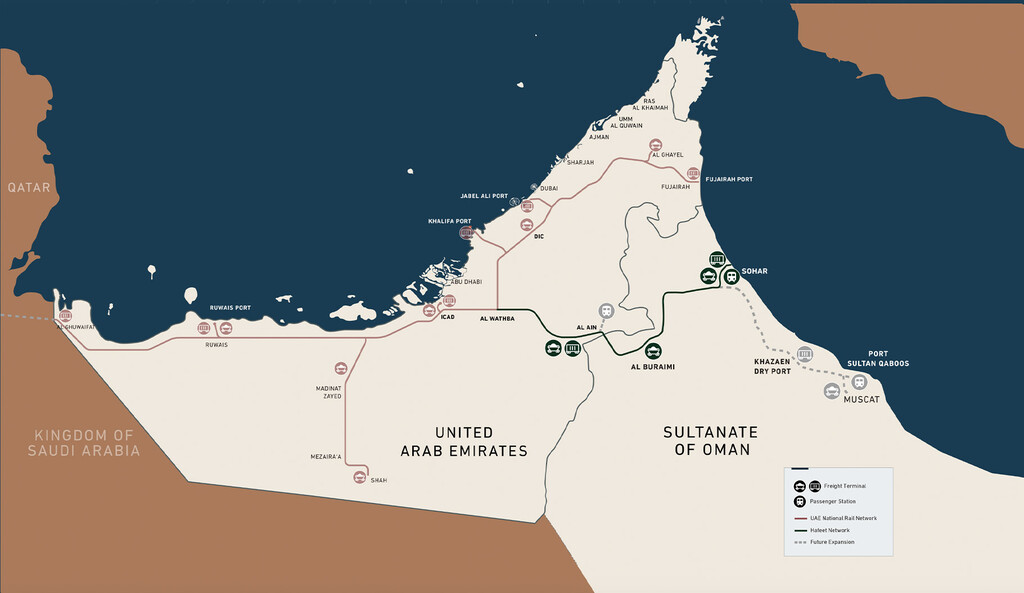
Hafeet Rail is the first cross-border railway network in the region, developed by Etihad Rail, Oman Rail, and Mubadala. The project will link the UAE's national rail network with the strategic port of Sohar in Oman, creating a mixed-use corridor for both passengers and freight.
Find Original Home Decor sparking conversation at Grand Goldman Shop.

With an estimated investment of around $3 billion (€2.5 billion), the railway promises to transform commercial flows in the Gulf and reduce logistics costs. It will directly connect five major ports and over fifteen integrated cargo facilities, significantly enhancing trade efficiency.
Economic Impact and Benefits
The economic implications are profound. By providing a faster, more cost-effective alternative to road transport, Hafeet Rail is expected to boost trade between the UAE and Oman and beyond. For everyday citizens, the railway will drastically cut travel times—the journey between Abu Dhabi and Sohar, which currently takes hours by car, will be reduced to a fraction of the time.
Key benefits include:
- Reduced logistics costs for businesses
- Increased trade volume between GCC countries
- Faster passenger travel
- Integration of five major ports
- Creation of jobs and economic opportunities
The Drone Threat
However, the project's route passes through areas vulnerable to drone strikes. Recent conflicts in the region have seen a rise in drone warfare, targeting critical infrastructure. The threat is not hypothetical: drones have been used to attack oil facilities, airports, and military installations, raising concerns about the safety of large-scale transport projects.
While specific incidents against Hafeet Rail have not been reported, the overarching security environment poses a risk. The project's developers must implement robust counter-drone measures and coordinate with local authorities to ensure the safety of construction crews and future operations.
Geopolitical Context
The railway is being built amid heightened tensions in the Gulf, with ongoing conflicts in Yemen and between Israel and Hamas. These conflicts have spilled over into the broader region, with drone and missile attacks becoming a common tactic. The UAE and Oman, while relatively stable, are not immune to these threats.
The project also holds strategic significance: by linking the UAE and Oman, it strengthens economic ties and could serve as a counterbalance to regional instability. Both countries have invested heavily in infrastructure as part of their economic diversification plans.
Security Measures and Future Outlook
To mitigate risks, the developers are likely to employ advanced surveillance and defense systems. This could include radar detection, jamming technology, and physical barriers. Coordination with military and security forces will be essential. The background to this story is set out in US and Iran Airstrikes Escalate Hostilities in Middle East. A related thread runs through Germany's Largest Cargo Airport Exposes Europe's Drone Threat. Earlier coverage in Gaza 12-Year-Old Boy Shares Daily Life in Conflict Zone shows how the argument developed.
Despite the challenges, the project is moving forward. The first phase is expected to be operational in the coming years, with full completion targeted for 2030. The success of Hafeet Rail will depend not only on engineering and financing but also on the ability to navigate a volatile security landscape. A closer look at the same subject appears in Houthi Strikes on Saudi Arabia Intensify Middle East Conflict. Anyone following the wider picture can start with Oil Tankers Cross Strait of Hormuz Blind Under Drone Threat. The same theme surfaces in Russia Ukraine War: Moscow Drone Strikes and Kyiv Attack Threats, which takes a different angle.
Comparison with Other Megaprojects
| Project | Investment | Length | Key Challenge |
|---|---|---|---|
| Hafeet Rail | $3 billion | ~300 km | Drone threats, regional tensions |
| Etihad Rail (UAE) | $11 billion | 1,200 km | Logistics, integration |
| GCC Railway | $250 billion | 2,177 km | Political coordination |
Compared to other regional rail projects, Hafeet Rail is smaller in scale but strategically vital due to its cross-border nature and direct port connections. Context on how this played out before sits in Middle East Conflict Threatens RBA Inflation Strategy. A companion piece, Middle East Conflict Disrupts Maritime Workers and Ports, approaches the same subject from another angle.
FAQ
What is Hafeet Rail?
Hafeet Rail is a $3 billion cross-border railway network connecting the UAE and Oman, designed for both passengers and freight. It aims to enhance trade and reduce travel times between the two countries.
Why is the project facing drone threats?
The railway passes through a region with heightened geopolitical tensions, where drone attacks on infrastructure have become more common. This poses a security risk to construction and operations.
How will the railway benefit the average citizen?
It will significantly reduce travel time between Abu Dhabi and Sohar, making commuting and tourism more convenient. It also promises economic benefits through job creation and lower logistics costs.
What measures are being taken to protect the railway?
While specific details are not public, developers are expected to implement advanced counter-drone systems and coordinate with security forces to safeguard the infrastructure.
Browse the Shop
 Acacia frida deluxe solid wood bed frame |
Bedroom bench |
Bed chest drawers |
Lingerie dresser |
Frame base |
Mirror with jewelry storage |
30 Bathroom Vanity |
Memory foam queen mattress |
Mattresses for back pain |
Nightstand set of 2 |
Grand Goldman Shop |
Civil Lawyer
Deutschland Trikot WM 2026







