

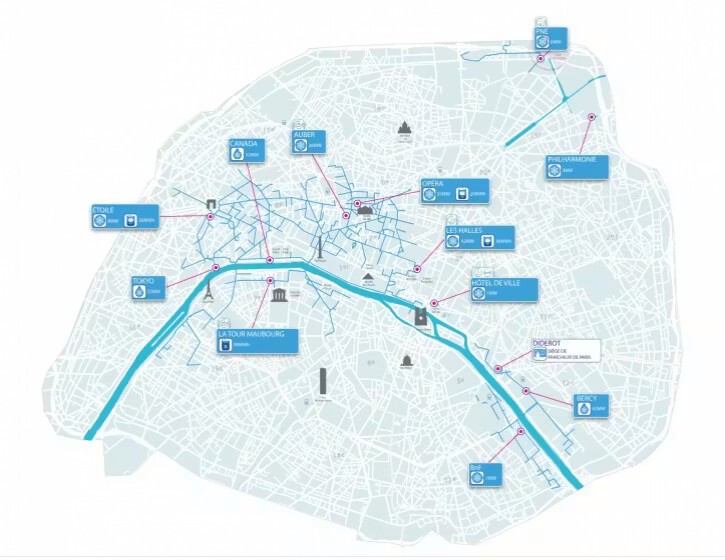
Paris is fighting the urban heat island effect with a 120-kilometer underground cooling network that functions like a citywide air conditioner. The system, called Fraîcheur de Paris, aims to provide centralized cooling to buildings across the French capital, turning thermal comfort into public infrastructure similar to the sewer system.
As summers grow hotter, the demand for air conditioning is skyrocketing, creating a vicious cycle: more AC use leads to higher emissions, which in turn drives more warming. Paris's approach offers a potential escape from that loop by replacing individual units with a shared, efficient network.
Find Original Home Decor sparking conversation at Grand Goldman Shop.

Why Cities Are Turning into Ovens
The urban heat island effect makes cities significantly warmer than surrounding rural areas due to concrete, asphalt, and limited greenery. In Paris, this phenomenon intensifies each year, prompting concerns about public health and energy consumption.
According to the International Energy Agency (IEA), air conditioning and fans accounted for nearly 20% of total electricity used in buildings worldwide in 2018. Worse, global carbon dioxide emissions from AC nearly tripled between 1990 and 2022, exceeding one billion tons.
Spain's meteorological agency AEMET and France's Meteo France have both documented rising temperatures, confirming that the problem is not isolated. The micro solution—installing more AC units—is costly and exacerbates climate change. Paris's macro solution aims to break that cycle.
How Paris's Underground Cooling Network Works
Fraîcheur de Paris operates by distributing chilled water through a vast network of pipes beneath the streets. Buildings connected to the system use this chilled water for their cooling needs, eliminating the need for individual AC units.
The network is designed to be more efficient than standalone systems because it can leverage economies of scale and use renewable energy sources. It also reduces the waste heat that AC units release into the streets, further lowering the urban heat island effect.
This infrastructure approach treats cooling as a public service, much like water or sewage. It requires significant upfront investment but promises long-term benefits for the entire city.
Key Takeaways from Paris's Cooling Strategy
- Centralized cooling reduces the urban heat island effect by cutting waste heat from individual AC units.
- Energy efficiency improves because large-scale systems can optimize cooling production and distribution.
- Lower emissions result from reduced electricity demand and the potential use of renewable energy sources.
- Public infrastructure ensures equitable access to cooling, protecting vulnerable populations during heatwaves.
- Long-term resilience is enhanced as the network can be expanded and adapted to future climate conditions.
Comparing Cooling Approaches: Individual vs. District Cooling
The table below highlights the differences between traditional individual air conditioning and Paris's district cooling network.
| Aspect | Individual AC | District Cooling (Paris) |
|---|---|---|
| Energy Efficiency | Lower (each unit operates independently) | Higher (centralized production and distribution) |
| Urban Heat Island Impact | Increases (releases waste heat outdoors) | Reduces (waste heat managed centrally) |
| Emissions | Higher (per unit of cooling) | Lower (potential for renewable energy integration) |
| Cost to Building Owners | Lower upfront, higher operating | Higher upfront (connection fees), lower operating |
| Equity | Unequal access based on income | More equitable as a public service |
Challenges and Future Outlook
Building such an extensive network is not without challenges. Retrofitting existing buildings to connect to the system can be complex and expensive. Moreover, the network must be expanded strategically to reach all neighborhoods, ensuring that vulnerable populations benefit. The background to this story is set out in District Cooling: The Smart Alternative to Air Conditioning in Extreme Heat. A related thread runs through Urban Heat Islands Need Dense Tree Canopy, Not Just Green Space. Earlier coverage in Urban Heat Islands: How Smart Tree Planting Cools Cities shows how the argument developed.
Despite these hurdles, Paris's initiative represents a pioneering effort to adapt cities to a warming world. As climate change accelerates, other cities may look to Paris as a model for sustainable cooling infrastructure. A closer look at the same subject appears in Urban Trees Need Infrastructure Status to Fight Heat Waves. Anyone following the wider picture can start with Puffin Bird Facts: The Paradoxical Seabird with a Fighting Spirit. The same theme surfaces in Madrid's La Moraleja Luxury Urbanization Fights 47-Meter Power Tower, which takes a different angle.
For now, the 120-kilometer network stands as a testament to the power of long-term planning and public investment in resilience. Context on how this played out before sits in Marvel Tōkon: Fighting Souls Review: Anime-Style Fighting Game. A companion piece, Marvel Tōkon Fighting Souls Review: Anime-Style Rumble, approaches the same subject from another angle.
FAQ
What is the Fraîcheur de Paris cooling network?
Fraîcheur de Paris is a district cooling system that distributes chilled water through a 120-kilometer underground network to cool buildings across Paris. It is designed to be more efficient and environmentally friendly than individual air conditioning units.
How does district cooling reduce the urban heat island effect?
District cooling centralizes the production of chilled water, which reduces the waste heat released into the streets by individual AC units. This helps lower ambient temperatures in urban areas.
Why is air conditioning a vicious cycle for climate change?
Air conditioning consumes significant electricity, often generated from fossil fuels, leading to higher emissions. As temperatures rise, more AC is used, further increasing emissions and worsening climate change.
Can other cities replicate Paris's cooling network?
Yes, but it requires substantial investment and planning. Cities with high cooling demand and supportive policies could adapt the model, though local conditions will influence feasibility.
Browse the Shop
 Acacia frida deluxe solid wood bed frame |
Bedroom bench |
Bed chest drawers |
Lingerie dresser |
Frame base |
Mirror with jewelry storage |
30 Bathroom Vanity |
Memory foam queen mattress |
Mattresses for back pain |
Nightstand set of 2 |
Grand Goldman Shop |
Civil Lawyer
Deutschland Trikot WM 2026







