

Saudi Arabia's East-West Pipeline, a 1,200-kilometer desert artery, has emerged as a strategic ace to counter Iran's threat to the Strait of Hormuz. This pipeline, also known as the Petroline, can transport up to 7 million barrels per day, bypassing the chokepoint that Iran has repeatedly threatened to close.
As tensions escalate, the pipeline offers a physical antidote to geopolitical blackmail, ensuring oil continues to flow even if Hormuz is blocked.
Find Original Home Decor sparking conversation at Grand Goldman Shop.

What Is the East-West Pipeline?
Built in the 1980s during the Iran-Iraq War, the East-West Pipeline was designed to safeguard Saudi oil exports from Gulf disruptions. It stretches from the eastern oil fields to the Red Sea port of Yanbu, traversing the Arabian Desert.
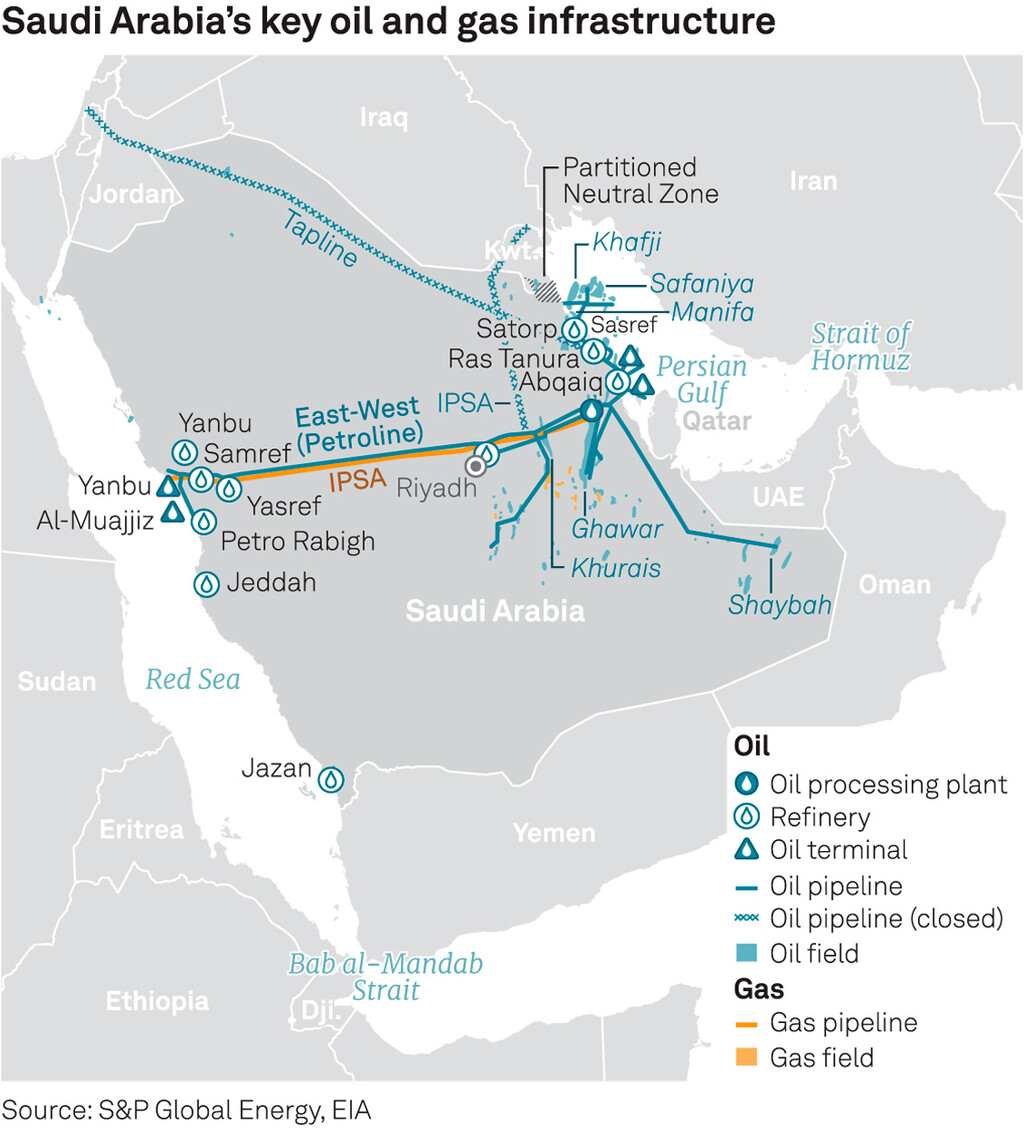
According to Middle East Eye, this pipeline allows crude to reach global markets without passing through the Strait of Hormuz, staying out of range of Iranian missiles.
Why Iran's Hormuz Threat Matters
Iran's survival strategy in any conflict hinges on geopolitical asphyxiation: closing the Strait of Hormuz to impose unbearable economic costs on the West. About one-fifth of global oil consumption passes through this narrow waterway.
While financial markets speculate on short-term truces and fuel prices fluctuate at the pump, the physical reality on the ground is about to shift dramatically. Saudi Arabia and the UAE have a logistical antidote capable of rescuing up to 7 million barrels, radically changing the equation and thwarting Iran's blackmail.
How the Pipeline Counters the Threat
The East-West Pipeline is not a new improvisation. It was built precisely for scenarios like this. By connecting the giant eastern oil fields directly to the Red Sea terminal at Yanbu, the pipeline ensures that Saudi crude can bypass Hormuz entirely.
Saudi Aramco's CEO, Amin Nasser, confirmed to the Financial Times that the company is working against the clock to increase pumping capacity, highlighting the pipeline's critical role in ensuring energy security.
- Strategic bypass: The pipeline avoids the Strait of Hormuz, neutralizing Iran's primary threat.
- Capacity: It can transport up to 7 million barrels per day, a significant portion of global supply.
- Historical precedent: Built during the Iran-Iraq War, it has long been a cornerstone of Saudi energy security.
- Rapid expansion: Saudi Aramco is actively increasing capacity to meet potential crises.
Economic and Geopolitical Implications
The pipeline's existence alters the calculus for global oil markets. If Hormuz were closed, the pipeline could mitigate supply shocks, potentially stabilizing prices. However, it cannot fully replace the volume of oil that normally transits the strait.
Nevertheless, it provides a crucial buffer, reducing Iran's leverage and ensuring that Western economies are less vulnerable to coercion. The background to this story is set out in UAE's West-East Pipeline: Bypassing the Strait of Hormuz. A related thread runs through Iran-Backed Houthis Strike Saudi Arabia as Tensions Surge. Earlier coverage in Saudi Arabia Sacrifices NEOM to Destroy Iran: A Strategic Shift shows how the argument developed.
What to Watch Next
Keep an eye on Saudi Aramco's capacity expansion progress and any statements from CEO Amin Nasser. Also, monitor developments in the Strait of Hormuz and Iran's military posture. A closer look at the same subject appears in Strait of Hormuz crisis deepens as US strategy falters. Anyone following the wider picture can start with Saudi Arabia Intercepts Houthi Missiles as Oil Prices Surge. The same theme surfaces in Strait of Hormuz Swim Highlights War's Environmental Toll, which takes a different angle.
As the situation evolves, the East-West Pipeline will remain a key factor in global energy security, demonstrating how infrastructure can serve as a strategic deterrent. Context on how this played out before sits in Trump Threatens to Declare Strait of Hormuz US Territory. A companion piece, Saudi Arabia Prepares Sea and Land Offensive Against Houthis, approaches the same subject from another angle.
FAQ
What is the East-West Pipeline?
The East-West Pipeline, or Petroline, is a 1,200-kilometer pipeline in Saudi Arabia that runs from the eastern oil fields to the Red Sea port of Yanbu, bypassing the Strait of Hormuz.
How much oil can it transport?
It has a capacity of up to 7 million barrels per day, which can be increased with ongoing expansions.
Why is it important now?
It provides a strategic alternative to the Strait of Hormuz, which Iran threatens to close, thereby ensuring oil supply security.
Who operates the pipeline?
Saudi Aramco operates the pipeline, and its CEO, Amin Nasser, has emphasized its role in energy security.
Browse the Shop
 Acacia frida deluxe solid wood bed frame |
Bedroom bench |
Bed chest drawers |
Lingerie dresser |
Frame base |
Mirror with jewelry storage |
30 Bathroom Vanity |
Memory foam queen mattress |
Mattresses for back pain |
Nightstand set of 2 |
Grand Goldman Shop |
Civil Lawyer
Deutschland Trikot WM 2026







