

Spain has authorized the release of up to 11.5 million barrels of oil from its strategic reserves to stabilize fuel prices as tensions in the Middle East threaten to push gasoline prices toward €2 per liter. The move is part of a coordinated international effort to calm markets.
The release comes as the European Union grapples with its chronic energy dependence, having spent €427 billion on energy imports in 2023 alone—over €1 billion per day. This vulnerability means conflicts thousands of miles away can quickly translate into higher costs at the pump for Spanish drivers.
Find Original Home Decor sparking conversation at Grand Goldman Shop.

Why Spain Is Tapping Its Strategic Reserves
The Spanish government, through the Ministry for Ecological Transition (MITECO), approved the release in response to the blocking of the Strait of Hormuz and the war in Iran. These events have created a logistical bottleneck that threatens to replicate past supply crises.
Spain's contribution represents 2.9% of the International Energy Agency's (IEA) historic contingency plan to inject 400 million barrels into the global market. The release will begin immediately, putting the equivalent of four days of national consumption into circulation.
What This Means for Gasoline Prices in Spain
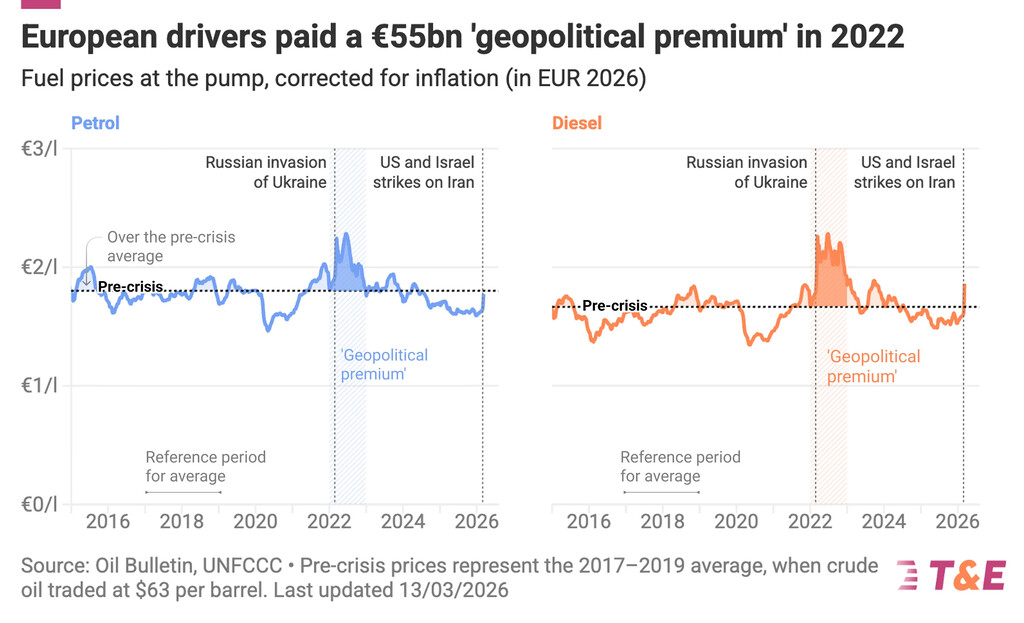
The primary goal is to contain price volatility and prevent gasoline from reaching €2 per liter. According to Transport & Environment (T&E), Europe pays a "geopolitical premium" due to its reliance on imported energy. This premium is now threatening to spike as Middle East tensions escalate.
While the release may provide short-term relief, analysts warn that it is not a long-term solution. Spain's strategic reserves are limited, and the underlying geopolitical risks remain. Drivers could still see prices rise if the situation worsens.
Key Takeaways for Consumers
- Immediate relief: The release of 11.5 million barrels may temporarily stabilize prices at the pump.
- Limited impact: The volume equals only four days of national consumption, so it's a short-term fix.
- Geopolitical premium: Europe's dependence on imported energy means prices remain sensitive to global conflicts.
- Watch the Strait of Hormuz: Any further disruption could quickly reverse the benefits of the release.
- Long-term uncertainty: Without structural changes, Spain remains exposed to future supply shocks.
Spain's Strategic Reserves: A Quick Comparison
Spain holds strategic reserves equivalent to 90 days of net imports, in line with EU requirements. The table below shows how the current release compares to other key metrics.
| Metric | Value |
|---|---|
| Spain's release volume | 11.5 million barrels |
| Share of IEA plan | 2.9% |
| Days of national consumption | 4 days |
| IEA total release | 400 million barrels |
| EU energy import bill (2023) | €427 billion |
The Geopolitical Premium Explained
The "geopolitical premium" refers to the extra cost Europeans pay for energy due to reliance on imports from unstable regions. T&E estimates this premium adds billions to Europe's energy bill annually.With the Strait of Hormuz blockade and war in Iran, the premium is rising. Spain's reserve release aims to cushion the blow, but it cannot eliminate the risk. The EU's long-term solution lies in accelerating the transition to renewable energy and reducing dependence on fossil fuel imports. The background to this story is set out in G7 Releases 100M Barrels of Emergency Oil and Diesel Reserves. A related thread runs through Diesel at €3 per Liter: Europe's Fuel Price Crisis Deepens. Earlier coverage in Petrol Prices Back Above $2 a Liter: What It Means for You shows how the argument developed.
What to Watch Next
Drivers should monitor developments in the Middle East, particularly any escalation that could further disrupt oil flows. The IEA's coordinated release may stabilize markets temporarily, but sustained relief depends on de-escalation. A closer look at the same subject appears in Shell Refinery Profits Soar: $42 per Barrel Margin Forecast. Anyone following the wider picture can start with Gasoline Prices Rise: Why Refineries Are Raking In Record Profits. The same theme surfaces in Gasoline Prices This Easter: Why I'm Switching to an Electric Car, which takes a different angle.
Spain's government has not ruled out further measures if prices continue to climb. However, the effectiveness of reserve releases diminishes with each use. For now, the 11.5 million barrels offer a buffer—but not a cure. Context on how this played out before sits in Cracker Barrel CEO Steps Down After Logo Backlash. A companion piece, US May Lift Gas Rules This Summer to Slash Pump Prices, approaches the same subject from another angle.
FAQ
How much oil is Spain releasing from its strategic reserves?
Spain is releasing up to 11.5 million barrels of oil, which represents 2.9% of the IEA's 400-million-barrel plan. This volume equals about four days of national consumption.
Will this release bring gasoline prices below €2 per liter?
The release aims to contain price volatility and prevent gasoline from reaching €2 per liter. However, it is a short-term measure, and prices could still rise if geopolitical tensions worsen.
Why is Spain releasing oil now?
The release is a response to the blocking of the Strait of Hormuz and the war in Iran, which threaten to disrupt global oil supplies and spike prices. Spain is acting as part of a coordinated IEA effort.
What is the geopolitical premium?
The geopolitical premium is the extra cost Europeans pay for energy due to dependence on imports from unstable regions. According to T&E, it adds billions to Europe's energy bill each year.
Browse the Shop
 Acacia frida deluxe solid wood bed frame |
Bedroom bench |
Bed chest drawers |
Lingerie dresser |
Frame base |
Mirror with jewelry storage |
30 Bathroom Vanity |
Memory foam queen mattress |
Mattresses for back pain |
Nightstand set of 2 |
Grand Goldman Shop |
Civil Lawyer
Deutschland Trikot WM 2026







