

To find out how far you ran, you either trust a GPS device that logs your route, use a foot pod or treadmill calibration when GPS fails, or map the route yourself and measure it. The trick is knowing which method fits your run and how much error each one carries.
Distance sounds like the simplest number in running, and it is also the one most often wrong. GPS drift under trees, a treadmill belt that runs fast, a foot pod that needs calibrating, a phone in a pocket that loses signal in a tunnel: each adds its own small lie. Below is a practical order of operations for getting a number you can actually train against.
Find Original Home Decor sparking conversation at Grand Goldman Shop.

Step by step
1. Decide what kind of run you are measuring
An outdoor road or trail run, an indoor treadmill session, and a track workout each need a different method. GPS is your best tool outdoors in open terrain, calibration is your best tool indoors, and a measured track or surveyed loop beats both for accuracy. Pick the method before you start, not after, because retro-fitting distance to a run is where most errors creep in.
2. Use GPS as your default outdoors, and check the trace
Start your watch or phone app and let it lock satellites for 30 to 60 seconds before you move, ideally somewhere with a clear view of the sky. When you finish, open the map view and look at the line: if it zigzags through buildings, doubles back on itself, or cuts corners across a lake, the distance is inflated or shortened. A clean trace that follows the road is a distance you can trust.
3. Calibrate a foot pod or treadmill if you run indoors
Treadmill distance depends on belt speed, and belts drift, so treat the console number as an estimate rather than a fact. Run a known distance outdoors with a foot pod or watch set to indoor mode, then apply the calibration factor your device offers so indoor runs match outdoor effort. Recheck every few months, because calibration slips as your stride changes with fitness and fatigue.
4. Cross-check with a mapped route
Plot the same loop on a route-mapping tool and compare it with your device's figure. A difference of one or two percent is normal and not worth chasing; a difference of five percent or more usually means a GPS problem or a wrong turn. This cross-check is also the fastest way to confirm a new route's true length before you build intervals around it.
5. Measure the same route repeatedly, not just once
Run your regular loop three or four times and compare the recorded distances side by side. Consistent readings tell you the route and the device agree; wild swings tell you something in the chain is unreliable. This is especially useful before you set pace targets, since pace is only as good as the distance underneath it.
6. Log the number with the method attached
Write down distance plus how you got it, for example "10.2 km, watch GPS, clean trace" or "8.0 km, treadmill calibrated." That single habit stops you comparing a generous GPS reading with a conservative treadmill one and concluding your fitness changed overnight. It also makes weekly volume totals far more honest.
Gear that makes this easier
| Product | What it solves | Best for | Verdict |
|---|---|---|---|
| Garmin Forerunner | Reliable GPS logging with map trace and indoor modes | Runners who want one device for road, trail and treadmill | Strong all-round choice; check the trace after each run |
| Stryd foot pod | Accurate pace and distance when GPS is weak or indoors | Data-focused runners and treadmill-heavy training | Excellent if you will calibrate it; overkill otherwise |
| Polar Verity Sense | Optical heart rate plus basic distance support without a chest strap | Runners who dislike chest straps and want simple tracking | Good companion device; not a full GPS replacement |
| Garmin HRM-Pro Plus | Running dynamics and treadmill distance from a chest strap | Treadmill runners who want indoor distance without a pod | Solid indoor option; needs pairing and occasional calibration |
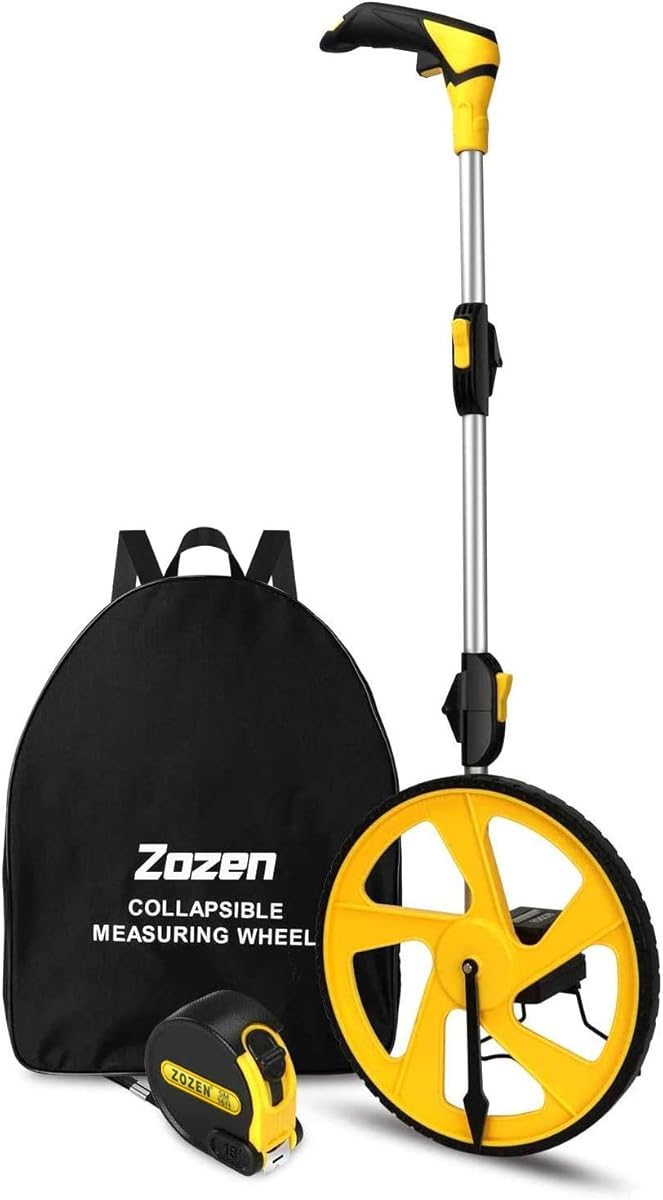
| Measuring wheel | Physically measures a loop or trail segment for a true reference | Coaches, interval routes and off-road loops | Cheap accuracy check; awkward on rough ground |
| Phone armband | Keeps your phone's GPS antenna stable and unobstructed | Runners using a phone app instead of a watch | Simple fix for pocket-GPS errors; not a substitute for a watch |

Garmin Forerunner
The Forerunner family is the default answer for most runners because it combines GPS, indoor modes and a usable map trace in one watch. It suits anyone who wants to check their route line after a run and compare outdoor and treadmill sessions in one place. Skip it if you only run the same measured loop and already own a phone app you trust.
Stryd foot pod
A foot pod gives you a second distance source that keeps working when GPS drops out under trees, in city canyons or on a treadmill. It suits runners who train by pace and care about consistency across indoor and outdoor sessions. Most casual runners should skip it, since it needs calibration and adds a subscription-style layer of data they will never use.

Polar Verity Sense
This arm-worn optical sensor is a comfortable alternative to a chest strap and pairs with phones and watches for heart rate alongside basic session tracking. It suits runners who find chest straps irritating and want one less piece of hardware. It is not a GPS device, so skip it if distance accuracy is your main problem rather than heart rate comfort.
Garmin HRM-Pro Plus
This chest strap records running dynamics and can supply treadmill distance when paired with a compatible watch, which removes the guesswork from indoor sessions. It suits treadmill-heavy runners who already live in the Garmin ecosystem. Skip it if you run mostly outdoors with clean GPS, where it adds little to distance accuracy.

Measuring wheel
A measuring wheel lets you walk a loop or trail segment and get a physical reference distance that no satellite can argue with. It suits coaches setting interval routes and runners who suspect a favourite loop is not the length they think. Skip it for road running on busy routes, where it is impractical and slightly absurd.
Phone armband
An armband keeps your phone's antenna facing the sky instead of bouncing around in a pocket or bag, which noticeably cleans up the GPS trace. It suits runners who use a phone app as their only tracker. Skip it if you already wear a watch, since carrying both is unnecessary weight.
Common mistakes
- Starting the watch before it has locked satellites, which produces a wandering first kilometre.
- Trusting the treadmill console without ever calibrating it against an outdoor run.
- Comparing GPS distance and treadmill distance directly and concluding fitness has changed.
- Ignoring the map trace and only reading the final number.
- Measuring a route once and treating that figure as permanent, when GPS error varies day to day.
FAQ
Why does my watch show a longer distance than the same route mapped online?
Small GPS errors add up as extra wiggles in the line, so recorded distance usually runs slightly high. A gap of one to two percent is normal; a much bigger gap suggests a poor satellite lock or a route that differs from what you mapped.
How accurate is treadmill distance?
It depends on belt speed and your stride, and most consoles are approximate rather than precise. Calibrating a foot pod or watch against an outdoor run gives you a correction factor that makes indoor sessions comparable.
Can I measure distance with just my phone?
Yes, phone apps use the same GPS signals as watches and are fine for most road running. Keep the phone in an armband or hand rather than a bag, and check the map trace afterwards to catch obvious errors.
Does a foot pod work without GPS?
A foot pod measures motion directly, so it keeps working indoors and in places where satellites struggle. It needs calibrating against a known distance to be accurate, and that calibration should be refreshed as your stride changes.
How often should I recheck my usual route distance?
Once or twice a season is plenty, or any time you change device or app. Rechecking after a big jump in distance or pace is also sensible, since it rules out a measurement problem before you blame your training.
Is a measured track more accurate than GPS?
A standard track is a surveyed distance, so yes, it is more accurate than consumer GPS for intervals and time trials. Use it when you need a true reference, and use GPS for everyday route running where convenience matters more.
Getting an honest distance number is less about buying the most expensive watch and more about picking the right method and checking it occasionally. Calibrate what needs calibrating, glance at the map trace, and keep a note of how each figure was produced. Do that and your weekly totals will finally mean something.
As an Amazon Associate we earn from qualifying purchases.
Related guides
More step-by-step guides on this topic are collected in the fitness archive.







