Google DeepMind's Gemini 4 Argon AI has achieved a remarkable feat: completing Minecraft from start to finish in just 27 hours and 14 minutes, with four agents controlled by the model defeating the Ender Dragon. This milestone, detailed in a paper on arXiv, underscores the growing capabilities of AI in complex, open-ended games.
Minecraft, a sandbox game beloved for its creativity and freedom, has long been a benchmark for AI. DeepMind's achievement is notable because the agents played without human intervention and without built-in Minecraft-specific tools or strategies. Instead, they relied on the large language model's general reasoning and planning abilities.
Find Original, High-end Home Decor that spark conversation at Grand Goldman Shop.
How the Gemini 4 Argon Agents Conquered Minecraft
The experiment took place in a randomly generated world on easy difficulty, with cheat commands disabled. Each of the four agents controlled a separate player character through Mineflayer, an open-source library for creating Minecraft bots. The agents were given only the goal to kill the Ender Dragon, with no further instructions.
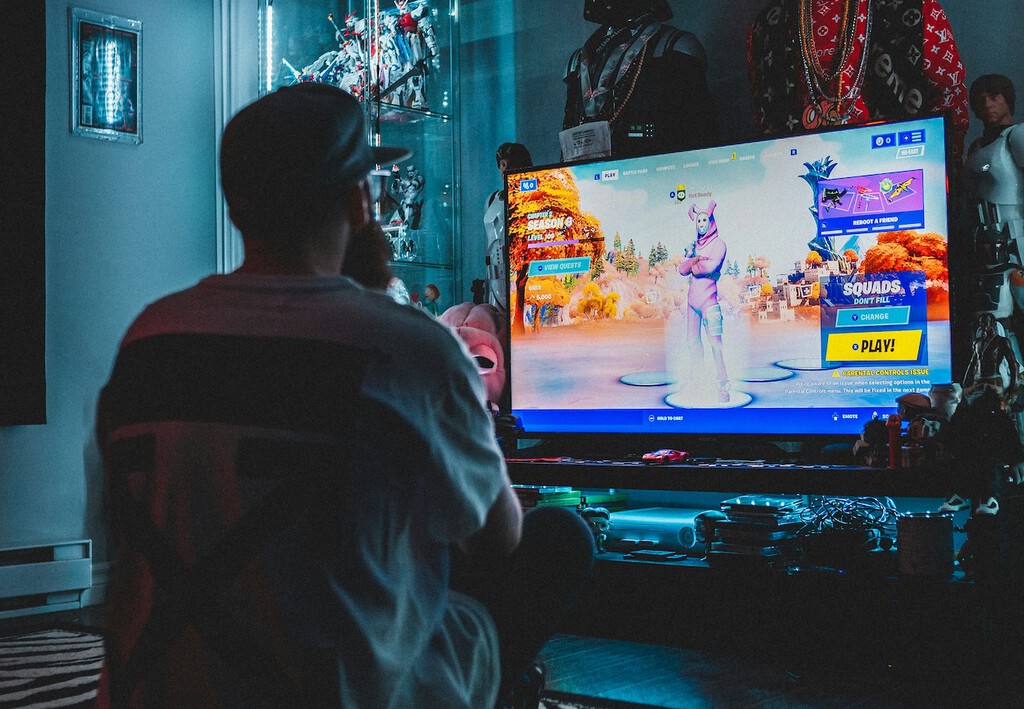
What makes this feat impressive is that the agents had to learn and adapt on the fly. They gathered resources, crafted tools, navigated the game's complex crafting tree, and ultimately confronted the final boss. The agents used a technique called "vibecoding" to write code on the fly, demonstrating advanced problem-solving and creativity.
Why Minecraft Is a Tough Test for AI
Minecraft is not a simple game with fixed rules; it's an open world where players must set their own subgoals and explore. This makes it an ideal testbed for AI that aims to exhibit general intelligence. Unlike board games like chess or Go, Minecraft requires long-term planning, resource management, and spatial reasoning.
Previous AI attempts at Minecraft have often relied on hard-coded knowledge or simplified environments. DeepMind's approach, using a general-purpose language model, represents a step toward more flexible and autonomous AI systems.
The Significance of the 27-Hour Run
Completing Minecraft in 27 hours is impressive not just for the speed but for the autonomy demonstrated. The agents had no prior training specific to Minecraft; they leveraged the model's pretrained knowledge and reasoning capabilities. This suggests that large language models can be applied to complex, sequential decision-making tasks without extensive fine-tuning.
However, there are caveats. The agents played on easy difficulty, which reduces the threat from hostile mobs. They also had access to Mineflayer, which provides a high-level API for controlling the game, abstracting away some low-level actions. Nevertheless, the achievement marks a significant advance in AI's ability to tackle open-ended problems.
Implications for AI Research and Gaming
This success has implications beyond gaming. It shows that AI can learn to solve complex tasks in dynamic environments, which could translate to real-world applications like robotics, logistics, and software automation. For the gaming industry, it opens possibilities for more intelligent NPCs and automated testing. Context on how this played out before sits in Google DeepMind's Gemini 4 Argon AI Beats Minecraft in 27 Hours.
DeepMind's work also highlights the potential of using games as benchmarks for AI progress. As models become more capable, they can be tested in increasingly challenging virtual worlds, providing a safe and controlled environment for evaluation. The background to this story is set out in Gemini 4 Argon: Google's New AI Beast for Code, Science, Finance. A related thread runs through AI Model Beats Standard Methods at Predicting Cyclones.
What's Next for AI in Gaming?
The achievement raises the bar for what AI can do in games. Future research might focus on harder difficulties, multiplayer scenarios, or games with even greater complexity. DeepMind's Gemini 4 Argon is already available to paid subscribers, and its capabilities are likely to improve. Earlier coverage in Commonwealth Games 2026 Netball Upset: Jamaica Beats Australia shows how the argument developed. A closer look at the same subject appears in Gaming: latest articles.
As AI continues to advance, we can expect more impressive feats in gaming and beyond. The line between human and AI performance in complex tasks is blurring, and the implications are profound. Anyone following the wider picture can start with AI Productivity Suites in 2026: How to Choose the Right One. The same theme surfaces in Google's AI Chip in Space: Testing Data Center Viability, which takes a different angle.
Key Takeaways
- Four Gemini 4 Argon agents completed Minecraft in 27 hours and 14 minutes, defeating the Ender Dragon.
- The agents played without human intervention or Minecraft-specific tools, relying on the model's general reasoning.
- The experiment was conducted on easy difficulty with cheat commands disabled, using Mineflayer for control.
- This milestone demonstrates AI's growing ability to solve open-ended, long-horizon tasks.
- Potential applications extend to robotics, automated testing, and more intelligent game NPCs.
Comparison of AI Achievements in Games
| Game | AI System | Year | Key Achievement |
|---|---|---|---|
| Chess | Deep Blue | 1997 | Defeated world champion Garry Kasparov |
| Go | AlphaGo | 2016 | Defeated world champion Lee Sedol |
| Dota 2 | OpenAI Five | 2018 | Defeated professional human team |
| Minecraft | Gemini 4 Argon agents | 2025 | Completed game in 27 hours |
FAQ
How did the Gemini 4 Argon agents complete Minecraft?
The agents used the Mineflayer library to control characters and relied on the model's reasoning to gather resources, craft tools, and ultimately defeat the Ender Dragon. They played on easy difficulty with cheats disabled.
What is the significance of this achievement?
It demonstrates that large language models can autonomously solve complex, open-ended tasks without domain-specific training, which could lead to advancements in AI for real-world applications.
Were there any limitations to the experiment?
Yes, the agents played on easy difficulty and used Mineflayer, which abstracts some low-level actions. Future tests on harder difficulties would be more challenging.
What does this mean for the future of AI in gaming?
It suggests that AI could be used to create more intelligent game characters, automate testing, and provide new ways to benchmark AI capabilities. The line between human and AI performance in games continues to blur.
For those following the leadership changes at DeepMind, the recent Google DeepMind CEO steps down news provides context on the company's evolving strategy. The shift comes as DeepMind pushes boundaries in AI research, including this Minecraft feat.
Understanding the Google DeepMind leadership shift: Hassabis steps down as CEO helps explain the backdrop of this achievement. As the organization adapts, its technical milestones continue to impress.
The gaming community is abuzz with the potential of AI to revolutionize how games are played and developed. This Minecraft milestone is just one example of how AI is reshaping the landscape, and it will be exciting to see what comes next.
Browse the Shop
 Acacia frida deluxe solid wood bed frame |
Bedroom bench |
Bed chest drawers |
Lingerie dresser |
Frame base |
Mirror with jewelry storage |
30 Bathroom Vanity |
Memory foam queen mattress |
Mattresses for back pain |
Nightstand set of 2 |
Grand Goldman Shop |
Civil Lawyer
Deutschland Trikot WM 2026