

Margaret Hamilton, the NASA software engineer whose code guided Apollo 11 to the Moon, has died at 90. Hamilton led the team that developed the onboard flight software for the Apollo missions, and her work became a cornerstone of modern software engineering.
She is perhaps best known for the iconic photograph showing her standing next to a towering stack of printed code, a visual reminder of the scale of the challenge. But her legacy goes far beyond that image: Hamilton's foresight and technical brilliance saved the Apollo 11 landing from near-disaster and established principles that still guide software development today.
Find Original, High-end Home Decor that spark conversation at Grand Goldman Shop.
From Mathematics to Mission-Critical Code
In 1961, NASA contracted the MIT Instrumentation Laboratory to develop the guidance system for its spacecraft. Hamilton, a young mathematician who had already made her mark developing weather prediction software, joined the project when software engineering was barely recognized as a profession.
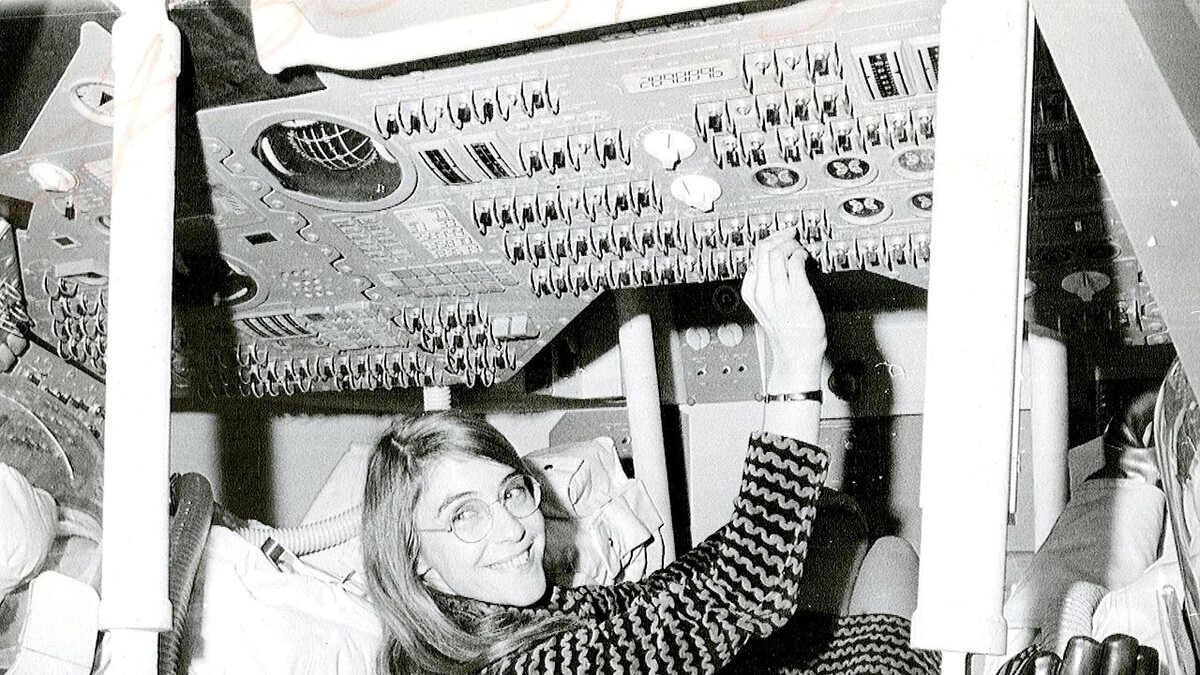
Just a few years later, she was leading the team responsible for the Apollo navigation software. In an era when programming meant punching holes in cards that were processed overnight on room-sized computers, Hamilton and her colleagues built the system that would guide astronauts to the lunar surface.
The Software That Saved Apollo 11
The Apollo 11 computer had extremely limited memory: only 36,864 words of fixed memory and 2,048 words of erasable memory for working data. Every instruction had to be meticulously crafted and tested.
During the descent to the Moon, the computer was overloaded with data from a rendezvous radar that had been inadvertently left on. Hamilton's software, designed with robust error detection and recovery, recognized the overload and prioritized the most critical tasks, allowing the landing to proceed. That moment demonstrated the value of her insistence on rigorous testing and fail-safe design.
Her approach included simulating scenarios and building in safeguards that were unusual for the time. She advocated for what we now call software reliability engineering, and her team's work laid the foundation for the discipline.
Why Margaret Hamilton's Work Still Matters
Hamilton's contributions extend far beyond the Apollo program. She coined the term software engineering and championed the idea that software development should be treated with the same rigor as hardware engineering.
Her legacy is evident in every modern system that requires high reliability, from aviation to medical devices. The principles she pioneered—error detection, priority scheduling, and rigorous testing—are now standard practice.
- Pioneering role: Hamilton led the development of the Apollo onboard flight software, a critical component of the Moon landing.
- Disaster averted: Her software's error-handling capabilities prevented the Apollo 11 landing from being aborted.
- Term creator: She popularized the term "software engineering" and fought for its recognition as a legitimate engineering discipline.
- Enduring influence: Her emphasis on reliability and testing continues to shape software development today.
- Recognition: Hamilton received the Presidential Medal of Freedom in 2016 for her contributions to space exploration.
Comparing Apollo Software Constraints to Modern Systems
The contrast between the Apollo computer's limitations and today's computing power is stark. Yet the challenges Hamilton faced—managing complexity, ensuring reliability, and operating within tight constraints—remain relevant. The background to this story is set out in Coworker Makes Insensitive Remarks About Woman Whose Son Has Just Died, Gets Fired. A related thread runs through Employer Asks If They Are Wrong For Firing An Employee Whose Parents Died. Earlier coverage in NASA Tang Myth: The Most Profitable Space Misunderstanding shows how the argument developed.
| Aspect | Apollo Guidance Computer (1969) | Modern Smartphone (2020s) |
|---|---|---|
| Memory (fixed) | 36,864 words (approx. 72 KB) | 64 GB or more |
| Clock speed | 2.048 MHz | 2+ GHz |
| Programming method | Punched cards, hand-assembled code | High-level languages, integrated development environments |
| Error handling | Custom priority scheduling and recovery routines | Advanced operating systems and frameworks |
Despite the technological gap, the core lesson from Hamilton's work is that thoughtful design and rigorous testing are timeless. Modern software engineers still grapple with the same fundamental questions of reliability and safety. A closer look at the same subject appears in Flying into Wellington: Landing in the World's Windiest City. Anyone following the wider picture can start with Spacecraft Rescue Mission for NASA Telescope Fails. The same theme surfaces in Ex-Nasa Astronauts Launch Voting Campaign to Restore Democracy, which takes a different angle.
What to Watch Next
As we remember Margaret Hamilton, her story serves as a reminder of the often-overlooked contributions of women in science and technology. Her life's work not only enabled one of humanity's greatest achievements but also paved the way for future generations of software engineers. Context on how this played out before sits in Nasa Eclipse Air Mission: Rare Data Capture Over Iceland. A companion piece, NASA Behavioral Health Scientist: Morning Routine and Work, approaches the same subject from another angle.
Those interested in space history might also enjoy our coverage of other space milestones and personalities. For instance, you can read about celebrity stories that highlight the human side of exploration. And if you're fascinated by the technology behind space missions, our gaming section often features simulations that bring these challenges to life.
Hamilton's passing is a moment to reflect on how software has become integral to our lives. From the car you drive to the energy utilities that power your home, software reliability is paramount. Her legacy lives on in every system that must work flawlessly.
FAQ
What was Margaret Hamilton's role in the Apollo missions?
Margaret Hamilton led the team that developed the onboard flight software for the Apollo missions. Her software was responsible for navigation and guidance, and it played a crucial role in the successful landing of Apollo 11.
How did Hamilton's software save Apollo 11?
During the lunar descent, the computer became overloaded due to a radar switch left on. Hamilton's software detected the overload and prioritized critical tasks, allowing the landing to proceed safely.
Why is Margaret Hamilton considered a pioneer of software engineering?
She coined the term "software engineering" and advocated for treating software development with the same rigor as hardware engineering. Her work established principles of reliability and error handling that are still used today.
What recognition did Margaret Hamilton receive?
In 2016, she was awarded the Presidential Medal of Freedom for her contributions to space exploration and software engineering. She also received numerous other awards and honors throughout her career.
Browse the Shop
 Acacia frida deluxe solid wood bed frame |
Bedroom bench |
Bed chest drawers |
Lingerie dresser |
Frame base |
Mirror with jewelry storage |
30 Bathroom Vanity |
Memory foam queen mattress |
Mattresses for back pain |
Nightstand set of 2 |
Grand Goldman Shop |
Civil Lawyer
Deutschland Trikot WM 2026










