

In 1919, a solar eclipse provided the first experimental proof of Einstein's general theory of relativity, overturning Newton's long-held law of gravity. This pivotal moment in science not only confirmed Einstein's radical ideas but also changed how we understand the cosmos. The story of how a British astronomer used a celestial event to settle one of physics' greatest debates is a fascinating chapter in scientific history.
The Two Theories of Gravity
For over two centuries, Newton's law of universal gravitation was the accepted explanation for how objects attract each other. Newton proposed that gravity is a force that acts instantaneously between masses, depending only on their mass and distance. His theory successfully predicted the motions of planets and falling objects on Earth, making it a cornerstone of classical physics.
Find Original Home Decor sparking conversation at Grand Goldman Shop.

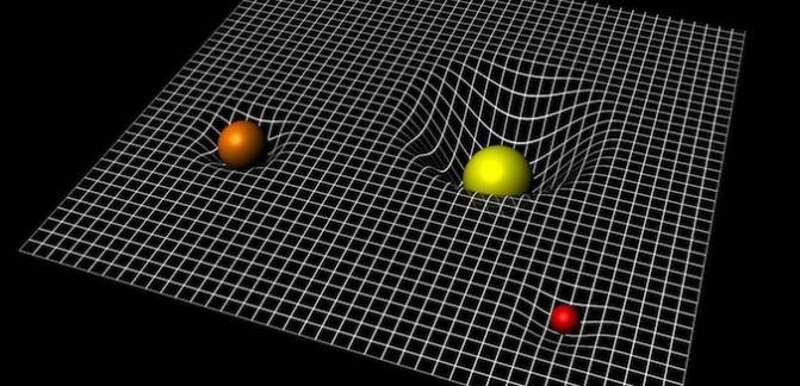
In 1915, Albert Einstein introduced his general theory of relativity, which offered a completely different perspective. Instead of a force, Einstein described gravity as the curvature of spacetime caused by mass and energy. Objects follow curved paths in this spacetime, which we perceive as gravitational attraction. This theory also predicted that light would be bent by gravity, a phenomenon not accounted for by Newtonian physics.
Einstein's Challenge: Proving General Relativity
Einstein's theory was met with interest but also skepticism. Many physicists were reluctant to abandon Newton's well-established framework, which had served science well for so long. To convince the scientific community, Einstein needed observational evidence that could distinguish between the two theories.
The key difference lies in the predicted deflection of light by a massive object like the Sun. Newtonian gravity, if it affected light at all (assuming light has mass), would predict a certain deflection. General relativity predicted a deflection twice as large. Measuring this deflection during a solar eclipse would provide a decisive test.
The 1919 Eclipse Expedition
The opportunity came on May 29, 1919, when a total solar eclipse would be visible from parts of South America and Africa. During totality, the Moon blocks the Sun's bright light, making it possible to observe stars near the Sun's edge. If Einstein was right, the positions of these stars would appear shifted due to the Sun's gravitational lensing effect.
British astronomer Arthur Eddington led two expeditions: one to Sobral in Brazil and another to the island of Príncipe off the west coast of Africa. Despite challenging conditions, including clouds and equipment issues, the teams successfully photographed the eclipse and the surrounding stars. After months of analysis, Eddington announced that the observations matched Einstein's prediction, not Newton's. The background to this story is set out in Einstein Was Right: Black Hole Image Confirms Relativity. A related thread runs through Einstein's 90-Year Math Puzzle Solved by Spanish Researcher. Earlier coverage in Einstein's Relativity Still Holds: Neutrino Test Finds No Violation shows how the argument developed.
Why the 1919 Eclipse Mattered
The results made headlines worldwide, catapulting Einstein to fame. But more importantly, they marked a paradigm shift in physics. General relativity became the leading theory of gravity, and its predictions have since been confirmed by numerous experiments and observations, from the orbit of Mercury to the existence of black holes. A closer look at the same subject appears in Isaac Newton's Tower Drop Puzzle: The Counter-Intuitive Solution. Anyone following the wider picture can start with Isaac Newton's Tower Drop Puzzle: The Counterintuitive Answer. The same theme surfaces in Marie Curie and Einstein's 20-Year Letters Revealed, which takes a different angle.
The 1919 eclipse also demonstrated the power of international collaboration in science, as Eddington, a British Quaker, worked with German scientists shortly after World War I. It highlighted how astronomical events can serve as natural laboratories for testing fundamental physics. Context on how this played out before sits in Einstein's 1923 Spain Tour: The Relativy Tour That Made Him a Superstar. A companion piece, 300 TeV Photon Challenges Einstein's Lorentz Invariance, approaches the same subject from another angle.
Key Takeaways from the Eclipse Experiment
- Einstein's general relativity predicted light bending twice as much as Newtonian gravity.
- The 1919 solar eclipse provided the first observational evidence for general relativity.
- Arthur Eddington's expeditions to Brazil and Africa successfully measured starlight deflection.
- The results were announced in November 1919, making Einstein a global celebrity.
- This experiment solidified the shift from Newtonian to relativistic gravity.
Comparing the Theories: Newton vs. Einstein
| Aspect | Newton's Gravity | Einstein's General Relativity |
|---|---|---|
| Nature of Gravity | Force between masses | Curvature of spacetime |
| Role of Energy | Not considered | Mass and energy both curve spacetime |
| Speed of Gravity | Instantaneous | Speed of light |
| Light Deflection | Half of Einstein's prediction (if any) | Double Newton's prediction |
| Experimental Proof | Various terrestrial tests | 1919 eclipse and later tests |
Frequently Asked Questions
What did the 1919 eclipse prove?
The 1919 eclipse provided evidence that light from stars is bent by the Sun's gravity by an amount predicted by Einstein's general relativity, not Newton's law. This confirmed that gravity is a curvature of spacetime.
Who led the 1919 eclipse expedition?
The expedition was led by British astronomer Arthur Eddington, who organized two teams to observe the eclipse from Brazil and the island of Príncipe.
Why was the 1919 eclipse important for Einstein's fame?
The dramatic confirmation of his theory made headlines worldwide, turning Einstein into a household name and cementing his reputation as a genius.
Does Newton's theory still apply?
Yes, Newton's law remains highly accurate for most everyday situations and is still used for many practical calculations. However, general relativity is necessary for extreme conditions and high precision.
The 1919 eclipse was more than a spectacle; it was a scientific revolution. It demonstrated that even the most established theories can be overturned by observation and bold thinking. As we continue to explore the universe, the lessons from this event remind us of the importance of testing our ideas against reality.
Browse the Shop
 Acacia frida deluxe solid wood bed frame |
Bedroom bench |
Bed chest drawers |
Lingerie dresser |
Frame base |
Mirror with jewelry storage |
30 Bathroom Vanity |
Memory foam queen mattress |
Mattresses for back pain |
Nightstand set of 2 |
Grand Goldman Shop |
Civil Lawyer
Deutschland Trikot WM 2026







