

A queen size mattress typically costs anywhere from roughly €150 for a basic foam model to over €2,000 for a premium hybrid or latex bed, with most mainstream queen mattresses landing in the €400–€1,200 range. The number you pay depends far more on materials, thickness and brand positioning than on the queen size itself.
Queen is the most popular mattress size in Europe and North America, which is exactly why pricing is so scattered. Below is a step-by-step way to work out what a queen should cost for your needs, plus the gear that makes the whole process less painful.
Find Original Home Decor sparking conversation at Grand Goldman Shop.


Step by step
1. Confirm that queen is the right size before you price anything
A queen mattress is generally 150 x 200 cm in Europe and 60 x 80 inches in the US, so check which standard the retailer is using. If two adults share a bed, a queen is the practical minimum; if you are tall or restless, a king may cost only modestly more per night of use.
2. Separate the mattress price from the total sleep cost
The mattress is only one line item. Add a foundation or bed frame, a mattress protector, pillows and delivery, because these can easily add a few hundred euros to the real total.
Budget for the whole setup up front rather than discovering the extras at checkout. A cheap queen on a bad base often costs more over time than a mid-range queen on a proper one.
3. Map materials to price bands
Basic polyurethane foam sits at the bottom of the market, memory foam and pocket-spring hybrids sit in the middle, and latex, dense hybrid and hand-finished models sit at the top. Price tracks material density and spring count more reliably than it tracks brand fame.
Thickness is a useful shortcut: a 15 cm foam queen and a 30 cm hybrid queen are not competing products, whatever the marketing says. Expect thinner mattresses to cost less and last fewer years.
4. Compare like-for-like using cost per year, not sticker price
Divide the price by the realistic lifespan: roughly 6–8 years for budget foam, 8–10 for a good hybrid, and 10–15 for quality latex. A €900 hybrid lasting ten years costs less per year than a €400 foam bed replaced every five.
This reframing also exposes suspiciously cheap queens, which often use lower-density foam that softens within a couple of years. Write the annual figure down next to each candidate.
5. Check what delivery, trial and returns actually include
Many online queen mattresses ship compressed in a box, which is cheaper to deliver but needs a few hours to expand. Confirm whether old-mattress removal, upstairs delivery and return pickup are included or charged separately, since these swing the real price.
Read the trial terms carefully: some "100-night" offers require you to keep the mattress a minimum period, and return shipping may be deducted. A slightly higher price with free returns can be the cheaper option.
6. Set a realistic ceiling and stick to it
Decide your maximum before browsing, then filter by size, firmness and material rather than starting with the most expensive models. Most sleepers get genuinely better sleep from correct firmness and support than from a higher price bracket.
If a sale price seems unusually low for the specification, check the foam density and warranty length before assuming it is a bargain. A long warranty on a thin mattress is rarely worth much.
Gear that makes this easier
| Product | What it solves | Best for | Verdict |
|---|---|---|---|
| Amazon Basics mattress protector | Protects the new mattress and keeps the warranty valid | Anyone buying a queen on a budget | Cheap insurance, buy with the mattress |
| Utopia Bedding pillows | Completes the setup without wrecking the budget | Guest rooms and first apartments | Solid value, replace sooner than premium pillows |
| Zinus bed frame | Gives the queen a proper flat, ventilated base | Renters and boxed-mattress buyers | Good entry point, check weight limits |
| Heavy-duty mattress bag | Keeps the old or new queen clean during moves and returns | Anyone returning a trial mattress | Cheap and genuinely useful |
| Tape measure | Confirms queen dimensions and door clearance | Every buyer before ordering | Skip and you risk a mattress that will not fit |
| Queen-size linen sheets | Correct fit for a 150 x 200 cm mattress | Hot sleepers upgrading bedding | Worth it, but buy after the mattress arrives |

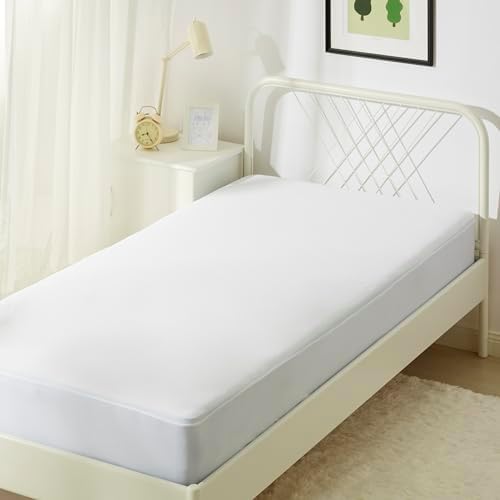
Amazon Basics mattress protector
This suits anyone spending real money on a queen who wants to keep stains and dust mites off it and preserve the warranty. Skip it if you already own a waterproof protector that fits a 150 x 200 cm mattress.
Utopia Bedding pillows
These suit budget setups where the mattress has eaten most of the spend and you still need decent pillows on day one. Skip them if you have neck pain or sleep hot, since you will want a more supportive or cooling option.

Zinus bed frame
This suits renters and boxed-mattress buyers who need a simple, ventilated base at a low price. Skip it if you need heavy-duty support for a dense hybrid or latex queen, where a sturdier frame pays off.
Heavy-duty mattress bag
This suits anyone trialling a mattress at home or moving a queen between flats, keeping it clean and easy to handle. Skip it if the mattress stays put and never needs transporting.
Tape measure
This suits every buyer, because queen sizing varies between standards and stairwells are unforgiving. Skip it only if you have already measured the room, the frame and the delivery route.
Queen-size linen sheets
These suit hot sleepers who want breathable bedding that fits a 150 x 200 cm queen properly. Skip them if you are still trialling the mattress, since you may end up returning the bed.

Common mistakes
- Comparing a queen to a king without dividing by years of use, which makes mid-range beds look expensive.
- Forgetting the foundation, protector, pillows and delivery when setting the budget.
- Assuming a low price means a bargain without checking foam density and warranty length.
- Buying bedding before confirming the exact queen dimensions the retailer uses.
- Choosing firmness by price bracket rather than by how you actually sleep.
FAQ
Is a queen mattress more expensive than a double?
Yes, generally by a modest margin, because a queen uses more material and more springs. The gap is usually smaller than the jump from queen to king.
Why do two queen mattresses cost wildly different amounts?
Materials, density, thickness and warranty drive the difference far more than size. A latex or dense hybrid queen uses considerably more expensive components than a basic foam one.
Can I get a decent queen mattress cheaply?
Yes, if you accept a shorter lifespan and a simpler build. Budget foam queens can sleep fine for a few years, especially for lighter sleepers and guest rooms.
Does a boxed queen mattress cost less?
Often slightly less, because compressed shipping is cheaper and there is no showroom. The trade-off is that you cannot try it in store and must rely on the trial period.
Should I pay extra for a longer warranty?
Only if the mattress specification justifies it. A ten-year warranty on low-density foam rarely translates into ten years of comfortable sleep.
How much should I set aside beyond the mattress?
Plan for a frame or foundation, a protector, pillows and delivery. Treat these as part of the queen budget rather than afterthoughts.
Work out the cost per year, match materials to how you actually sleep, and price the whole setup rather than the mattress alone. Done that way, a queen is one of the better-value sizes you can buy.
As an Amazon Associate we earn from qualifying purchases.
Related guides
More step-by-step guides on this topic are collected in the sleep archive.







