

ASML, the Dutch semiconductor equipment giant, reported that it sold zero lithography machines in Europe during the second quarter of 2026. The revelation came from Frank Heemskerk, ASML's executive vice president, who stated at an event in Amsterdam: "We don't sell a single euro's worth in Europe. That happens because Europe doesn't invest in it and because no chip factories are being built here." The statement underscores a stark paradox: Europe is home to the world's most critical chipmaking equipment supplier, yet the continent itself is not buying its products.
This isn't just a minor blip. ASML's machines are essential for manufacturing the most advanced semiconductors, and the lack of European sales highlights how the region has fallen behind in semiconductor manufacturing capacity. While ASML remains a technological jewel, its sales map paints a picture of Europe's industrial weakness.
Find Original, High-end Home Decor that spark conversation at Grand Goldman Shop.
ASML's Sales Map: Where the Machines Go
ASML's official figures for the second quarter show total revenue of €6.6 billion from lithography systems. Of that, 43% went to South Korea, 30% to Taiwan, 14% to China, and the remainder to other regions—but none to Europe. This distribution reflects the global concentration of chip manufacturing in Asia, where countries like South Korea and Taiwan have invested heavily in fabs.
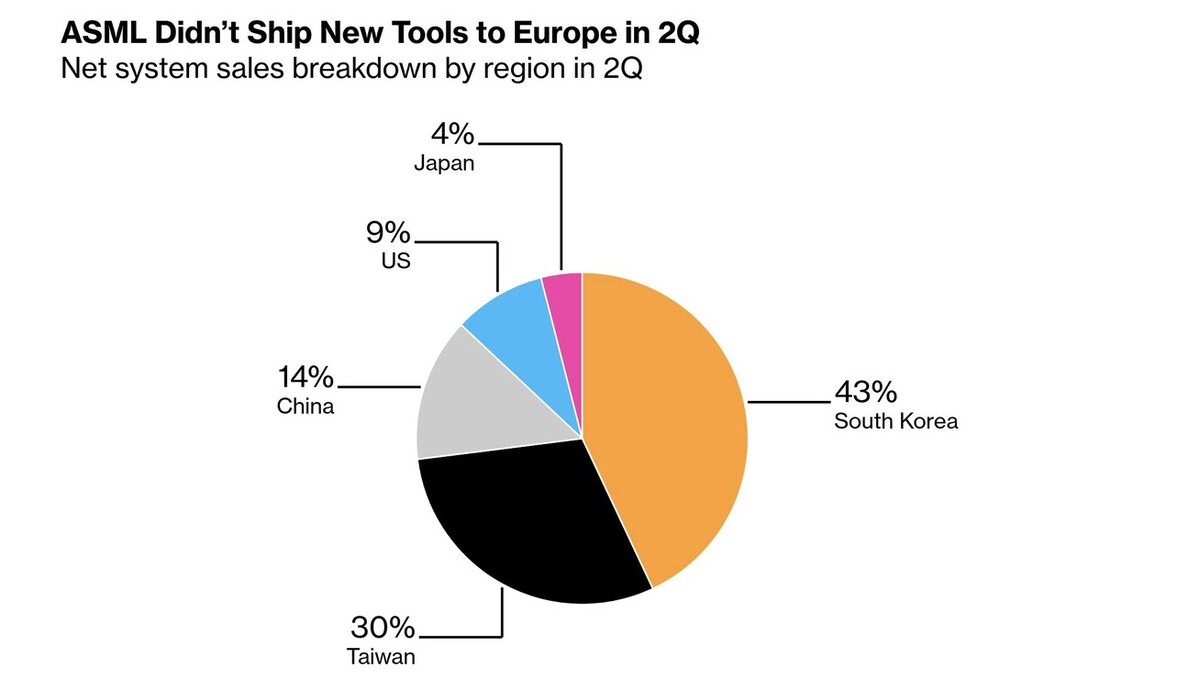
The zero percent figure specifically refers to sales of lithography machines, not ASML's total revenue. ASML does have customers and activity in Europe, but the lack of equipment sales is a telling indicator. It means that no new advanced chip fabrication plants are being equipped in Europe, which has long-term implications for the region's technological sovereignty.
Why Europe Isn't Buying ASML Machines
The reasons are twofold, according to Heemskerk: Europe isn't investing in chip manufacturing, and no new fabs are being built. While the European Union has announced initiatives like the European Chips Act to boost semiconductor production, the actual construction of leading-edge fabs has lagged. Building a cutting-edge chip factory requires billions of euros and years of planning, and Europe has been slow to attract such investments.
In contrast, South Korea and Taiwan are home to giants like Samsung and TSMC, which continuously expand their advanced node capacity. China, despite export restrictions, remains a significant market for ASML's older-generation equipment. Europe, meanwhile, lacks a major player in leading-edge chip manufacturing, leaving ASML without local customers for its most advanced systems.
The Paradox of ASML: A European Jewel with Global Customers
ASML is often cited as a symbol of European technological prowess. Its extreme ultraviolet (EUV) lithography machines are unmatched, and the company holds a near-monopoly in this critical segment. Yet the paradox is that Europe benefits from ASML's success indirectly—through jobs, R&D, and tax revenue—but not through the actual use of its machines in local production.
This disconnect raises questions about the effectiveness of Europe's industrial policy. If the continent can produce the world's most advanced chipmaking equipment but cannot attract the factories that use them, it risks losing out on the economic and strategic benefits of semiconductor manufacturing.
What This Means for Europe's Chip Ambitions
The European Chips Act aims to double Europe's share of global chip production to 20% by 2030. However, without significant investment in fabs, that goal appears increasingly distant. ASML's zero sales in Europe serve as a wake-up call: building a semiconductor ecosystem requires not just equipment makers but also manufacturers willing to invest.
Some European countries, like Germany, have attracted fab investments from Intel and TSMC, but these projects are still in early stages. Until they become operational, ASML's European sales are likely to remain minimal. The company's success story is a reminder of what Europe can achieve, but also of what it is missing. The background to this story is set out in Technology: latest articles.
Key Takeaways
- ASML sold no lithography machines in Europe in Q2 2026, with all sales going to Asia.
- The zero percent figure highlights Europe's lack of advanced chip manufacturing capacity.
- South Korea, Taiwan, and China are the main markets for ASML's equipment.
- Europe's Chips Act aims to boost production but faces challenges in attracting fab investments.
- ASML's paradox: a European tech leader whose products are absent from its home continent.
ASML's Regional Sales Breakdown (Q2 2026)
| Region | Share of Lithography System Sales |
|---|---|
| South Korea | 43% |
| Taiwan | 30% |
| China | 14% |
| Other regions (excluding Europe) | 13% |
| Europe | 0% |
Note: Percentages are based on total revenue of €6.6 billion from lithography systems in Q2 2026. The "Other regions" category includes the Americas, Japan, and Southeast Asia. A related thread runs through Inside Huawei's Ox Horn Campus: Smartwatch Innovation and Future Plans. Earlier coverage in ASML's Zero Europe Sales Show Europe's Chip Industry Gap shows how the argument developed.
FAQ
Did ASML really sell nothing in Europe?Yes, ASML sold zero lithography machines in Europe during the second quarter of 2026. This means no new chip fabrication plants in Europe purchased ASML's equipment in that period. However, ASML does have other business activities in Europe, but the equipment sales were zero.
Why is Europe not buying ASML machines?According to ASML executive Frank Heemskerk, Europe is not investing in chip manufacturing and no new fabs are being built. Without local fabs, there is no demand for ASML's lithography systems, which are used to produce advanced chips.
What are the implications for Europe's semiconductor industry?The lack of ASML equipment sales in Europe signals a broader weakness in the region's chip manufacturing capacity. While Europe excels in equipment production, it lags in fabricating chips, which could hinder its technological sovereignty and economic competitiveness.
Is ASML's zero Europe sales a one-time event?It's too early to tell, but the trend has been consistent: Europe has not been a significant market for ASML's lithography systems. Without new fab construction, the situation is unlikely to change in the near term.
Browse the Shop
 Acacia frida deluxe solid wood bed frame |
Bedroom bench |
Bed chest drawers |
Lingerie dresser |
Frame base |
Mirror with jewelry storage |
30 Bathroom Vanity |
Memory foam queen mattress |
Mattresses for back pain |
Nightstand set of 2 |
Grand Goldman Shop |
Civil Lawyer
Deutschland Trikot WM 2026










