

Google has signaled that Bitcoin cryptography may be vulnerable to quantum attacks sooner than most people assume. In a recent publication, the company's Quantum AI team warned that quantum computers will pose a significant threat to current cryptographic standards. More strikingly, Google claims it knows how to break Bitcoin's cryptography using quantum computing — and that transactions could be intercepted before the blockchain verifies them.
This is not a distant sci-fi scenario. It is a technical warning from one of the world's most advanced quantum research teams, and it has direct implications for anyone holding digital assets.
Find Original Home Decor sparking conversation at Grand Goldman Shop.

What Google Actually Said About Bitcoin Cryptography
Google's Quantum AI division focuses on researching quantum technology and how to defend against it. In its recent post, the team stated plainly that quantum computers represent a significant threat to existing cryptographic standards. That includes the elliptic curve cryptography that secures Bitcoin wallets and transactions.
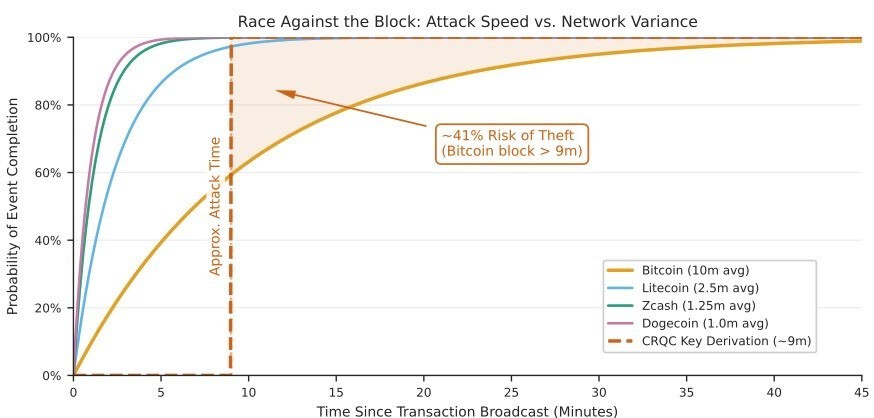
The most alarming detail is the claim that quantum machines could intercept transactions before the blockchain verifies them. That means an attacker might not need to wait for a wallet to be cracked over time — they could strike in the brief window when a transaction is broadcast but not yet confirmed.
Why Google's 2029 Post-Quantum Deadline Matters
Google has set an ambitious internal goal: all of its systems will be prepared for the post-quantum cryptography era by 2029. This does not mean quantum computers will be everywhere in three years. It is a self-imposed deadline to migrate security systems to post-quantum cryptography (PQC).
PQC is a higher layer of security designed to resist attacks from quantum computers. It ensures that data such as keys and digital signatures remain encrypted long-term. A classical computer would take centuries to break these ciphers, but a quantum computer could do it in moments.
The threat is closer than it looks
Google's message is that quantum frontiers are nearer than they appear. The company is actively preparing, and that preparation itself is a signal. When a firm with Google's resources sets a deadline for PQC migration, it is telling the market that the risk is real and the timeline is compressing.
How Quantum Attacks on Bitcoin Could Work
Bitcoin relies on cryptographic signatures to prove ownership. A quantum computer running Shor's algorithm could, in theory, derive a private key from a public key. The window of exposure is when a transaction is broadcast and waiting for confirmation.
Google's claim about intercepting transactions before verification points to this exact vulnerability. If an attacker can extract the private key during that window, they could redirect funds before the network confirms the original transaction.
- Public key exposure: Bitcoin addresses reveal public keys when funds are spent, creating a quantum attack surface.
- Transaction window: The brief period before blockchain verification is the most dangerous moment.
- PQC migration: Google aims to move all systems to post-quantum cryptography by 2029.
- Long-term data risk: Encrypted keys and signatures could be harvested now and cracked later.
- Industry wake-up call: Google's warning pressures crypto projects to plan quantum-resistant upgrades.
Bitcoin vs. Post-Quantum Cryptography: What Changes
The table below compares current Bitcoin cryptography with the post-quantum standards Google is moving toward. The differences show why migration is a multi-year engineering effort, not a simple patch.
| Factor | Current Bitcoin Cryptography | Post-Quantum Cryptography (PQC) |
|---|---|---|
| Core algorithm | Elliptic curve signatures (ECDSA) | Lattice-based and hash-based schemes |
| Quantum resistance | Vulnerable to Shor's algorithm | Designed to resist quantum attacks |
| Classical computer break time | Centuries | Not applicable |
| Quantum computer break time | Moments, in theory | No known efficient attack |
| Migration status | No network-wide upgrade yet | Google targets 2029 for its systems |
Who Is Affected and What to Watch Next
Every Bitcoin holder is affected in principle, but the risk is highest for addresses that have already exposed their public keys through outgoing transactions. Long-dormant wallets that have never spent funds are less exposed until they move. The background to this story is set out in Quantum Computers Could Break Bitcoin Encryption Sooner Than Expected. A related thread runs through Giant Superatoms: A Key to Universal Quantum Computers. Earlier coverage in Bitcoin Sidechain Breach Drains $320M in BTC: What Went Wrong shows how the argument developed.
What to watch next is whether Bitcoin developers propose quantum-resistant signature schemes and how quickly the network can adopt them. Google's 2029 PQC deadline will likely accelerate that conversation across the crypto industry. A closer look at the same subject appears in Crypto Crosswords: Decode the Latest Bitcoin Puzzle Trends. Anyone following the wider picture can start with Bitcoin Crash 2026: Why This Crypto Slump May Not Recover. The same theme surfaces in Satya Nadella: Assume All AI Models Are Compromised and Act, which takes a different angle.
The broader lesson is that cryptographic assumptions have a shelf life. Google is not saying Bitcoin is broken today, but it is saying the clock is running — and that the industry should not wait for a working quantum attack to start preparing. Context on how this played out before sits in China Achieves High-Purity Silicon-28 for Quantum Computing. A companion piece, PsiQuantum's Photonic Quantum Computer: A Leap Toward Fault Tolerance, approaches the same subject from another angle.
FAQ
Can Google actually break Bitcoin right now?
No. Google has described a method and warned about the threat, but it has not demonstrated a working quantum attack on Bitcoin. The warning is about future capability and the need to prepare.
What is post-quantum cryptography?
PQC is a set of cryptographic algorithms designed to resist attacks from quantum computers. Google plans to migrate all its security systems to PQC by 2029.
Why can quantum computers intercept Bitcoin transactions?
When a transaction is broadcast, the sender's public key can be exposed before confirmation. A quantum computer could theoretically derive the private key in that window and redirect funds.
Should Bitcoin holders be worried now?
The immediate risk is low, but the long-term risk is real. Holders should follow developments in quantum-resistant signatures and avoid unnecessary public key exposure.
Browse the Shop
 Acacia frida deluxe solid wood bed frame |
Bedroom bench |
Bed chest drawers |
Lingerie dresser |
Frame base |
Mirror with jewelry storage |
30 Bathroom Vanity |
Memory foam queen mattress |
Mattresses for back pain |
Nightstand set of 2 |
Grand Goldman Shop |
Civil Lawyer
Deutschland Trikot WM 2026







