

A maker known as Bitluni is building a homemade GPU using thousands of RISC-V microcontrollers, challenging the assumption that GPU manufacturing requires industrial-scale resources.
Matthias Balwierz, known online as Bitluni, has undertaken a project that redefines what's possible for individual hardware enthusiasts. While he isn't replicating a commercial GeForce card or competing with NVIDIA, his work demonstrates that the fundamental concepts of graphics processing can be explored outside corporate labs.
Find Original Home Decor sparking conversation at Grand Goldman Shop.

Why Building a GPU at Home Seemed Impossible
For years, the conventional wisdom held that constructing a GPU was reserved for companies with advanced fabrication plants, engineering teams, and million-dollar budgets. This wasn't an unreasonable assumption—modern graphics cards are incredibly complex devices with billions of transistors and sophisticated architectures.
The sheer scale of commercial GPU development made the idea of a solo maker building one seem far-fetched. However, Bitluni's project forces a reevaluation of that certainty by breaking down the problem into manageable pieces.
The Architecture: Thousands of RISC-V Microcontrollers
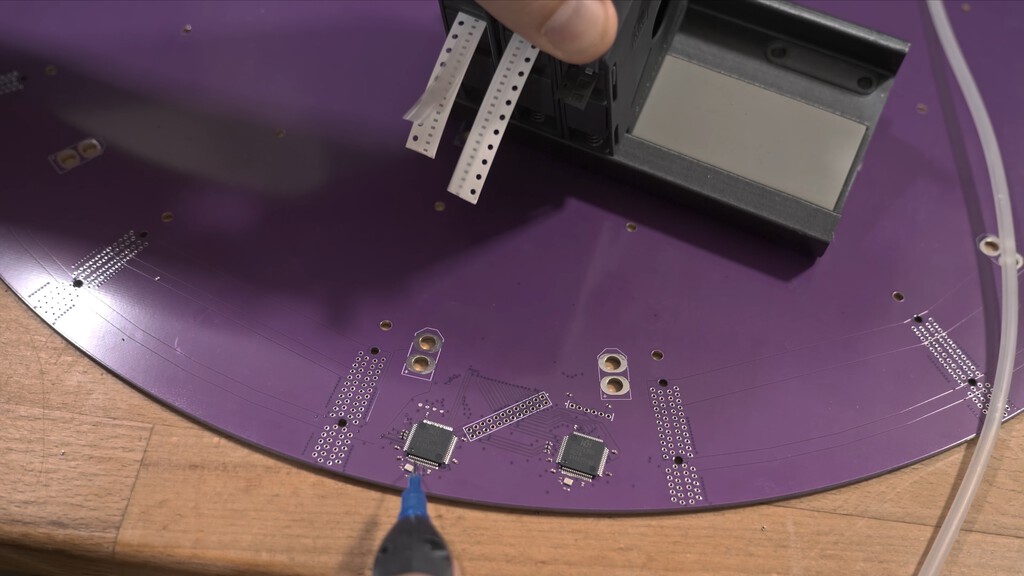
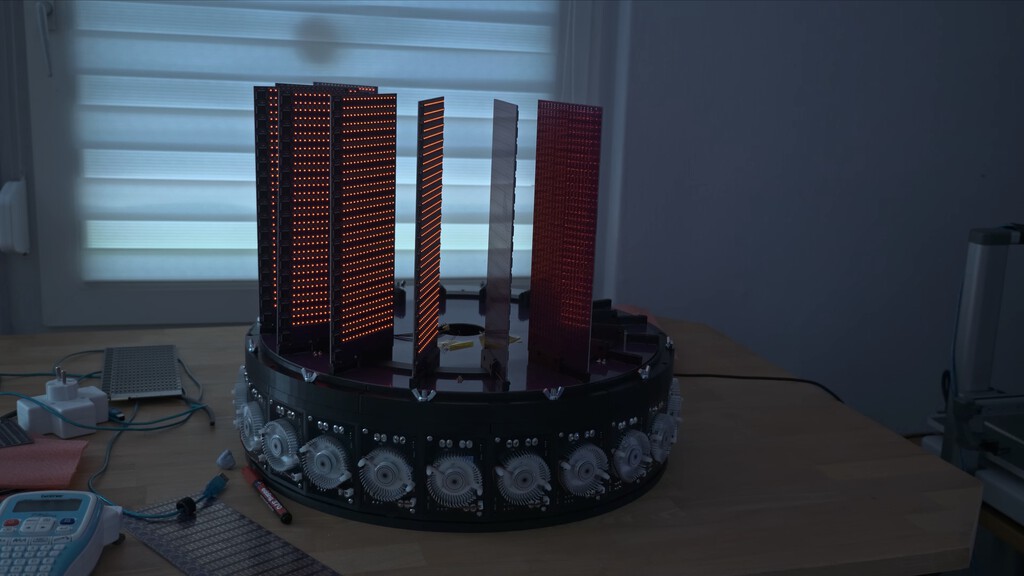
Bitluni's approach centers on using RISC-V microcontrollers as the building blocks for his graphics machine. In the first phase, the design incorporates 8,192 of these microcontrollers, each directly linked to an RGB LED.
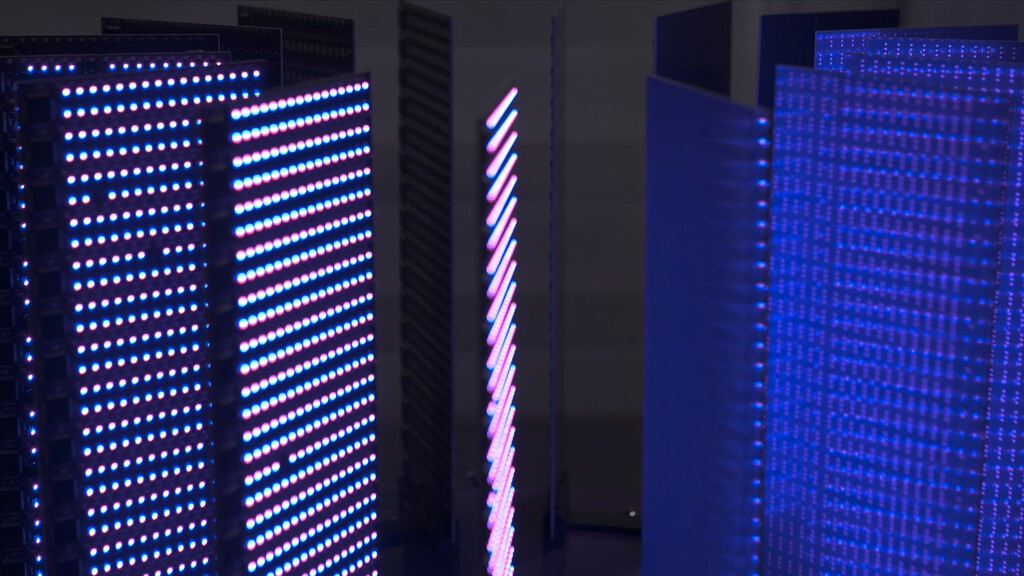
This decision blurs the line between processing and display. The design integrates graphics processing and the surface where the result appears into a single structure. Technically, it's conceived to act simultaneously as a graphics card and a screen, without relying on a separate monitor.
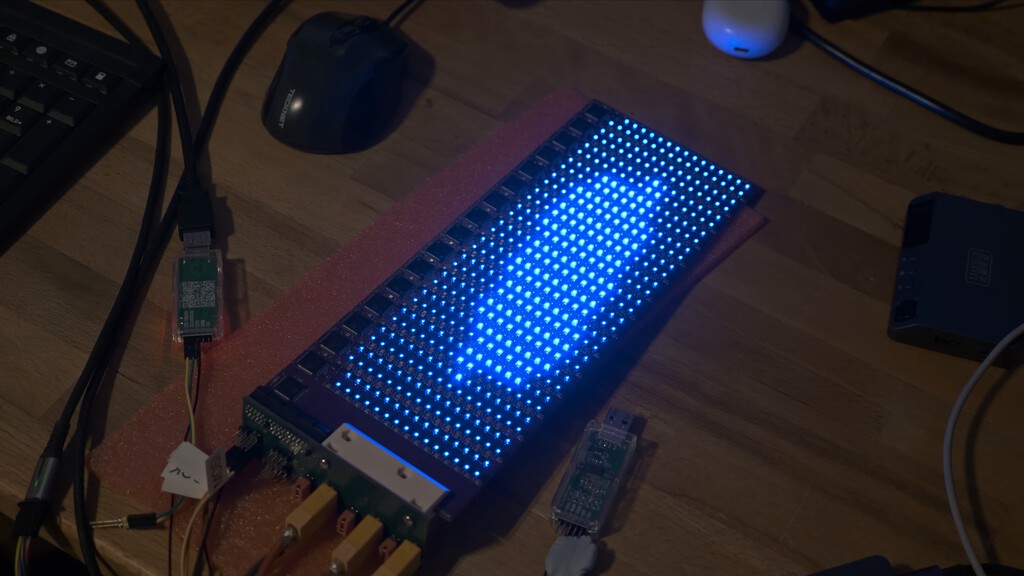
However, the project remains a partial prototype, still far from the scale and capabilities envisioned for the complete system.
How the Idea Evolved
The architecture wasn't defined from the start. Bitluni initially considered building some type of display but ruled out using addressable RGB components after studying the cost and difficulty. That pivot led to the microcontroller-based approach.
By choosing RISC-V microcontrollers, he found a balance between cost, availability, and flexibility. Each microcontroller can handle simple tasks, and collectively they can produce graphics when coordinated properly.
Key Takeaways from This DIY GPU Project
- Cost-effective alternative: Using RISC-V microcontrollers instead of custom silicon reduces expenses dramatically.
- Integrated display: The design combines processing and display in one unit, eliminating the need for a separate monitor.
- Scalable approach: Starting with 8,192 microcontrollers, the project can potentially expand to larger arrays.
- Educational value: The project offers insights into GPU architecture and parallel processing.
- Community inspiration: Bitluni's work encourages other makers to tackle ambitious hardware projects.
Comparing Homemade and Commercial GPUs
| Feature | Bitluni's Homemade GPU | Commercial GPU (e.g., NVIDIA GeForce) |
|---|---|---|
| Processing units | 8,192 RISC-V microcontrollers | Thousands of CUDA cores |
| Display integration | Integrated RGB LEDs | Requires external monitor |
| Cost | Low (maker budget) | High (hundreds to thousands of dollars) |
| Performance | Prototype, limited capabilities | High-performance, optimized for gaming and compute |
| Purpose | Educational, experimental | Commercial, consumer, and professional use |
What This Means for the Maker Community
Bitluni's project is more than a technical curiosity; it's a proof of concept that could inspire others. By demonstrating that a homemade GPU is feasible with accessible components, he opens the door for more experimentation.
This aligns with the growing trend of open-source hardware and the maker movement, where individuals challenge established norms. The project also highlights the potential of RISC-V, an open instruction set architecture that is gaining traction in various applications.
While this homemade GPU won't replace commercial graphics cards, it serves as a valuable learning tool and a testament to human ingenuity. Context on how this played out before sits in Maker Builds Homemade GPU With 8,192 RISC-V Microcontrollers.
Challenges and Limitations
Despite its promise, the project faces significant challenges. Coordinating thousands of microcontrollers to work in unison is complex, and achieving meaningful graphics performance is difficult. The background to this story is set out in Technology: latest articles. A related thread runs through Raspberry Pi Price Surge: How ESP32 Became the Go-To Chip for DIY.
Additionally, the integrated display approach may limit resolution and color depth compared to traditional monitors. The prototype stage means many technical hurdles remain before a fully functional system emerges. Earlier coverage in SK Hynix CEO Warns 2027 Will Be Worst Memory Chip Crisis shows how the argument developed. A closer look at the same subject appears in 4GB GPUs Return: AMD RX 9050 Leak Signals a Worrying Trend for PC Gaming.
Nevertheless, each obstacle overcome provides insights that could benefit future iterations or other projects. Anyone following the wider picture can start with Homemade Christmas Gifts: 7 Easy DIY Ideas for Anyone. The same theme surfaces in Volkswagen Uses Sheep to Maintain 31,000 Solar Panels at Poland Plant, which takes a different angle.
FAQ
What is Bitluni's homemade GPU?
It's a DIY graphics processing unit built by maker Matthias Balwierz (Bitluni) using 8,192 RISC-V microcontrollers, each connected to an RGB LED, designed to function as both a graphics card and a display.
Why use RISC-V microcontrollers instead of traditional GPU components?
RISC-V microcontrollers are inexpensive, widely available, and flexible, making them accessible for hobbyists. They allow parallel processing without the high cost of custom silicon.
Can this homemade GPU run modern games?
No, it's a prototype with limited capabilities. It's not intended to compete with commercial GPUs but to explore graphics processing concepts and inspire makers.
What can we learn from this project?
It demonstrates that complex hardware like GPUs can be approached by individuals, fostering innovation and education in computer architecture and parallel processing.
Browse the Shop
 Acacia frida deluxe solid wood bed frame |
Bedroom bench |
Bed chest drawers |
Lingerie dresser |
Frame base |
Mirror with jewelry storage |
30 Bathroom Vanity |
Memory foam queen mattress |
Mattresses for back pain |
Nightstand set of 2 |
Grand Goldman Shop |
Civil Lawyer
Deutschland Trikot WM 2026







