

The water computer, known as the water integrator, was invented in 1936 by Soviet engineer Vladimir Lukyanov. This remarkable analog device used flowing water to perform complex mathematical calculations, particularly for solving differential equations related to concrete structures in railway construction. It stands as one of the most unusual yet ingenious technologies in computing history.
Who Was Vladimir Lukyanov and Why Did He Build a Water Computer?
Vladimir Lukyanov worked in the 1920s on the construction of railways across the Soviet Union. His job involved ensuring the quality of reinforced concrete structures, which often cracked due to extreme temperatures. The cracks depended on multiple factors: temperature, cement type, mixture proportions, and more. Each combination produced different results, making calculations extremely challenging.
Find Original Home Decor sparking conversation at Grand Goldman Shop.

Lukyanov realized that traditional methods couldn't easily handle these variable interactions. He envisioned a machine that could model the problem physically, using water as a computational medium. His water integrator allowed him to simulate and solve complex equations by observing water flow through a system of pipes and chambers.
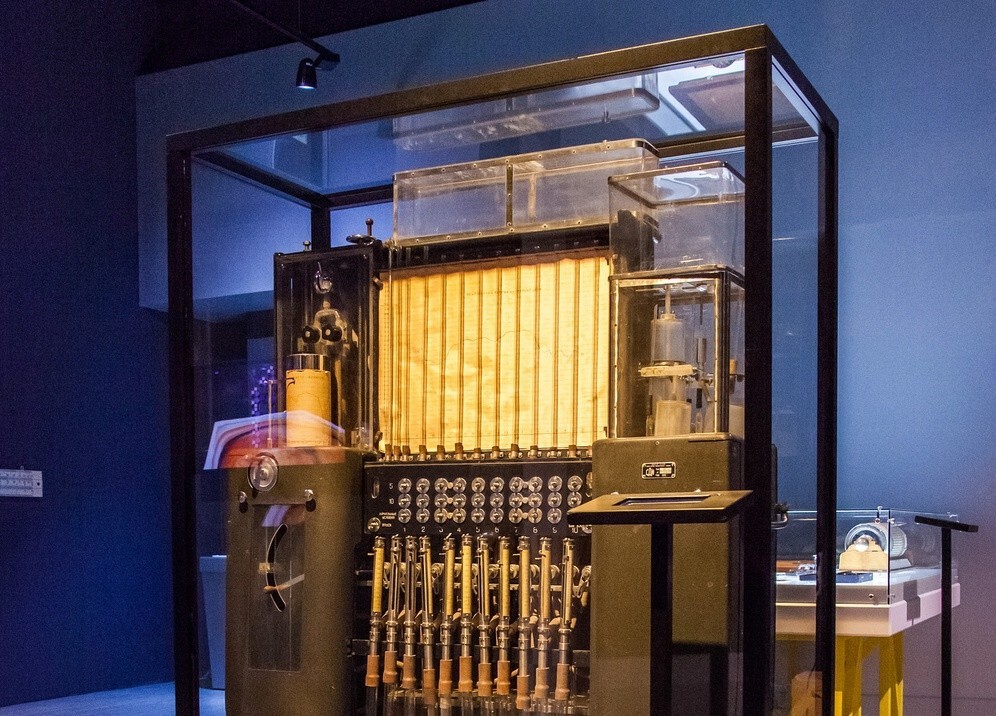
How Did the Water Integrator Work?
To understand the water computer, we first need to grasp how early analog computers operated. Unlike digital computers that use binary code, analog computers represent quantities through physical phenomena—in this case, water levels and flow rates. The water integrator used a network of interconnected tanks, pipes, and valves to perform mathematical operations like addition, subtraction, and integration.
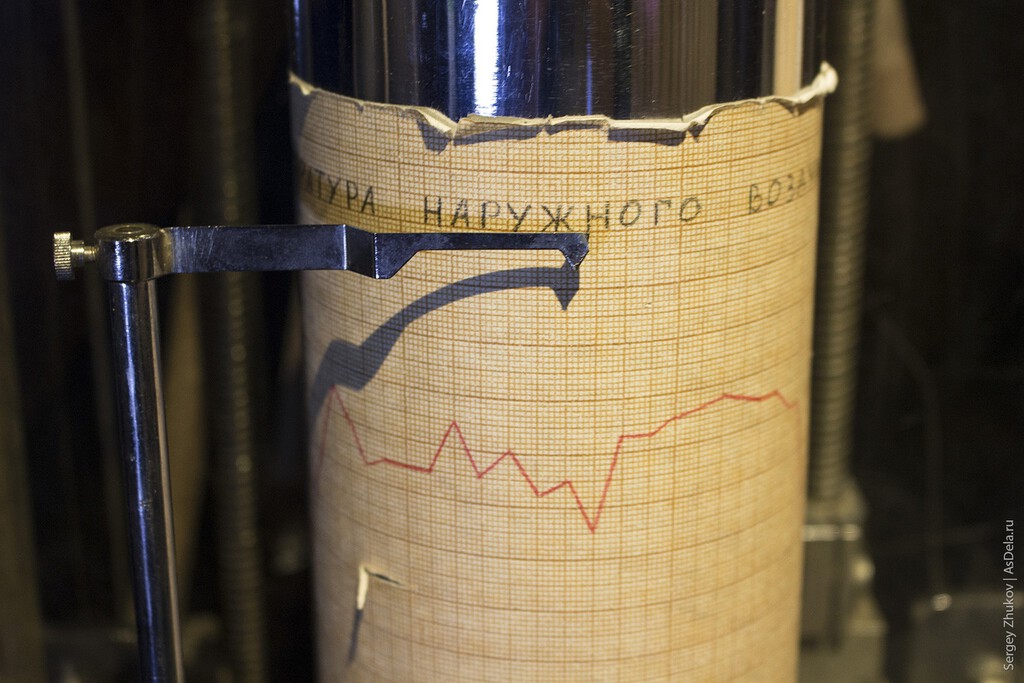
By adjusting valves and observing water levels, engineers could set up equations and read results directly from the water heights. The continuous flow of water naturally solved differential equations, making it a powerful tool for simulating dynamic systems. This physical modeling approach was intuitive and visual, allowing engineers to see the math in action.
Key Components and Operation
The machine consisted of vertical cylindrical tanks connected by pipes. Water flowed between tanks at rates proportional to the variables in the equation. By controlling inflow and outflow, the system could integrate and differentiate, effectively solving complex mathematical problems. The results were read as water levels in specific tanks, which corresponded to the solution values.
Why Was the Water Computer Important?
The water integrator was not a general-purpose computer but a specialized tool for solving engineering problems. It enabled Lukyanov and his team to calculate the stability of concrete structures more accurately, leading to safer and more durable railway infrastructure. The machine was used in various Soviet industries, including construction, metallurgy, and even economics, for tasks like modeling economic processes.
Its significance lies in its innovative use of a ubiquitous resource—water—to perform computations. It predated electronic computers and demonstrated that computation could be achieved through various physical means. The water integrator is a testament to human ingenuity and the diverse paths that led to modern computing. Context on how this played out before sits in Water Computer: The Soviet Engineer's 1936 Water Integrator.
- Invented in 1936 by Soviet engineer Vladimir Lukyanov.
- Used water flow to solve differential equations and model complex systems.
- Applied in railway construction to ensure the stability of concrete structures.
- Continued in use for decades, even after electronic computers emerged.
- Represented a unique branch of analog computing with practical engineering applications.
Water Computer vs. Electronic Computers: A Comparison
The water integrator and early electronic computers both aimed to solve complex problems, but they operated on fundamentally different principles. The table below highlights key differences. The background to this story is set out in Technology: latest articles. A related thread runs through 460 Vacuum Tube Computer: 15-Minute Warm-Up, Fully Functional.
| Aspect | Water Integrator | Early Electronic Computers |
|---|---|---|
| Computation medium | Water flow and levels | Electrical signals |
| Type | Analog | Digital |
| Introduced | 1936 | 1940s |
| Primary use | Solving differential equations for engineering | General-purpose computing, codebreaking |
| Speed | Slow, but continuous | Fast, discrete operations |
| Programmability | Limited, configured via pipes and valves | Programmable via instructions |
What Happened to the Water Computer?
The water integrator remained in use in the Soviet Union for many years, even as electronic computers began to dominate. Its ability to solve certain types of equations quickly and visually kept it relevant in specific niches. However, as digital computers became more powerful and versatile, the water integrator eventually faded into history. Earlier coverage in Raspberry Pi Cyberdeck Guide: Build Your Own Custom Portable PC shows how the argument developed. A closer look at the same subject appears in AI Startups Turn Idle GPUs Into Chatbots as Data Centers Lag.
Today, it is remembered as a fascinating curiosity—a reminder that the history of computing is filled with alternative approaches. The water computer exemplifies how engineers creatively used available resources to tackle complex problems, leaving a legacy of innovation. Anyone following the wider picture can start with ChatGPT Computer History: How It Tracks Your Desktop Activity. The same theme surfaces in El Ajedrecista: The First Computer Game by Leonardo Torres Quevedo, which takes a different angle.
FAQ
What is a water computer?
A water computer, specifically the water integrator, is an analog computer that uses water flow to perform mathematical calculations. It was invented by Vladimir Lukyanov in 1936 to solve differential equations for engineering projects.
How did the water integrator work?
The water integrator used a system of tanks and pipes where water levels represented variables. By adjusting valves, engineers could set up equations and read the results from water heights, effectively solving complex problems through physical modeling.
Why was the water computer invented?
Lukyanov created it to calculate the stability of reinforced concrete structures for railway construction. The machine helped model how different factors like temperature and cement composition affected concrete cracking, leading to better construction practices.
Is the water computer still used today?
No, the water integrator is no longer in use. It was eventually replaced by electronic digital computers, which became more powerful and versatile. However, it remains an important part of computing history.
Browse the Shop
 Acacia frida deluxe solid wood bed frame |
Bedroom bench |
Bed chest drawers |
Lingerie dresser |
Frame base |
Mirror with jewelry storage |
30 Bathroom Vanity |
Memory foam queen mattress |
Mattresses for back pain |
Nightstand set of 2 |
Grand Goldman Shop |
Civil Lawyer
Deutschland Trikot WM 2026







