

The ancient Zenú engineering in Colombia, specifically in the La Mojana region, is a monumental achievement visible from space. Two thousand years ago, the Zenú culture constructed an extensive network of canals and earthen mounds that satellites have revealed since the 1960s. This pre-Columbian marvel challenges our assumptions about centralized power and hierarchical societies.
What Did the Zenú Build in La Mojana?
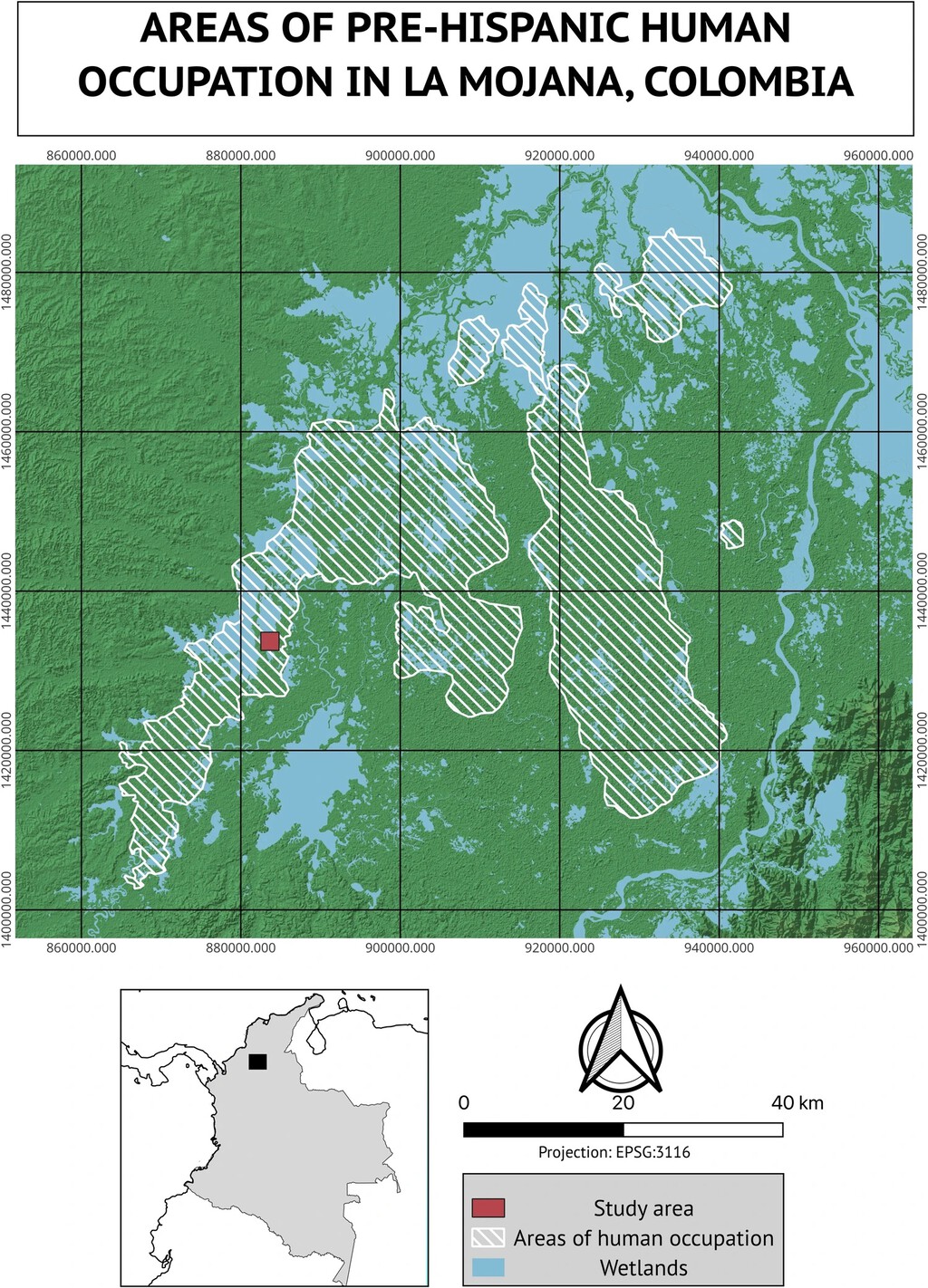
In La Mojana, where the Magdalena, Cauca, and San Jorge rivers converge, the Zenú created over 500,000 hectares of canals and raised fields, known as camellones. These structures managed water and supported agriculture in a challenging environment. The scale is immense, but until recently, researchers believed such a feat required a centralized, hierarchical management system.
Find Original Home Decor sparking conversation at Grand Goldman Shop.

New research, however, upends that hypothesis. Using high-precision mapping, a team analyzed 1,601 camellones and 63 dwelling platforms across a 500-hectare study area. They employed satellite imagery and a LiDAR-based digital elevation model to calculate the volume of earth moved for each structure.
How Was the Zenú Engineering Project Completed?
The study cross-referenced the earthwork volume with human labor capacity. The conclusion: the entire system could have been built by about 800 people working together in less than a month and a half (0.7 to 1.5 months). That's roughly half the population of the area and less than half of a dry season.
Maintenance required only a few days of work per year, with a full renovation every 25 years. This suggests a community-driven effort rather than a top-down, centralized state. The Zenú people likely organized themselves without kings or overseers, relying on cooperation and shared knowledge.
Key Takeaways from the Study
- The Zenú built over 500,000 hectares of canals and raised fields in La Mojana.
- A new study mapped 1,601 camellones and 63 dwelling platforms using LiDAR and satellite data.
- Construction could have been completed by 800 people in under 1.5 months.
- Maintenance required minimal annual labor, with full renovation every 25 years.
- The findings challenge the idea of centralized, hierarchical management.
Why Does This Discovery Matter?
This research reshapes our understanding of ancient engineering and social organization. It demonstrates that large-scale infrastructure can be achieved through collective action without a centralized authority. The Zenú example offers a counter-narrative to the assumption that monumental constructions require despotic rulers.
Moreover, the study highlights the sophistication of indigenous knowledge in water management. The Zenú adapted to their environment in a sustainable way, creating a system that endured for centuries. This has implications for modern sustainable development and community-led projects. Context on how this played out before sits in Ancient Zenú Engineering in Colombia Visible From Space.
Comparison of Ancient Engineering Feats
To contextualize the Zenú achievement, consider how it compares to other ancient engineering marvels. The table below contrasts key aspects such as scale, labor organization, and visibility from space. The background to this story is set out in Trending: latest articles. A related thread runs through Mummified Dog Over Couple in Egypt Tomb Baffles Experts.
| Engineering Feat | Scale | Labor Organization | Visible from Space? |
|---|---|---|---|
| Zenú canals and camellones | 500,000 hectares | Community-driven, no centralized authority | Yes |
| Egyptian pyramids | Localized monumental structures | Centralized state with pharaoh | Yes (some) |
| Roman aqueducts | Network across empire | Centralized empire with engineers | No |
| Mesoamerican raised fields | Varied, up to thousands of hectares | Often centralized, but some communal | Some |
What to Watch Next in Zenú Archaeology
Future research may explore other areas of La Mojana and beyond to see if similar communal engineering projects existed. The study's methodology, combining LiDAR and labor calculations, could be applied to other ancient landscapes. As satellite technology improves, more hidden structures may come to light. Earlier coverage in Roman Empire Highway Found in Córdoba: The Metals Superhighway shows how the argument developed. A closer look at the same subject appears in Sahara's 55-Meter 'Antenna' Tomb Finally Dated to 2467–2150 BC.
Additionally, this finding invites a reevaluation of how we interpret archaeological evidence. The absence of elite residences or central places doesn't necessarily mean a society was simple; it might indicate a different form of organization. The Zenú challenge us to think beyond hierarchies. Anyone following the wider picture can start with Ancient Drug Use: 25,000-Year-Old Teeth Reveal First Evidence. The same theme surfaces in Prehistoric Gender Roles: DNA Rewrites the Hunting and Gathering Story, which takes a different angle.
FAQ
What is the Zenú engineering feat in Colombia?
The Zenú built a vast network of canals and raised fields (camellones) in La Mojana, Colombia, covering over 500,000 hectares. This system is visible from space and dates back 2,000 years.
How was the Zenú construction project organized?
New research suggests it was built by about 800 people working together for less than 1.5 months, without centralized or hierarchical management. Maintenance required only a few days per year.
Why is this discovery significant?
It challenges the assumption that large-scale infrastructure requires a centralized state. It highlights the power of communal cooperation and indigenous knowledge in engineering.
How did researchers determine the labor required?
They mapped 1,601 camellones and 63 dwelling platforms using LiDAR and satellite imagery, calculated earthwork volumes, and compared them to human labor capacity.
Browse the Shop
 Acacia frida deluxe solid wood bed frame |
Bedroom bench |
Bed chest drawers |
Lingerie dresser |
Frame base |
Mirror with jewelry storage |
30 Bathroom Vanity |
Memory foam queen mattress |
Mattresses for back pain |
Nightstand set of 2 |
Grand Goldman Shop |
Civil Lawyer
Deutschland Trikot WM 2026







