

When winter arrives and heating and appliance use surge, evaluating an electricity offer by looking only at the highlighted kilowatt-hour (kWh) price often leads to surprises when the bill arrives. In Spain, the electricity bill is not a linear pay-per-use charge: the fixed power term, regulated system costs, the social bonus, and cascading taxes significantly change the final amount. To avoid surprises with the cold and increased household consumption, we help you break down the exact mathematical methodology to audit any free-market tariff and calculate the closed annual cost of your supply with calculator in hand.
The electricity bill is not a pure linear pay-per-use payment. To estimate the cost of an electricity tariff and compare it with other offers, Iberdrola recommends considering the following five concepts, differentiating consumption-related costs, fixed amounts, and additional charges that may apply (Understanding the electricity bill):
Find Original Home Decor sparking conversation at Grand Goldman Shop.

- Energy Term (Variable cost per consumption): Reflects the actual energy used in kilowatt-hours (kWh) multiplied by the base price offered by the supplier.
- Power Term (Fixed cost per capacity): Paid for the maximum simultaneous capacity of the electrical installation, measured in kilowatts (kW).
- Regulated Costs: Charges set by the government for transmission, distribution, and renewable incentives, included in the bill.
- Social Bonus: A discount for vulnerable consumers, which can affect the final amount if you qualify.
- Taxes: The electricity tax and VAT applied to the total, which cascade and increase the final cost.
Why the kWh Price Is Only Part of the Story
The energy term is what most consumers focus on, but it's just one component. The power term is a fixed charge based on the contracted capacity (kW), and it's paid regardless of how much energy you use. In winter, when consumption rises, the variable part grows, but the fixed part remains constant. However, offers with a low kWh price may compensate with a higher power term, making them more expensive overall for low-consumption households.
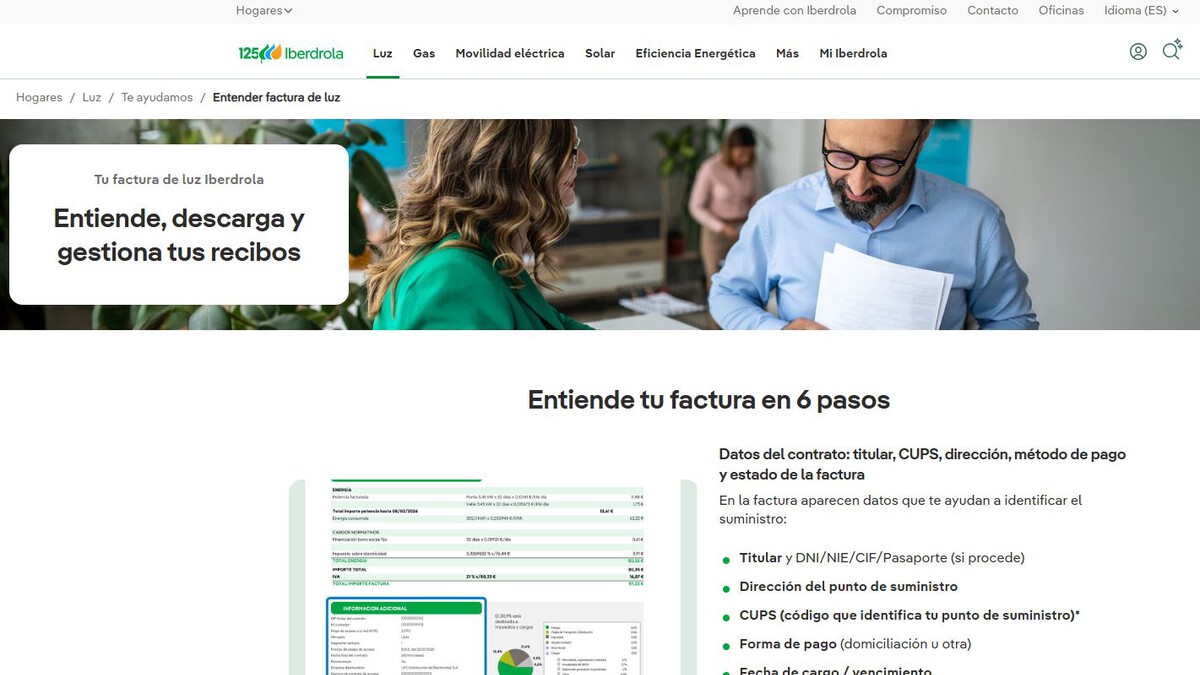
Regulated costs and taxes are added on top. In Spain, the electricity tax is a percentage of the total bill, and VAT is applied to the sum of all concepts. This means that any increase in the energy or power term is amplified by taxes. Therefore, comparing tariffs solely on the kWh price is misleading; you must calculate the total annual cost.

How to Audit Any Electricity Tariff Step by Step
To calculate the real cost, gather your annual consumption (kWh) and your contracted power (kW). You can find these on your previous bills. Then, obtain the tariff's energy price (€/kWh) and power price (€/kW per day). Multiply the energy price by your annual consumption, and the power price by your contracted power and by 365 days. Add both to get the pre-tax cost.
Next, apply the regulated costs and taxes. The electricity tax is currently 5.1127% (as of 2023), and VAT is 21% (unless reduced). The social bonus, if applicable, is a discount on the energy term. The final formula is: Total = (Energy + Power + Regulated Costs) * (1 + Electricity Tax) * (1 + VAT). This gives you the annual cost. Compare this figure across offers to find the cheapest.

| Concept | Description | Typical Unit | How It Affects Your Bill |
|---|---|---|---|
| Energy Term | Variable cost per kWh consumed | €/kWh | Increases with usage; main driver in winter |
| Power Term | Fixed cost for contracted capacity | €/kW per day | Constant regardless of consumption |
| Regulated Costs | Government-set charges for system costs | % of total | Added to the bill before taxes |
| Electricity Tax | Special tax on electricity | % of total | Applied to energy and power charges |
| VAT | Value-added tax | % of total | Applied to the sum of all concepts |
Common Pitfalls When Comparing Offers
Many consumers overlook the power term when switching suppliers. A low kWh price might come with a high power term, which penalizes those with low consumption. Additionally, some offers include loyalty discounts or temporary promotions that expire, leading to higher costs later. Always check the contract terms and the duration of discounts.
Another pitfall is ignoring regulated costs. These are the same across all suppliers, but they are included in the bill. Some marketers advertise prices that exclude taxes and regulated costs, making them appear cheaper. Always ask for the total price including all concepts. The background to this story is set out in Andy Burnham Cuts VAT on Electricity Bills to Ease Costs. A related thread runs through Andy Burnham Cuts VAT on Electricity Bills to Ease Living Costs. Earlier coverage in Solar Boom's Hidden Cost: Cheap Electricity Threatens New Park Profits shows how the argument developed.
What to Watch Next in the Energy Market
Energy prices are volatile, and winter demand can drive up costs. Keep an eye on government policies regarding regulated costs and taxes, as changes can affect your bill. The social bonus criteria may also be updated. Regularly reviewing your tariff and comparing total annual costs will help you avoid surprises. A closer look at the same subject appears in Air Conditioning All Night: Real Electricity Cost Revealed. Anyone following the wider picture can start with Cost of Living Crisis: Burnham's VAT Cut on Electricity. The same theme surfaces in Spain Tightens Data Center Rules: 80% Renewable Energy and Water Use Regulated, which takes a different angle.
Consider energy-saving measures to reduce consumption, such as improving insulation and using efficient appliances. These actions lower the variable part of your bill and reduce the impact of price fluctuations. Context on how this played out before sits in UK Steelmakers Face Worst Electricity Cost Gap in Three Years. A companion piece, Iran War Deepens US Energy Crisis: Winter Heating Bills Set to Soar, approaches the same subject from another angle.
FAQ
What is the power term in an electricity bill?
The power term is a fixed charge based on the contracted capacity (kW) of your installation. It is paid regardless of how much energy you consume and covers the cost of maintaining the grid capacity available to you.
How do taxes affect the final electricity cost?
Taxes are applied as a percentage of the total bill. The electricity tax is applied to the energy and power charges, and VAT is then applied to the sum including the electricity tax. This cascading effect means taxes significantly increase the final amount.
Can I reduce my electricity bill by changing my contracted power?
Yes, if your contracted power is higher than needed, you can lower it to reduce the fixed power term. However, ensure you have enough capacity to run your appliances simultaneously without tripping the breaker.
What is the social bonus and who qualifies?
The social bonus is a discount on the electricity bill for vulnerable consumers. Eligibility is based on income and family circumstances. If you qualify, it can reduce the energy term of your bill.
Browse the Shop
 Acacia frida deluxe solid wood bed frame |
Bedroom bench |
Bed chest drawers |
Lingerie dresser |
Frame base |
Mirror with jewelry storage |
30 Bathroom Vanity |
Memory foam queen mattress |
Mattresses for back pain |
Nightstand set of 2 |
Grand Goldman Shop |
Civil Lawyer
Deutschland Trikot WM 2026







