

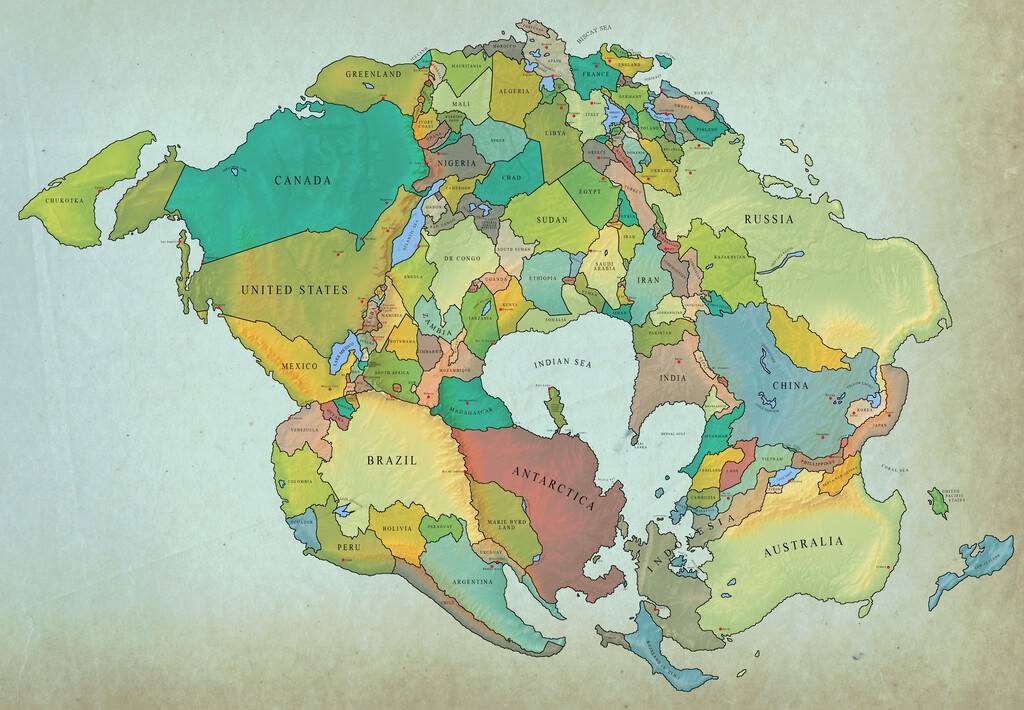
In about 250 million years, Earth's continents will merge into a new supercontinent called Pangea Ultima, according to geological projections. This future landmass will resemble the ancient Pangea, which began breaking apart some 200 million years ago. The slow but relentless movement of tectonic plates will bring North America, Eurasia, Africa, and South America together once again.
The concept, popularized by geographer Christopher Scotese and his PALEOMAP Project, offers a glimpse into Earth's distant future. While no one will be around to see it, the idea helps scientists understand the dynamic nature of our planet's surface.
Find Original Home Decor sparking conversation at Grand Goldman Shop.

What Is Pangea Ultima?
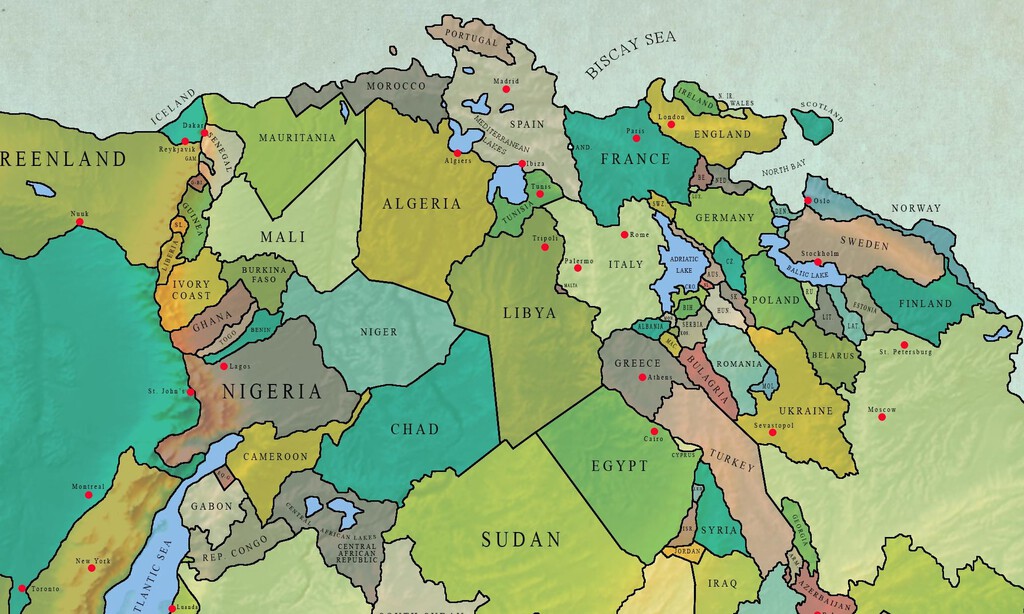
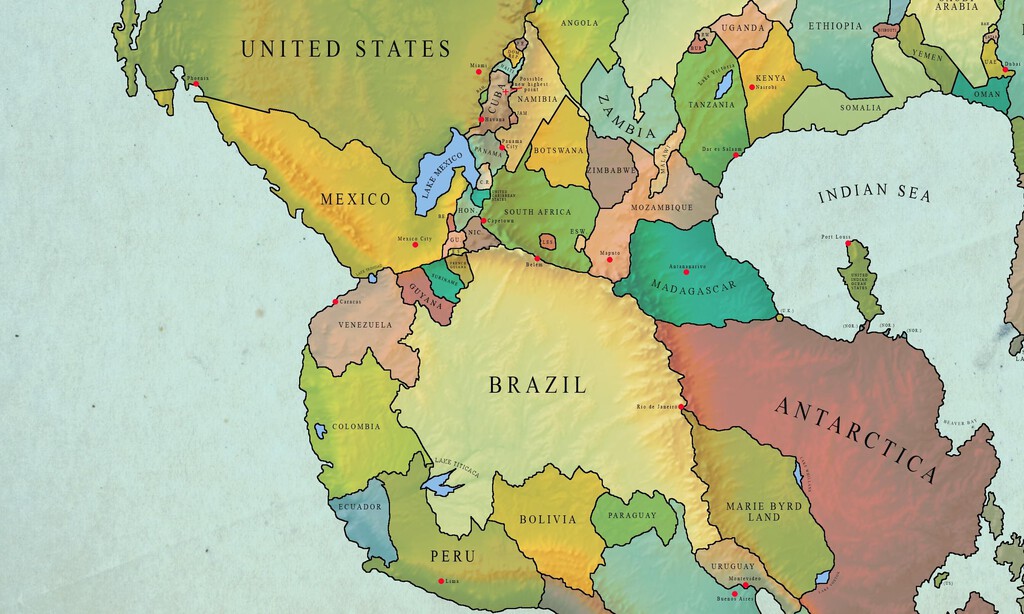
Pangea Ultima is the hypothesized supercontinent that will form as the Atlantic Ocean closes and continents collide. According to Scotese's models, North America will rotate clockwise and move toward Africa, while Eurasia rotates counterclockwise. The Mediterranean Sea will disappear as Africa pushes into Europe, and Australia will drift north to join Asia.
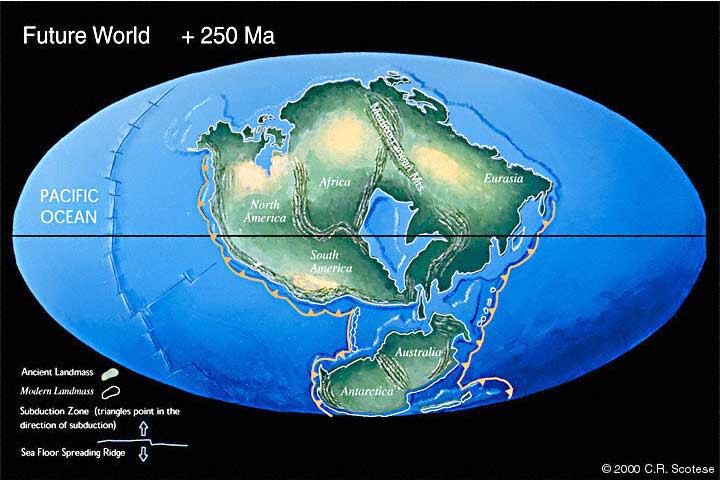
This isn't the first time Earth has had a supercontinent. Pangea existed from about 335 to 175 million years ago. Before that, there were others like Rodinia and Gondwana. The cycle of supercontinent assembly and breakup, known as the Wilson Cycle, repeats roughly every 400-600 million years.
How Plate Tectonics Shapes Continents
Plate tectonics is the theory that Earth's outer shell is divided into several plates that glide over the mantle. These plates move a few centimeters per year—about as fast as fingernails grow. Over millions of years, this movement can drastically alter the map of the world.
The Atlantic Ocean is currently widening by about 2-3 centimeters per year. However, in the distant future, new subduction zones may form along the Atlantic's edges, causing the ocean to close. This would bring the Americas back toward Europe and Africa.
Key Drivers of Continental Drift
Mantle convection, slab pull, and ridge push are the main forces driving plate motion. Scientists study these processes to reconstruct past geographies and predict future ones. Scotese's PALEOMAP Project has mapped the last 1 billion years of plate movements and projected the next 250 million.
What Will Happen to Spain and Europe?
In the Pangea Ultima scenario, Spain will be at the heart of the action. As Africa collides with Europe, the Mediterranean will close, and Spain will become part of a massive mountain range similar to the Himalayas. This could make Spain a central landmass in the new supercontinent, potentially benefiting from new resources and strategic positioning.
Europe will also see dramatic changes. The Atlantic will narrow, bringing Britain closer to Scandinavia, and the North Sea will disappear. The climate will be vastly different, with a huge desert in the continental interior, much like the center of Pangea was arid.
Timeline: From Now to Pangea Ultima
Scotese's projections outline a step-by-step journey to Pangea Ultima. In 50 million years, North America will have rotated so that Alaska is subtropical, and Africa will have collided with Europe, closing the Mediterranean. By 100 million years, the Atlantic will be narrowing, and Australia will merge with Asia. In 250 million years, the supercontinent will be fully formed. Context on how this played out before sits in Earth's Next Supercontinent: Pangea Ultima in 250 Million Years.
| Time from Now | Key Events | Geography |
|---|---|---|
| 50 million years | Africa-Europe collision, Mediterranean closes | Alaska moves north, Britain closer to pole |
| 100 million years | Atlantic narrowing, Australia joins Asia | Americas approach Africa-Europe |
| 250 million years | Pangea Ultima forms | All continents merged, huge interior desert |
These changes are gradual and imperceptible on human timescales, but they are inevitable given current plate motions. The background to this story is set out in Ancient Australian Zircons Rewrite Earth's Plate Tectonics Timeline. A related thread runs through Trending: latest articles.
Why This Matters for Understanding Earth
Studying future supercontinents isn't just an academic exercise. It helps us understand the distribution of resources, the evolution of life, and the long-term climate of our planet. For example, the formation of Pangea Ultima will likely cause a drop in biodiversity due to the loss of shallow seas and the creation of a vast arid interior. Earlier coverage in Mercadona Closes Fish Counters: Pre-Packaged Fish Takes Over Spain shows how the argument developed. A closer look at the same subject appears in Pet Weddings in Spain: Dogs Steal the Spotlight From Couples.
Additionally, the closing of oceans and formation of mountains can create new mineral deposits. Spain, with its current geology, might become a key area for future resources. But don't worry—these changes are hundreds of millions of years away. Anyone following the wider picture can start with RTX 5090 Hits €17,000 in Spain: Prebuilt PC Offers Better Value. The same theme surfaces in Continents Don't Exist: The Scientific Case Against Continental Models, which takes a different angle.
- Pangea Ultima will form in about 250 million years as continents merge.
- Spain will be at the center of the collision between Africa and Europe.
- The Atlantic Ocean will close, bringing the Americas back together with Europe and Africa.
- Studying future supercontinents helps scientists understand Earth's geological cycles.
FAQ
What is Pangea Ultima?
Pangea Ultima is a predicted future supercontinent that will form in about 250 million years when the continents merge again. It is based on the work of geographer Christopher Scotese and his PALEOMAP Project.
Will Spain really benefit from Pangea Ultima?
Spain will be centrally located in the new supercontinent, potentially gaining strategic and resource advantages. However, the climate will be harsh, with a large desert interior.
How do scientists predict future continents?
Scientists use the study of plate tectonics, mantle dynamics, and geological history to project future movements. They also use computer models to simulate the interactions of plates over millions of years.
When will the next supercontinent form?
According to current models, the next supercontinent, Pangea Ultima, will form in approximately 250 million years. However, other models suggest different timelines and configurations.
Understanding these long-term processes gives us a deeper appreciation for the dynamic planet we live on. While we won't witness Pangea Ultima, the study of plate tectonics continues to reveal the forces that shape our world.
Browse the Shop
 Acacia frida deluxe solid wood bed frame |
Bedroom bench |
Bed chest drawers |
Lingerie dresser |
Frame base |
Mirror with jewelry storage |
30 Bathroom Vanity |
Memory foam queen mattress |
Mattresses for back pain |
Nightstand set of 2 |
Grand Goldman Shop |
Civil Lawyer
Deutschland Trikot WM 2026







