

The Iran war has unexpectedly benefited Russia's oil industry after the United States partially lifted sanctions on Russian oil, allowing the Kremlin to capitalize on market instability. This move comes as Washington seeks to stabilize global energy markets and prevent a historic spike in oil prices.
What Happened: US Pauses Sanctions on Russian Oil
The US Treasury Department, under Secretary Scott Bessent, announced a temporary suspension of sanctions that penalize the purchase of Russian crude oil and petroleum products. This decision marks a significant shift in policy, as the sanctions were originally imposed four years ago following Russia's invasion of Ukraine.
Find Original Home Decor sparking conversation at Grand Goldman Shop.

The suspension is narrowly scoped: it applies only to cargo already loaded onto ships and is set to last for one month, from March 12 to April 11. The White House hopes this will alleviate pressure on the global energy market caused by the Iran war.
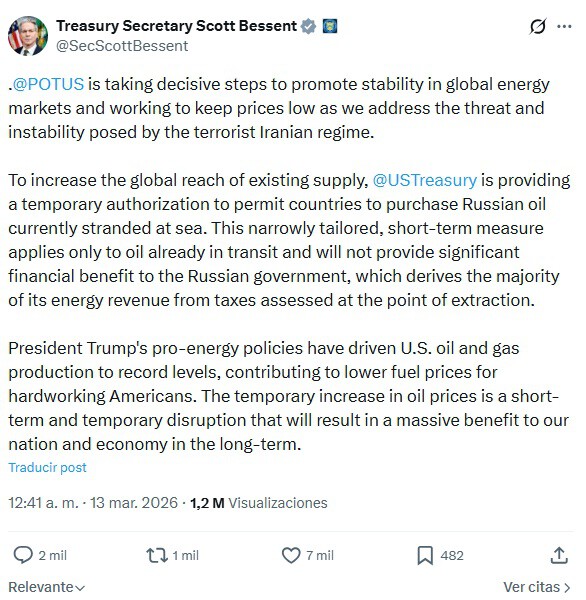
Why It Matters: Russia's Unexpected Windfall
Russia, a major oil exporter, stands to gain significantly from this temporary reprieve. Just days before the US announcement, India received a green light to purchase millions of barrels of Russian crude without fear of sanctions. Now, with the US partially lifting restrictions, Russian oil can flow more freely to global markets.
This development is a boon for the Kremlin, which has been struggling under Western sanctions. The additional revenue could help fund Russia's war efforts in Ukraine, raising questions about the unintended consequences of the US decision.
Key Takeaways
- The US has temporarily suspended sanctions on Russian oil purchases from March 12 to April 11.
- The move aims to stabilize global energy markets amid the Iran war.
- Russia benefits from increased oil exports and revenue.
- India can now buy Russian crude without sanctions concerns.
- The suspension is limited to cargo already loaded on ships.
Impact on Global Oil Markets
The Iran war has already disrupted oil supplies, with Tehran threatening to drive Brent crude to $200 per barrel—a historic high. By allowing Russian oil to flow, the US hopes to prevent such a spike and maintain market stability.
However, the temporary nature of the suspension means uncertainty remains. Traders and analysts will be watching closely to see if the measure is extended or if it achieves its intended effect. The background to this story is set out in US Sanctions on Iran Target Global Economic Ties. A related thread runs through China-US Sanctions Standoff Over Iran Oil Trade Escalates. Earlier coverage in US Strikes Iran 10th Time; Iran Declares Full-Scale War shows how the argument developed.
| Sanction Aspect | Before | After (Temporary) |
|---|---|---|
| Russian oil purchases | Restricted | Allowed for pre-loaded cargo |
| Duration | Indefinite | March 12 - April 11 |
| Impact on Russia | Limited revenue | Increased revenue |
| Global market effect | Tight supply | Eased supply |
What to Watch Next
The key question is how this affects the war in Ukraine. With Russia gaining additional oil revenue, its ability to sustain military operations could increase. The US may need to balance its desire for market stability with its support for Ukraine. A closer look at the same subject appears in Nato Urgently Boosts Ukraine Air Defenses Amid Russian Missile. Anyone following the wider picture can start with Trump's Iran War Repeats Afghanistan Mistakes: A Forever War. The same theme surfaces in Trump's Iran War: Is America Stuck in Another Forever War?, which takes a different angle.
Additionally, the duration of the suspension is short. If the Iran war continues, the US may face pressure to extend the waiver, further benefiting Russia. The international community will be monitoring these developments closely. Context on how this played out before sits in US Sanctions International Criminal Court: Global Impact. A companion piece, US Senate Advances Russia Sanctions Bill Granting Trump New, approaches the same subject from another angle.
FAQ
Why did the US lift sanctions on Russian oil?
The US lifted sanctions to stabilize global energy markets amid the Iran war and prevent oil prices from spiking to $200 per barrel.
How long will the sanctions suspension last?
The suspension is temporary, lasting from March 12 to April 11, and applies only to cargo already loaded on ships.
Who benefits from this decision?
Russia benefits the most, as it can sell more oil and generate revenue. India also benefits by being able to purchase Russian crude without sanctions concerns.
What does this mean for the Ukraine war?
Increased oil revenue could help Russia fund its military operations in Ukraine, potentially prolonging the conflict.
Browse the Shop
 Acacia frida deluxe solid wood bed frame |
Bedroom bench |
Bed chest drawers |
Lingerie dresser |
Frame base |
Mirror with jewelry storage |
30 Bathroom Vanity |
Memory foam queen mattress |
Mattresses for back pain |
Nightstand set of 2 |
Grand Goldman Shop |
Civil Lawyer
Deutschland Trikot WM 2026







