

Russia has expanded its target map beyond Ukraine by publishing detailed lists of companies in London, Munich, and Madrid linked to drone production for Kyiv. The move, revealed by the Russian Ministry of Defense, signals a new phase in the war where European industrial sites are framed as legitimate military objectives.
From the Front Lines to a Wider Map
The conflict in Ukraine has largely been defined by territorial battles along a static front. But Russia's latest move shifts the focus from the battlefield to a broader map that includes European cities. By naming specific companies and addresses, Moscow is redefining the geography of the war.
Find Original Home Decor sparking conversation at Grand Goldman Shop.

This isn't the first time economic infrastructure has been drawn into a conflict. In 2019, oil tankers were attacked in the Gulf of Oman, far from any declared war zone, showing that modern conflicts can expand without visible front lines. Russia's new target list follows a similar logic: mark a point on the map and make it part of the board.
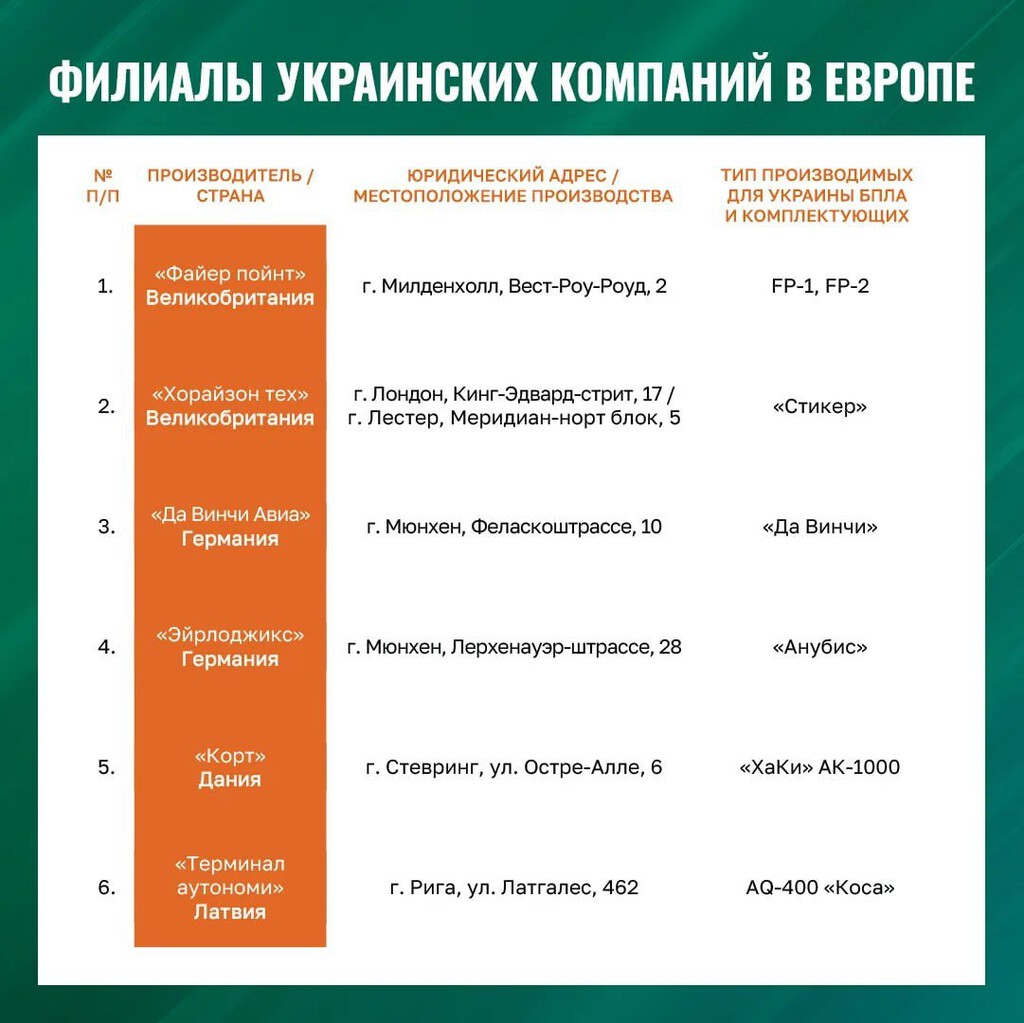
Why London, Madrid, and Munich?
The cities named—London, Munich, and Madrid—are home to companies involved in the production and supply of drones for Ukraine. By highlighting these locations, Moscow is sending a clear message: any country that supports Ukraine's drone program is directly participating in the war.
This framing turns industrial infrastructure into potential military targets in official Russian discourse. It also puts European governments in a difficult position, as they must balance support for Ukraine with the security of their own industries.
Europe Enters the Military Equation
Russia's message is unambiguous: increasing drone production and supply to Ukraine equates to direct involvement in the conflict. From Moscow's perspective, countries that host or fund these production facilities become part of the war effort.
This shift has significant implications for European security. It challenges the traditional distinction between combatants and non-combatants, and it raises questions about how far Russia might go to disrupt drone production.
Key Takeaways
- Russia has published a list of drone production sites in London, Munich, and Madrid, labeling them as potential targets.
- The move expands the war beyond Ukraine's borders and into European industry.
- Moscow claims that supplying drones to Kyiv is equivalent to direct participation in the conflict.
- European governments now face the challenge of protecting their industries while supporting Ukraine.
- The strategy echoes past incidents where economic infrastructure became a target in undeclared conflicts.
How the Target List Works
The Russian Ministry of Defense has released detailed lists that include company names and addresses. This information is likely intended to intimidate and to signal that these sites are under surveillance. It also serves as a justification for potential future actions against these facilities.
While the list itself does not constitute an immediate military threat, it represents a rhetorical escalation that could lead to real-world consequences. By publicly identifying these targets, Russia is setting the stage for possible sabotage or cyberattacks. The background to this story is set out in Russia Warns Foreign Troops in Ukraine Are Legitimate Targets. A related thread runs through Ukraine Strikes Russian Drone Warehouses: War Update.
Comparison of Drone Production Sites Named by Russia
| City | Country | Role in Drone Production | Potential Target Type |
|---|---|---|---|
| London | United Kingdom | Manufacturing and supply | Industrial facilities |
| Munich | Germany | Component production | Tech companies |
| Madrid | Spain | Logistics and assembly | Warehouses and factories |
What to Watch Next
The publication of this target list is a clear escalation in Russia's rhetoric. It remains to be seen whether Moscow will follow through with concrete actions against these sites. European governments are likely to increase security around defense-related industries. Earlier coverage in Ukraine Strikes Devastate Russian Drone Supply Warehouses shows how the argument developed. A closer look at the same subject appears in Ukraine Ballistic Missiles Could Strike Russia in Months.
The situation also tests the unity of NATO and the EU, as member states must decide how to respond collectively to this threat. The coming weeks will reveal whether this is a bluff or a prelude to a broader campaign against European infrastructure. Anyone following the wider picture can start with Russia Strikes Weapons Exhibition Near Kyiv: 10 Killed.
FAQ
What is Russia's new target map?
It is a list published by the Russian Ministry of Defense that names companies in London, Munich, and Madrid involved in drone production for Ukraine, framing them as potential military targets.
Why did Russia publish this list?
Moscow aims to deter European support for Ukraine's drone program by signaling that such support makes those countries direct participants in the war.
Does this mean these cities could be attacked?
While the list is primarily a rhetorical escalation, it raises the risk of sabotage or cyberattacks against these facilities. European governments are likely to bolster security.
How should Europe respond?
Europe must balance continued support for Ukraine with protecting its own industries. A coordinated response through NATO and the EU is essential to counter this threat.
The broader implications of this strategy are still unfolding. As Russia seeks to expand the conflict's boundaries, European nations must reassess their vulnerabilities. For those tracking how global conflicts reshape economies and societies, the situation in Ukraine offers a stark reminder of how quickly war can spread beyond its original borders. The trend of wealthy individuals and investors seeking safe havens in cities like Madrid is covered in Madrid: A Magnet for Millionaires and Latin American Wealth, highlighting how security concerns drive capital flows.
Meanwhile, the war's economic ripple effects are being felt across Europe. Energy markets, supply chains, and defense industries are all adjusting to the new reality. The targeting of drone production sites is just one example of how economic infrastructure has become a front line. For a deeper look at how cities like Madrid are attracting global wealth amid these uncertainties, see this analysis of Madrid's rise as a wealth hub.
As the situation evolves, the line between economic and military targets continues to blur. Russia's target map is a clear signal that the war in Ukraine is not confined to the battlefield. Understanding these dynamics is crucial for policymakers, investors, and citizens alike. The appeal of stable, prosperous cities like Madrid becomes even more pronounced in times of geopolitical turmoil, as explored in this report on Madrid's magnetic pull for millionaires.
Browse the Shop
 Acacia frida deluxe solid wood bed frame |
Bedroom bench |
Bed chest drawers |
Lingerie dresser |
Frame base |
Mirror with jewelry storage |
30 Bathroom Vanity |
Memory foam queen mattress |
Mattresses for back pain |
Nightstand set of 2 |
Grand Goldman Shop |
Civil Lawyer
Deutschland Trikot WM 2026







