

The US F-35 program represents a bet on quality over quantity, but China's rapid fighter production is challenging that strategy. As the US fleet shrinks and ages, Beijing's industrial expansion threatens to alter the global airpower balance for the first time in decades.
US Airpower: A Shrinking Fleet
During the Cold War, the United States produced hundreds of combat aircraft annually, with factories capable of sustaining wartime production rates. Today, such levels are the exception rather than the norm. The US fighter fleet has shrunk by more than 60% since the Cold War's end, and many aircraft have accumulated decades of service.
Find Original Home Decor sparking conversation at Grand Goldman Shop.

While the US remains a dominant air power, the combination of aging platforms, operational wear, and global demand is stretching the system to its limits. The force no longer has sufficient margin to respond to multiple simultaneous conflicts.
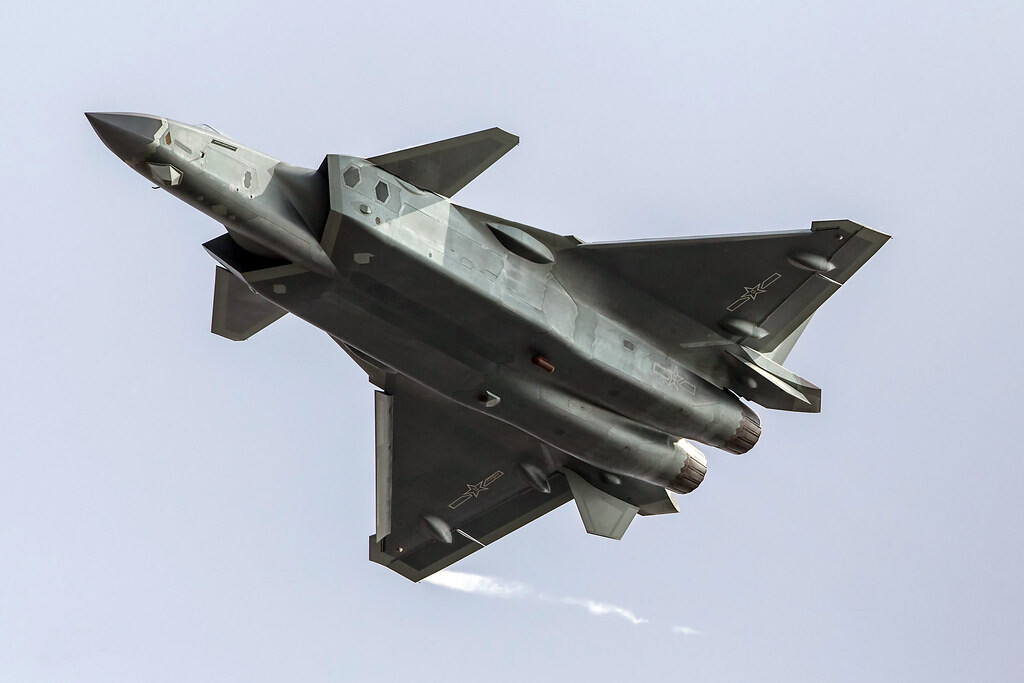
China's Production Surge: Quantity as a Strategy
China is producing fighters at a rate that clearly exceeds current US capacity. With massive industrial expansion and projections of up to 300 aircraft per year before the decade's end, Beijing is not only closing the gap but threatens to surpass the US in both volume and modernization.
This shift marks a departure from the post-Cold War era, where the US enjoyed uncontested air superiority. China's approach emphasizes quantity as a means to overwhelm adversaries and project power across the Indo-Pacific.
The F-35: Quality Pillar or Insufficient Solution?
The F-35 Lightning II is the centerpiece of US airpower, embodying advanced stealth, sensor fusion, and network capabilities. However, relying on a single platform to maintain dominance may be insufficient against a numerically superior adversary.
The F-35's high cost and complex maintenance requirements limit its production rate and availability. While its quality is unmatched, quantity matters in sustained conflicts, and the US may struggle to field enough aircraft to cover global commitments.
Key Takeaways
- The US fighter fleet has shrunk by over 60% since the Cold War, with aging aircraft and limited production capacity.
- China is projected to produce up to 300 fighters annually by the end of the decade, surpassing US output.
- The F-35 represents a quality-focused strategy, but may not provide sufficient numbers to counter China's quantity.
- This shift could alter the global balance of airpower for the first time in decades.
- The US faces structural challenges in scaling production to meet simultaneous global demands.
Comparing US and Chinese Airpower
| Aspect | United States | China |
|---|---|---|
| Annual Fighter Production (approx.) | ~100-150 (incl. F-35) | Up to 300 (projected) |
| Fleet Size Trend | Shrinking (60% reduction since Cold War) | Expanding rapidly |
| Key Platform | F-35 (quality-focused) | J-20, J-16 (quantity + modernization) |
| Industrial Capacity | Limited, peacetime rates | Massive expansion, wartime-like output |
| Strategic Approach | Quality over quantity | Quantity as a lever |
Why This Matters for Global Security
The US strategy of relying on technological superiority is being tested by China's ability to field large numbers of capable aircraft. This could undermine deterrence and complicate US military planning in regions like the Taiwan Strait and South China Sea.
Moreover, the US industrial base faces structural hurdles in ramping up production. During the Cold War, factories could quickly shift to high-output modes; today, supply chain complexities and budget constraints limit surge capacity. The background to this story is set out in F-35 Fleet Readiness Crisis: Only 25% Fully Mission Capable. A related thread runs through Spain's Harrier Fleet Gets Life Extension to 2032 Without F-35. Earlier coverage in Pentagon Plans Giant Nets to Shield F-35 Jets from Drones shows how the argument developed.
What to Watch Next
Observers should monitor China's actual production rates and the modernization of its aircraft, such as the J-20 stealth fighter. On the US side, efforts to increase F-35 production and develop next-generation platforms like NGAD will be critical. A closer look at the same subject appears in F-35 Fighter Jet Parts Missing in Hong Kong: Australia Investigates. Anyone following the wider picture can start with FCAS Collapse: Spain and Sweden's Last Chance to Stop the F-35. The same theme surfaces in F-35 Crashes Now a National Security Challenge for Spain, which takes a different angle.
The outcome of this quality-versus-quantity dilemma will shape the future of air warfare and global power dynamics. As both sides adapt, the balance of airpower may hinge on industrial capacity as much as technological innovation. Context on how this played out before sits in Balearic Islands Water Crisis: 44 of 87 Aquifers Fail Quality or Quantity. A companion piece, Air Fryer vs Oven: Easy Food Quantity Cost Calculation, approaches the same subject from another angle.
FAQ
How many fighters is China producing annually?
How many fighters is China producing annually?
China is projected to produce up to 300 fighter aircraft per year by the end of the decade, according to current estimates. This rate would significantly exceed US production capacity.
Why is the US F-35 considered a quality-focused strategy?
Why is the US F-35 considered a quality-focused strategy?
The F-35 incorporates advanced stealth, sensor fusion, and network capabilities, making it superior to adversary aircraft individually. However, its high cost and complexity limit production numbers, reflecting a bet on quality over quantity.
What challenges does the US face in increasing fighter production?
What challenges does the US face in increasing fighter production?
The US industrial base has limited surge capacity due to supply chain complexities, budget constraints, and a shift away from wartime production rates since the Cold War. Scaling up quickly is difficult.
How does China's production affect the global airpower balance?
How does China's production affect the global airpower balance?
China's ability to produce large numbers of modern fighters could erode the US's qualitative edge and alter the balance of power, potentially undermining deterrence in key regions.
As the US grapples with these airpower challenges, it's worth examining how other nations are pushing technological boundaries. For instance, China's 582-ton magnet for artificial sun fusion energy demonstrates the country's ambitious scientific pursuits, which could have long-term implications for energy and defense.
Meanwhile, the US continues to innovate in areas like sustainable energy and advanced manufacturing. The same industrial base that supports aviation also drives progress in other sectors, highlighting the interconnected nature of national power.
Understanding these dynamics is crucial for policymakers and analysts alike. The quality-versus-quantity debate in airpower mirrors broader strategic choices facing the US and its allies in the 21st century.
Browse the Shop
 Acacia frida deluxe solid wood bed frame |
Bedroom bench |
Bed chest drawers |
Lingerie dresser |
Frame base |
Mirror with jewelry storage |
30 Bathroom Vanity |
Memory foam queen mattress |
Mattresses for back pain |
Nightstand set of 2 |
Grand Goldman Shop |
Civil Lawyer
Deutschland Trikot WM 2026







