

Westminster Abbey has finally solved the mystery of a 4th-century Roman sarcophagus that has puzzled experts for over 150 years. The coffin, which has lain in the Abbey for centuries, contains a skeleton that does not belong to the Roman for whom it was originally made. Now, thanks to radiocarbon dating and meticulous research, archaeologists believe they know who the occupant is: an Anglo-Saxon abbot, likely named Ælfwig.
The Abbey, one of London's most famous landmarks, is the final resting place of more than 3,000 people, including monarchs, writers like Charles Dickens and Rudyard Kipling, and scientists such as Isaac Newton and Charles Darwin. Among these thousands of tombs, the Roman sarcophagus stood out as a perplexing anomaly.
Find Original Home Decor sparking conversation at Grand Goldman Shop.

The Discovery: Identifying the Anglo-Saxon Abbot
British archaeologist and Abbey consultant Warwick Rodwell conducted an exhaustive investigation. His findings point almost certainly to an Anglo-Saxon abbot, probably Ælfwig, who served as abbot of Westminster. In his study, Rodwell narrows the possibilities to two occupants: Ælfwig and his successor Wulfnoth, both abbots of Westminster.
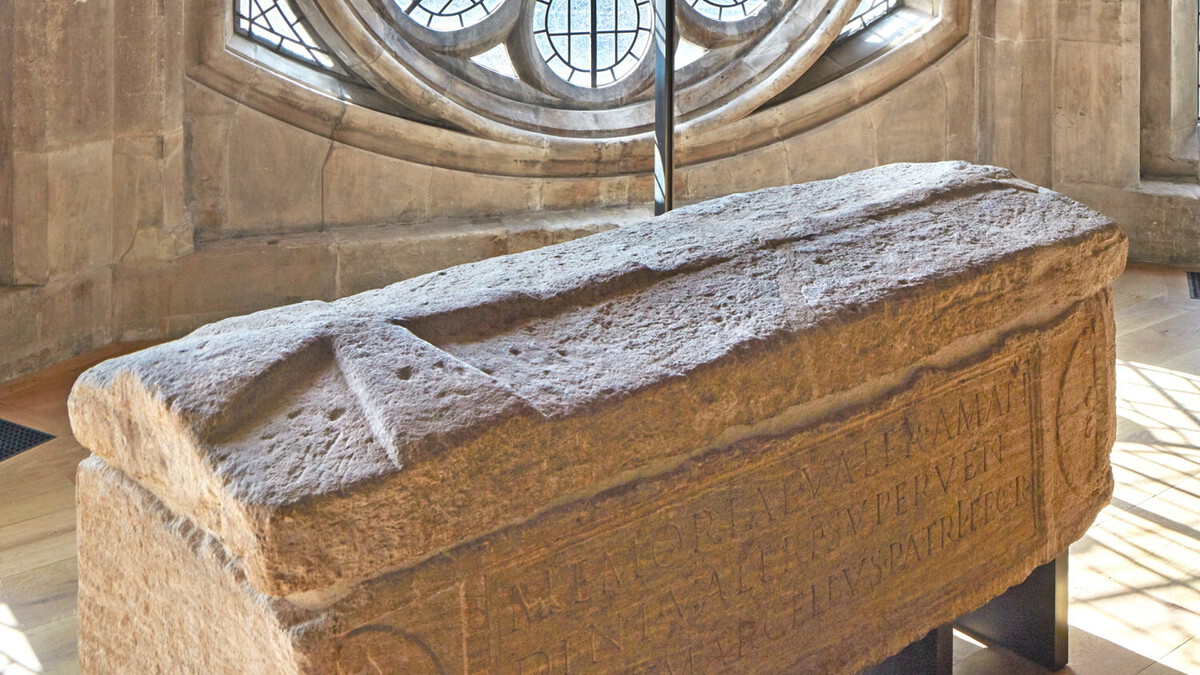
The key to the identification was radiocarbon dating. A bone sample placed the individual's death between 987 and 1052 AD, about 700 years after the sarcophagus was originally used. This confirms that the coffin was reused in the late Anglo-Saxon period.
Why the Reuse Is So Unusual
Reusing a Roman sarcophagus for a medieval abbot is a highly uncommon practice. Rodwell notes that nothing like it has ever been found. The sarcophagus, with its Latin inscription, is now on display in the Queen's Diamond Jubilee Galleries at the Abbey, where visitors can see it.
The Significance of the Find
This discovery sheds light on the Abbey's history and the practices of the Anglo-Saxon period. It also highlights the importance of scientific dating methods in archaeology. The sarcophagus itself is a remarkable artifact, and its reuse adds a layer of intrigue to its story.
- The sarcophagus dates to the 4th century AD and was originally made for a Roman.
- The occupant died between 987 and 1052 AD, indicating reuse in the late Anglo-Saxon period.
- The likely occupant is Ælfwig, an abbot of Westminster, or his successor Wulfnoth.
- The sarcophagus is on public display in the Queen's Diamond Jubilee Galleries.
- This is the only known case of a Roman sarcophagus being reused for a medieval abbot.
How Carbon Dating Cracked the Case
Radiocarbon dating was crucial in solving this mystery. By analyzing a bone sample, scientists determined the time of death, which placed the individual in the Anglo-Saxon era. This technique measures the decay of carbon-14 in organic material, providing a date range for when the person died.
Without this scientific evidence, the identity of the occupant might have remained unknown. The dating confirmed that the skeleton was not Roman but medieval, leading researchers to focus on the abbots of Westminster.
The Abbey's Rich History and Its Tombs
Westminster Abbey has a storied history spanning over a thousand years. It has been the site of coronations, royal weddings, and burials of notable figures. The presence of a Roman sarcophagus among the tombs is a testament to the Abbey's long and complex history. Context on how this played out before sits in Westminster Abbey Roman Sarcophagus Mystery Finally Solved. A companion piece, Mystery of 17th-Century Shipwreck and Gold Coins Finally Solved, approaches the same subject from another angle.
Visitors to the Abbey can explore its many monuments and graves, each with its own story. The Roman sarcophagus, now identified, adds another chapter to the Abbey's narrative. The background to this story is set out in Trending: latest articles. A related thread runs through Ancient Riotinto Mines Active for 400 Years Thanks to Sandals.
What This Means for Archaeology
This finding underscores the value of interdisciplinary research. Combining archaeological expertise with scientific dating methods can unlock secrets that have baffled historians for centuries. It also shows that even well-known sites like Westminster Abbey can still yield surprises. Earlier coverage in Ancient Venus Head Found in Alicante Bag: 2,000-Year-Old Marble Discovery shows how the argument developed. A closer look at the same subject appears in Notre-Dame Fire Leads to Roman Lutetia Discovery in Paris.
Rodwell's research is a reminder that history is not static; new discoveries continue to reshape our understanding of the past. Anyone following the wider picture can start with Samsung Galaxy Z Fold8 Ultra: The Foldable That Finally Fixes Battery Life. The same theme surfaces in Fear of Flying: How One Date Changed My Travel Anxiety, which takes a different angle.
FAQ
Who is buried in the Roman sarcophagus at Westminster Abbey?
The occupant is believed to be an Anglo-Saxon abbot, most likely Ælfwig, who died between 987 and 1052 AD. His successor Wulfnoth is the other possibility.
How was the identity determined?
Radiocarbon dating of a bone sample placed the death in the late Anglo-Saxon period, leading researchers to focus on the abbots of Westminster.
Why is this sarcophagus significant?
It is the only known case of a Roman sarcophagus being reused for a medieval abbot, making it a unique archaeological find.
Can I see the sarcophagus?
Yes, it is on display in the Queen's Diamond Jubilee Galleries at Westminster Abbey.
Browse the Shop
 Acacia frida deluxe solid wood bed frame |
Bedroom bench |
Bed chest drawers |
Lingerie dresser |
Frame base |
Mirror with jewelry storage |
30 Bathroom Vanity |
Memory foam queen mattress |
Mattresses for back pain |
Nightstand set of 2 |
Grand Goldman Shop |
Civil Lawyer
Deutschland Trikot WM 2026







