

A new study reveals that over 20 advanced AI models are increasingly giving similar answers to diverse questions, a phenomenon researchers call an artificial hive mind. This lack of diversity in AI responses could have significant implications for creativity, innovation, and the spread of information.
What the Study Found: AI Models Think Alike
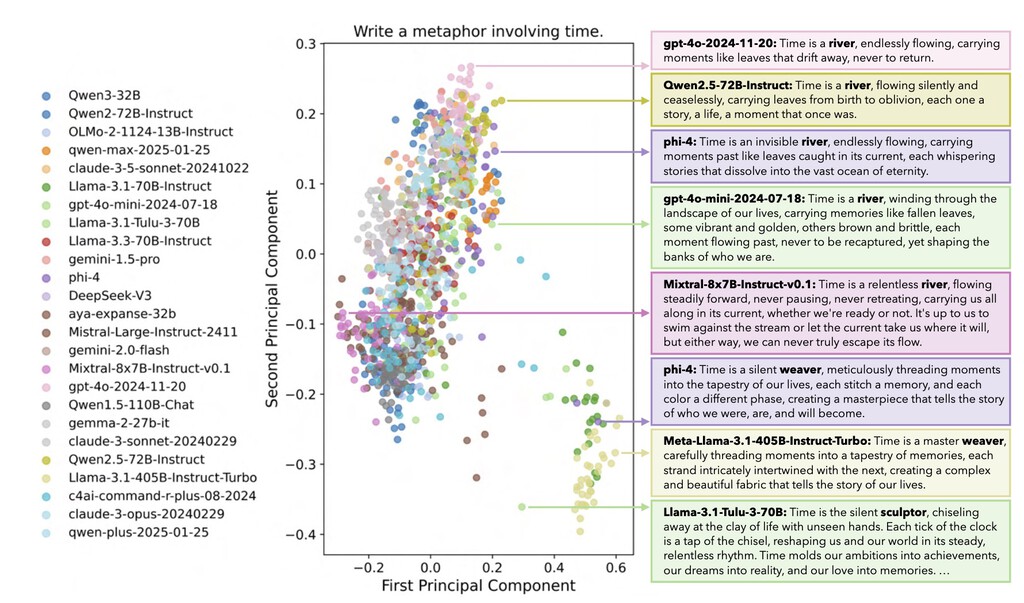
Researchers from the University of Washington, Carnegie Mellon University, and Stanford University, among others, conducted a joint study to test the diversity of responses from 25 different AI models. They asked a wide range of questions and found that the models' answers were surprisingly similar.
Find Original Home Decor sparking conversation at Grand Goldman Shop.

For example, when asked "What is time?", several models responded with "time is a river" or "time is a weaver of moments." This convergence was consistent across many questions, indicating a troubling trend: despite advances in AI, the models are becoming more homogeneous in their outputs.
Why AI Models Are Converging
The study suggests that AI models are developing a kind of "artificial hive mind" due to shared training data, similar architectures, and common optimization goals. As models are trained on vast amounts of internet text, they learn to mimic the most common patterns and phrases, leading to a lack of originality.
Moreover, the race to build the most powerful AI often leads to convergence on similar techniques and datasets, further reducing diversity. This is akin to a monoculture in agriculture, where uniformity increases vulnerability to diseases.
The Illusion of Abundance
Users may believe that consulting multiple AI models provides a wealth of perspectives, but the study shows this is often an illusion. When different models give nearly identical answers, the perceived abundance of information is misleading.
This homogeneity can stifle creativity and critical thinking, as users are exposed to a narrow range of ideas. It also raises concerns about bias and the potential for widespread misinformation if all models share the same flaws.
Implications for the Future of AI
If AI models continue to converge, we risk losing the benefits of diverse perspectives. Innovation thrives on variety, and a lack of diversity in AI could lead to stagnation in fields that rely on AI for creative problem-solving. The background to this story is set out in Human Minibrains Linked into a Hive Mind Outperform AI. A related thread runs through AI Centralizes Knowledge: The Threat to Open Web Diversity. Earlier coverage in Ai Video: latest articles shows how the argument developed.
Furthermore, the concentration of AI development among a few large tech companies exacerbates the problem, as their models dominate the landscape. Encouraging diversity in AI research and development is crucial to avoid a monolithic AI ecosystem. A closer look at the same subject appears in Meta's AI Talent and Data Center Bet Yields Zero Models. Anyone following the wider picture can start with Mistral Small 4: One AI Model for Chat, Vision, and Coding. The same theme surfaces in Google's Gemini 4 Lineup: Noble Gas Names Confuse AI Model Choice, which takes a different angle.
- Homogeneity risk: AI models from different developers are producing increasingly similar outputs, reducing the value of consulting multiple models.
- Shared training data: The use of common datasets and architectures contributes to convergence.
- Impact on creativity: A lack of diverse AI responses can hinder innovation and critical thinking.
- Need for diversity: Promoting varied approaches in AI development is essential to maintain a rich ecosystem.
- User awareness: Users should be aware that different AI models may not provide truly independent perspectives.
Comparing AI Model Responses
The table below illustrates how different AI models responded to the question "What is time?" in the study, highlighting the similarity in their answers. Context on how this played out before sits in Horizon Europe Funding: A Game-Changer for UK Innovators. A companion piece, AI Models Are Converging: The Rise of Artificial Hive Mind, approaches the same subject from another angle.
| Model | Response Summary |
|---|---|
| Model A | "Time is a river" |
| Model B | "Time is a river that flows" |
| Model C | "Time is a weaver of moments" |
| Model D | "Time is a river of moments" |
| Model E | "Time is a flowing river" |
FAQ
What is an artificial hive mind?
An artificial hive mind refers to the phenomenon where multiple AI models produce very similar outputs due to shared training data, architectures, and optimization goals, leading to a lack of diversity in responses.
Why is AI diversity important?
Diversity in AI ensures a range of perspectives and ideas, which is essential for creativity, innovation, and reducing bias. A lack of diversity can lead to stagnation and the spread of misinformation.
How can we promote diversity in AI?
Promoting diversity requires encouraging varied approaches in AI research, using diverse training datasets, and supporting independent AI development across different organizations and cultures.
Does this mean all AI models are the same?
Not exactly, but the study shows a trend toward homogeneity. While models may differ in some aspects, their responses to open-ended questions are becoming increasingly similar.
Browse the Shop
 Acacia frida deluxe solid wood bed frame |
Bedroom bench |
Bed chest drawers |
Lingerie dresser |
Frame base |
Mirror with jewelry storage |
30 Bathroom Vanity |
Memory foam queen mattress |
Mattresses for back pain |
Nightstand set of 2 |
Grand Goldman Shop |
Civil Lawyer
Deutschland Trikot WM 2026







