

Distributed data centers are emerging as a solution to the space and power problems plaguing giant facilities, and one San Francisco startup wants to put GPU nodes right in people's homes. SPAN, known for smart electrical panels and EV chargers, has launched XFRA, a "distributed data center solution" that installs NVIDIA GPU nodes directly in residential areas.
Instead of a massive building full of GPUs, these nodes are spread across neighborhoods in small panels that resemble large air conditioners. Each node contains 16 NVIDIA RTX PRO 600 Blackwell GPUs, 3TB of memory, and liquid cooling. The company argues this approach is quieter, more discreet, and makes energy more affordable for both the provider and the community.
Find Original Home Decor sparking conversation at Grand Goldman Shop.

Why Giant Data Centers Are Facing Pushback
Data centers have become the new cell towers: nobody wants to live near one, even with financial incentives. Concerns about pollution and rising local electricity bills are driving opposition. As AI demand surges, hyperscalers struggle to find suitable locations that can handle the power and cooling requirements.
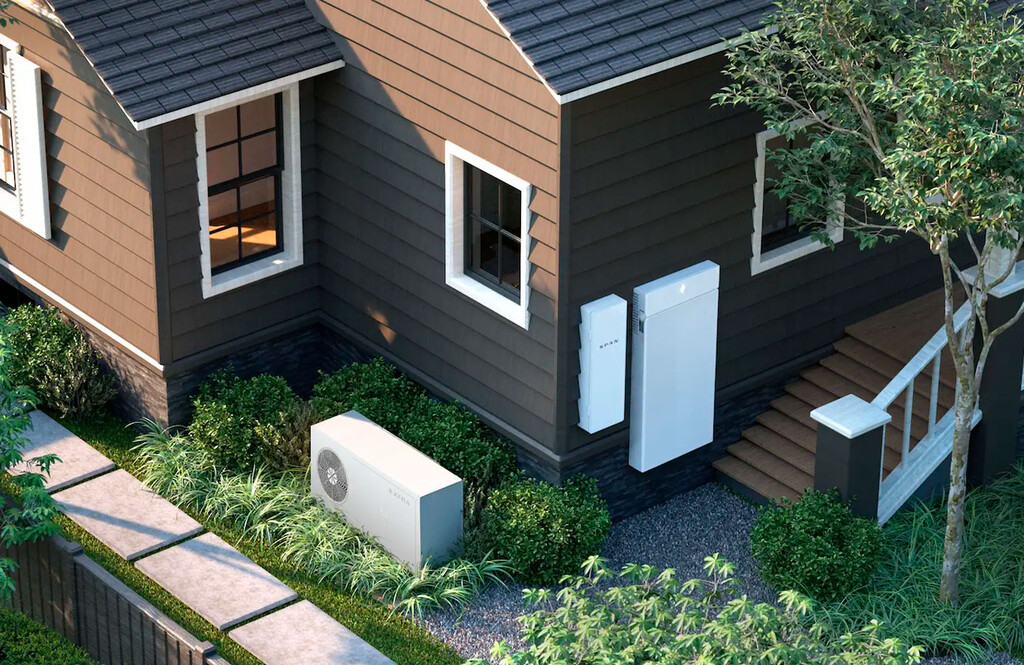
SPAN's vice president told Ars Technica that traditional data centers are "noisy, unsightly, and often drive up local electricity bills." The XFRA solution aims to address these issues by distributing the infrastructure and making it less intrusive.
How SPAN's Distributed Data Center Works
XFRA nodes are installed in homes and connected to the local grid. They use liquid cooling to manage heat and operate quietly. The nodes are designed to be unobtrusive, blending into residential environments. SPAN claims the system benefits both hyperscalers and homeowners: hyperscalers get distributed compute capacity without building new facilities, while homeowners may receive compensation or lower energy costs.
The company's existing products, like smart electrical panels, already manage home energy use. Adding GPU nodes could integrate with these systems to optimize power consumption and reduce strain on the grid.
Key Takeaways for Homeowners and Investors
- Space savings: Distributed nodes eliminate the need for large data center buildings.
- Energy efficiency: Local generation and consumption may reduce transmission losses.
- Community impact: Quieter and less visually intrusive than traditional facilities.
- Financial incentives: Homeowners could earn money or credits for hosting nodes.
- Scalability: Distributed approach can be deployed quickly across many locations.
Comparing Traditional and Distributed Data Centers
| Feature | Traditional Data Center | SPAN XFRA Distributed Node |
|---|---|---|
| Location | Dedicated building | Residential homes |
| Cooling | Air or liquid, often noisy | Liquid cooling, quiet |
| Visual impact | Large industrial structure | Small panel, resembles AC unit |
| Power source | Grid, sometimes strained | Local grid, potentially optimized |
| Community reaction | Often opposed | Potentially more accepted |
Challenges and What to Watch Next
Distributing data centers raises questions about security, maintenance, and reliability. Each node must be physically secure and monitored remotely. SPAN will need to prove that home installations can match the uptime and performance of centralized facilities.
Regulatory hurdles also exist: zoning laws and utility regulations may not be prepared for residential GPU clusters. Additionally, the heat generated by 16 GPUs could impact home cooling systems, though liquid cooling helps. The background to this story is set out in Nvidia GPUs: Hyperscalers Hoard Billions in Unused Chips. A related thread runs through Nvidia RTX Price Hikes Up to 30%: Is Now the Worst Time to Buy a GPU.
As AI continues to drive demand for compute, innovative solutions like XFRA could become more common. The success of this model will depend on partnerships with hyperscalers and the willingness of homeowners to participate. Earlier coverage in Nvidia Skips New Gaming GPUs in 2026 as AI Chip Demand Soars shows how the argument developed. A closer look at the same subject appears in Nvidia RTX 5090 Shortage: Chinese AI Labs Are Stripping Gaming GPUs.
FAQ
What is SPAN's XFRA?XFRA is a distributed data center solution that installs NVIDIA GPU nodes in homes, aiming to reduce the space and power issues of traditional data centers.
How many GPUs are in each node?Each XFRA node contains 16 NVIDIA RTX PRO 600 Blackwell GPUs, along with 3TB of memory and liquid cooling.
Do homeowners get paid for hosting a node?SPAN claims the solution benefits both hyperscalers and homeowners, suggesting financial incentives may be offered, though details are not specified.
Is this safe for residential areas?SPAN emphasizes that the nodes are quiet and discreet, but security and maintenance concerns remain to be addressed.
While SPAN's distributed data centers target space and power issues, other communities are fighting to protect natural resources from tech giants. In Finland, for example, activists have successfully halted Google's tree clearing for a data center, highlighting growing resistance to traditional infrastructure. You can read the full story about Finlandia detiene la tala de Google para centros de datos to understand the local impact.
The energy sector is watching these developments closely, as distributed solutions could reshape how power is consumed and generated. For a deeper dive into similar conflicts, see how Finlandia detiene la tala de Google para centros de datos illustrates the tension between digital growth and environmental preservation.
As SPAN's XFRA moves forward, it will be interesting to see if homeowners embrace the idea of hosting GPU nodes. The outcome may influence how Finlandia detiene la tala de Google para centros de datos and other projects are perceived in the future.
For now, the distributed data center concept offers a glimpse into a possible future where compute is woven into the fabric of our neighborhoods. Whether it's a genius idea or a folly remains to be seen, but it's certainly a development worth watching. The energy utilities sector will play a crucial role in integrating these systems, and lessons from Finlandia detiene la tala de Google para centros de datos could inform best practices.
Browse the Shop
 Acacia frida deluxe solid wood bed frame |
Bedroom bench |
Bed chest drawers |
Lingerie dresser |
Frame base |
Mirror with jewelry storage |
30 Bathroom Vanity |
Memory foam queen mattress |
Mattresses for back pain |
Nightstand set of 2 |
Grand Goldman Shop |
Civil Lawyer
Deutschland Trikot WM 2026







