

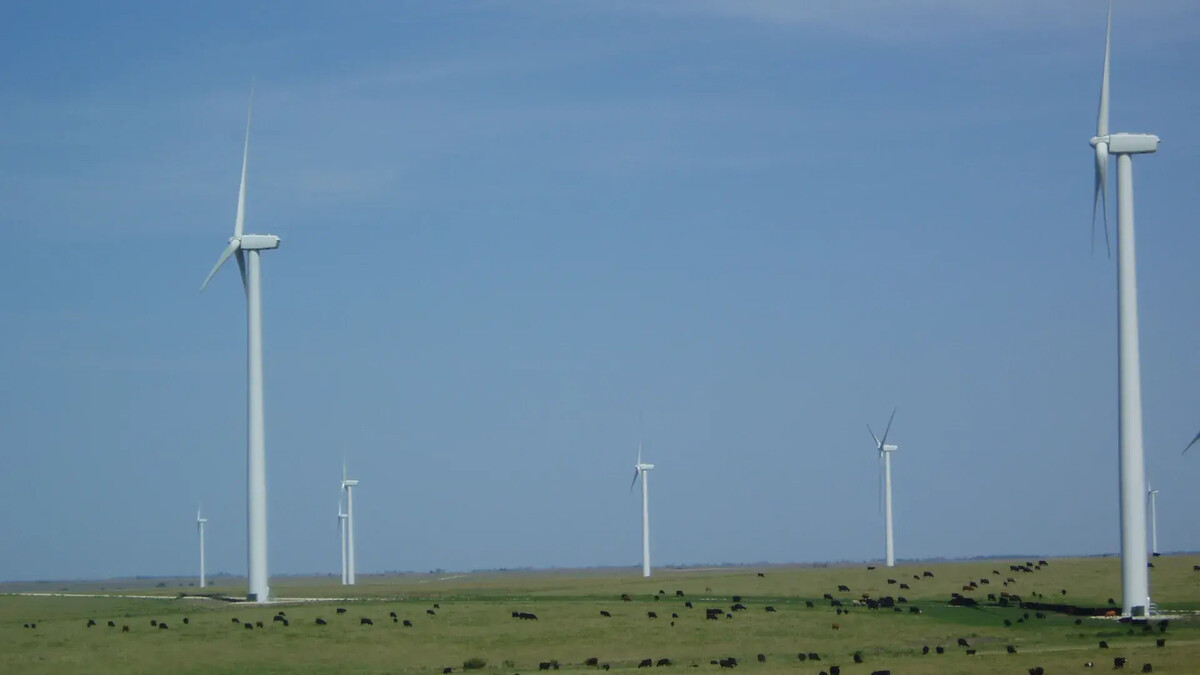
A Kansas farmer who installed wind turbines among his cows 30 years ago has turned his ranch into a lucrative wind farm. The story of Pete Ferrell and his family's ranch in Beaumont, Kansas, shows how renewable energy can provide a steady income stream for rural landowners while continuing traditional agricultural practices.
From Windmill to Wind Farm: A Century of Energy Innovation
The Ferrell family's journey with wind power began in 1923 when they installed a Jacobs Windjammer to generate electricity for their home, as the grid hadn't reached their remote ranch. That small windmill, connected to batteries, powered their lights and appliances when few others had access to electricity.
Find Original, High-end Home Decor that spark conversation at Grand Goldman Shop.
Fast forward to the 1990s, and the family faced a new opportunity. The same winds that once powered their homestead could now generate significant revenue. Pete Ferrell, the fourth generation on the ranch, decided to lease land to a wind energy company, leading to the installation of 50 massive wind turbines across the family's 7,000-acre property in the Flint Hills.
How the Ferrell Ranch Became a Wind Energy Pioneer
The Ferrell ranch, established in 1888 by Pete's great-grandfather, spans about 7,000 acres of tallgrass prairie in the Flint Hills. The area's elevated terrain and abundant wind make it ideal for wind energy production. Ferrell often jokes that his great-grandfather accidentally chose a perfect spot for a wind farm over a century later.
When the wind company approached, Ferrell saw an opportunity to diversify income and secure the ranch's future. The turbines now stand among the cattle, allowing the family to continue raising livestock while earning lease payments from the wind farm. This dual use of land is a key advantage of wind energy development in rural areas.
The Financial Windfall: How Much Can Landowners Earn?
While specific figures for the Ferrell ranch aren't disclosed, wind lease payments typically range from $3,000 to $5,000 per turbine per year, depending on the project. With 50 turbines, that could mean $150,000 to $250,000 annually—a substantial boost for a family operation.
These payments provide a stable income stream that isn't affected by cattle prices or crop yields, helping to smooth out the financial ups and downs of farming. For many rural landowners, wind leases have become a vital part of their financial strategy.
Balancing Cattle and Turbines: What It Means for the Ranch
One common concern about wind farms is their impact on livestock and land use. At the Ferrell ranch, cattle continue to graze around the turbines, and the family reports no significant issues. The turbines take up only a small fraction of the land, and the lease agreements typically include provisions for road maintenance and land restoration.
Studies have shown that cattle generally adapt well to the presence of wind turbines, and the additional income can help ranchers invest in their operations. For the Ferrells, the wind farm has become an integral part of the ranch's legacy, ensuring it remains viable for future generations. The background to this story is set out in Energy Utilities: latest articles. A related thread runs through Spain's Renewable Energy Edge Attracts Car Factories Over Slovakia. Earlier coverage in US Diesel Export Ban: Why Trump's Proposal Could Backfire shows how the argument developed.
Key Takeaways from the Ferrell Ranch Wind Project
- Dual land use: Wind turbines can coexist with cattle grazing, allowing landowners to earn income from both.
- Long-term income: Wind leases provide stable, multi-year revenue that can help sustain family farms and ranches.
- Renewable energy: Projects like this contribute to clean energy goals while supporting rural economies.
- Legacy planning: Wind income can help keep land in the family by providing funds for succession planning and operations.
- Community impact: Wind farms can bring additional tax revenue and jobs to rural areas.
Wind Energy by the Numbers: A Comparison
| Factor | Traditional Windmill (1923) | Modern Wind Turbine (2020s) |
|---|---|---|
| Power output | ~1 kW | 2-3 MW |
| Number on ranch | 1 | 50 |
| Primary use | Home electricity | Grid supply & income |
| Land impact | Minimal | Small footprint per turbine |
| Income potential | None (cost savings) | $3,000-$5,000 per turbine/year |
What This Means for Rural Landowners and the Future of Energy
The Ferrell ranch story is a powerful example of how rural landowners can benefit from the energy transition. As wind and solar projects expand, more farmers and ranchers are considering leasing land for renewable energy. This trend not only provides financial stability but also helps diversify the rural economy. A closer look at the same subject appears in Students Build Greenhouses from 2,000 Plastic Bottles. Anyone following the wider picture can start with Adults-Only Weddings in Spain: Why Couples Are Banning Kids. The same theme surfaces in Xbox Layoffs and Studio Closures: Is There a Real Plan, which takes a different angle.
For those interested in exploring wind energy, it's essential to understand lease agreements, potential impacts, and the long-term implications. Consulting with legal and energy experts can help landowners make informed decisions. The Ferrell family's experience shows that with careful planning, wind energy can be a win-win for both the environment and agriculture. Context on how this played out before sits in NASA Teases SR-71 Blackbird Successor with Mysterious Shadow. A companion piece, Kansas Farmer Installs Wind Turbines Among Cows and Strikes It Rich, approaches the same subject from another angle.
FAQ
How much do wind turbines pay landowners?
Wind lease payments vary by project and location, but typically range from $3,000 to $5,000 per turbine per year. Some landowners also receive a percentage of revenue. The total income depends on the number of turbines and the specific terms of the lease.
Can cattle graze around wind turbines?
Yes, cattle can graze around wind turbines with minimal disruption. The turbines occupy only a small portion of the land, and livestock generally adapt quickly to their presence. Many wind farms are designed to allow continued agricultural use.
How long do wind leases last?
Wind leases often last 20 to 30 years, with options for renewal. The agreements typically include provisions for decommissioning and land restoration at the end of the project's life. Landowners should carefully review lease terms before signing.
What are the benefits of wind energy for rural communities?
Wind energy projects can bring significant economic benefits to rural communities, including lease payments to landowners, property tax revenue, and local jobs. They also support the transition to clean energy and can help stabilize farm incomes.
Browse the Shop
 Acacia frida deluxe solid wood bed frame |
Bedroom bench |
Bed chest drawers |
Lingerie dresser |
Frame base |
Mirror with jewelry storage |
30 Bathroom Vanity |
Memory foam queen mattress |
Mattresses for back pain |
Nightstand set of 2 |
Grand Goldman Shop |
Civil Lawyer
Deutschland Trikot WM 2026










