

Nvidia's DLSS 5 has ignited a fierce debate in the gaming community, with many calling the new AI rendering technology an "AI slop filter" that makes games look like they have an Instagram beauty filter applied. The backlash was so swift and unanimous that Nvidia had to publicly clarify how the technology works and how much control developers actually have over these visual enhancements.
What Is DLSS 5 and How Does It Work?
DLSS, or Deep Learning Super Sampling, debuted in 2019 as an intelligent upscaling system: the GPU renders at a lower resolution and AI reconstructs each frame up to 4K with minimal quality penalty. Each iteration—DLSS 3, 3.5, 4, 4.5—kept that same goal, but DLSS 5 breaks from that logic entirely.
Find Original Home Decor sparking conversation at Grand Goldman Shop.

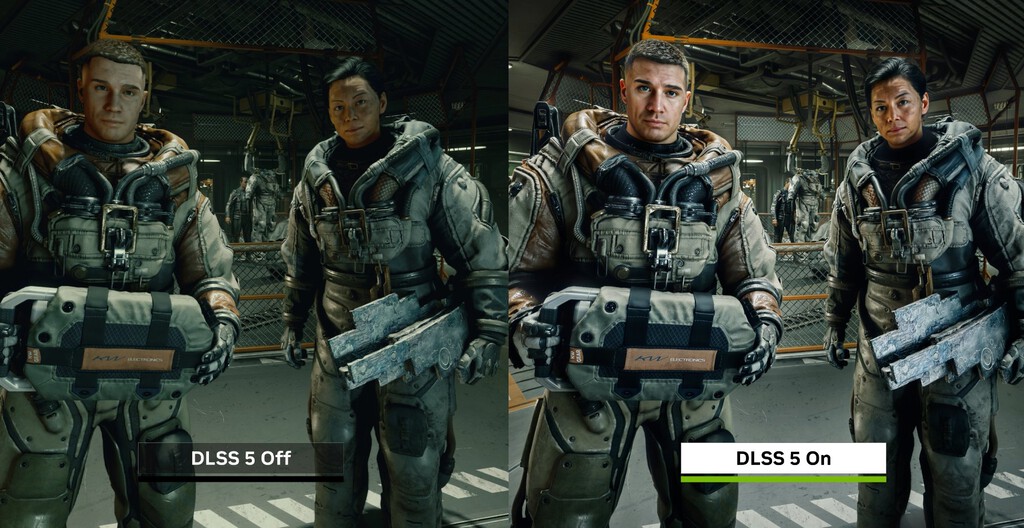
According to Nvidia's own announcement, DLSS 5 is a real-time neural rendering model that analyzes the color and motion vectors of each frame and generates photorealistic lighting and materials on top of them. The system recognizes scene semantics—skin, hair, fabrics, metals—and applies its own interpretation of how those elements should look under real physical lighting.
Jensen Huang summed up the ambition: "Twenty-five years after Nvidia invented the programmable shader, we are reinventing graphics." The company positioned DLSS 5 at GTC 2026 as the biggest graphical leap since ray tracing.
Why Gamers Are Calling It an AI Beauty Filter
The negative reaction was immediate and nearly universal. Players and industry professionals alike criticized the technology for making characters look overly smoothed, plastic-like, and uncanny—as if a social media beauty filter had been applied to every frame.
The core issue is that DLSS 5 doesn't just upscale; it reinterprets. By generating its own lighting and materials based on scene semantics, it can override artist intent. A character's skin might look more "realistic" by the AI's definition, but lose the stylized grit the developer intended.
This marks a fundamental shift from previous DLSS versions, which aimed to reconstruct the original image as faithfully as possible. DLSS 5 essentially creates a new image, one that may not match the original vision.
Nvidia's Response and Developer Control
Facing the backlash, Nvidia clarified that developers retain control over how DLSS 5 is implemented. The company emphasized that the technology is not a one-size-fits-all filter and that studios can adjust its intensity or disable specific effects.
However, critics argue that even with developer control, the underlying model's bias toward photorealism could homogenize art styles across games. If DLSS 5 becomes a standard feature, developers might feel pressured to use it to meet performance targets, potentially sacrificing artistic identity for frame rates.
Nvidia also pointed out that DLSS 5 is optional and that games will still render natively without it. But in a market where upscaling is increasingly necessary for 4K gaming, the line between optional and essential is blurry. The longer history behind the story is traced in NVIDIA DLSS 5: Neural Rendering Ushers in a New Era for PC Gaming.
Key Takeaways for Gamers and Developers
- DLSS 5 is a paradigm shift: It moves from image reconstruction to neural rendering, generating new lighting and materials rather than just upscaling.
- Backlash is widespread: Players and professionals criticize the "AI beauty filter" look, fearing loss of artistic intent.
- Developer control is emphasized: Nvidia says studios can adjust or disable DLSS 5 effects, but concerns about homogenization remain.
- Performance vs. fidelity: DLSS 5 promises photorealistic visuals with minimal performance cost, but may alter the original art style.
- Future adoption uncertain: How developers implement DLSS 5 will determine whether it becomes a standard or a niche feature.
DLSS 5 vs. Previous Versions: What's Different?
| Feature | DLSS 4.5 | DLSS 5 |
|---|---|---|
| Primary Function | AI upscaling and frame generation | Real-time neural rendering |
| Approach | Reconstructs image from lower resolution | Generates lighting and materials based on scene semantics |
| Artistic Control | Preserves original image closely | Reinterprets scene, may override artist intent |
| Performance Impact | Minimal quality loss, high frame rates | Promises photorealistic visuals with minimal penalty |
| Community Reaction | Generally positive | Mixed to negative, "AI beauty filter" criticism |
What This Means for the Future of Game Graphics
The DLSS 5 controversy highlights a growing tension between technical innovation and artistic integrity. As AI becomes more deeply integrated into rendering pipelines, the question of who controls the final image—the developer or the algorithm—becomes critical. The background to this story is set out in NVIDIA DLSS 5 Backlash: Jensen Huang Says Critics Are Wrong. A related thread runs through DLSS 5 Release Date Set: Nvidia's Neural Rendering Leap. Earlier coverage in Best Value Graphics Cards for 2026: Top Picks for Gaming PCs shows how the argument developed.
Nvidia's challenge is to convince both developers and players that DLSS 5 enhances rather than erases creative vision. The company's clarification is a first step, but the real test will come when games using DLSS 5 launch and players see the results firsthand. A closer look at the same subject appears in Gun Buyback Debate Ignites After Sydney Boy Shooting. Anyone following the wider picture can start with Gaming: latest articles. The same theme surfaces in GTA VI Hype: Why Grand Theft Auto Looks More Appealing Than Reality, which takes a different angle.
If Nvidia can strike the right balance, DLSS 5 could indeed be a milestone. If not, it may join the ranks of technologies that promised photorealism but delivered uncanny valleys. Context on how this played out before sits in DLSS 5 Hands-On: Subtle Upgrades in NBA 2K27, Not a Movie. A companion piece, Nvidia DLSS 4.5 Ray Reconstruction Brings AI Image Boost to All RTX Cards, approaches the same subject from another angle.
FAQ
What is DLSS 5?
DLSS 5 is Nvidia's real-time neural rendering technology that analyzes each frame's color and motion vectors to generate photorealistic lighting and materials. Unlike previous versions that focused on upscaling, DLSS 5 reinterprets scene elements like skin, hair, and metals.
Why are people calling DLSS 5 an AI beauty filter?
Critics say DLSS 5 makes characters look overly smoothed and plastic-like, similar to social media beauty filters. The technology's tendency to impose its own interpretation of realism can override the original art style, leading to an uncanny appearance.
Do developers have control over DLSS 5?
Nvidia states that developers can adjust or disable DLSS 5 effects. However, concerns remain that the technology's photorealistic bias could homogenize art styles if widely adopted.
Will DLSS 5 be mandatory in future games?
DLSS 5 is optional, but as upscaling becomes more necessary for high-resolution gaming, developers may feel pressured to use it. The extent of its adoption will depend on how well Nvidia addresses artistic concerns.
Browse the Shop
 Acacia frida deluxe solid wood bed frame |
Bedroom bench |
Bed chest drawers |
Lingerie dresser |
Frame base |
Mirror with jewelry storage |
30 Bathroom Vanity |
Memory foam queen mattress |
Mattresses for back pain |
Nightstand set of 2 |
Grand Goldman Shop |
Civil Lawyer
Deutschland Trikot WM 2026







