

Elon Musk's Tesla Roadster in space has become an unexpected icon. Launched in February 2018 aboard the first Falcon Heavy rocket, the car and its passenger Starman have spent eight years orbiting the Sun, capturing global attention and sparking scientific curiosity.
The Launch That Started It All
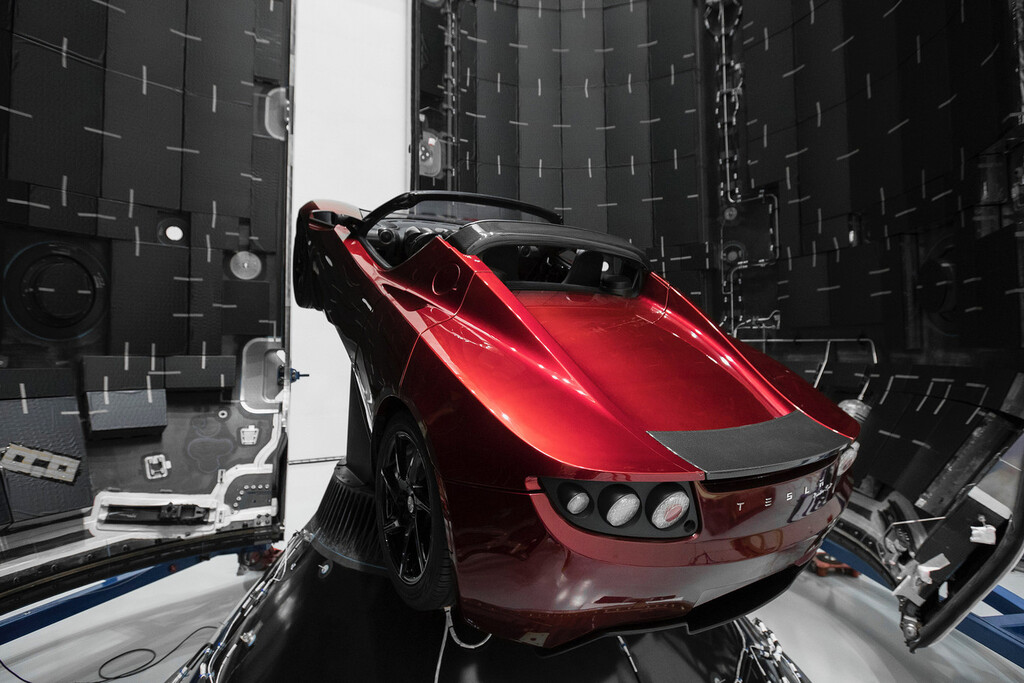
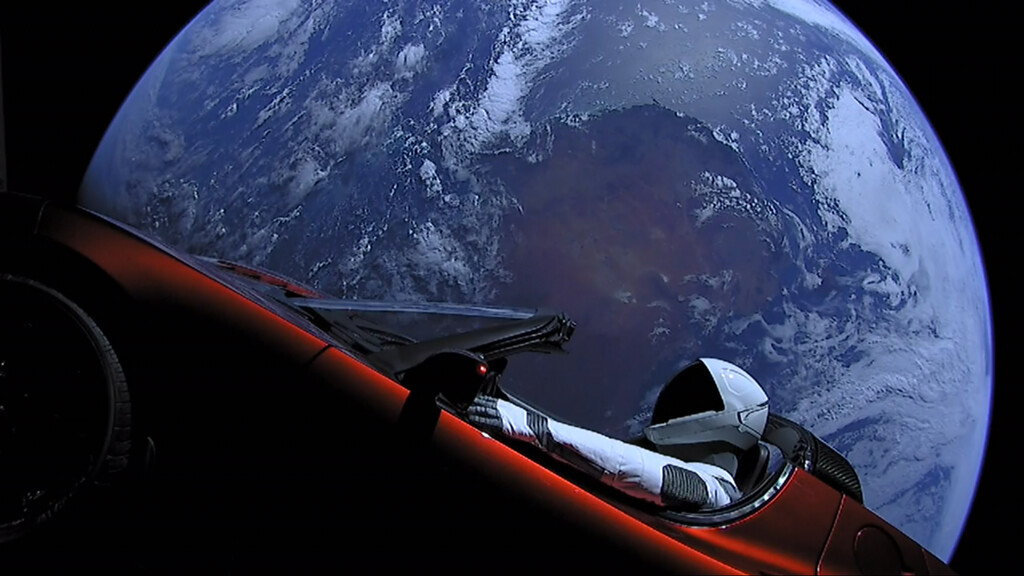
On February 6, 2018, SpaceX launched the Falcon Heavy for the first time. The payload was unusual: a midnight cherry Tesla Roadster owned by Elon Musk, with a mannequin dubbed Starman in the driver's seat. The car was intended as test cargo to demonstrate the rocket's capabilities.
Find Original Home Decor sparking conversation at Grand Goldman Shop.

The mission was a success, and the upper stage, with the Roadster attached, was placed into a heliocentric orbit. This means it orbits the Sun, not Earth, traveling between the orbits of Earth and Mars. According to NASA, the elliptical path takes it as far out as the asteroid belt and as close in as Earth's orbit.
Why the Roadster Still Matters
The Roadster is more than a publicity stunt. It serves as a test object for tracking and identifying artificial objects in space. Its journey helps scientists and engineers understand how man-made objects behave over long periods in deep space.
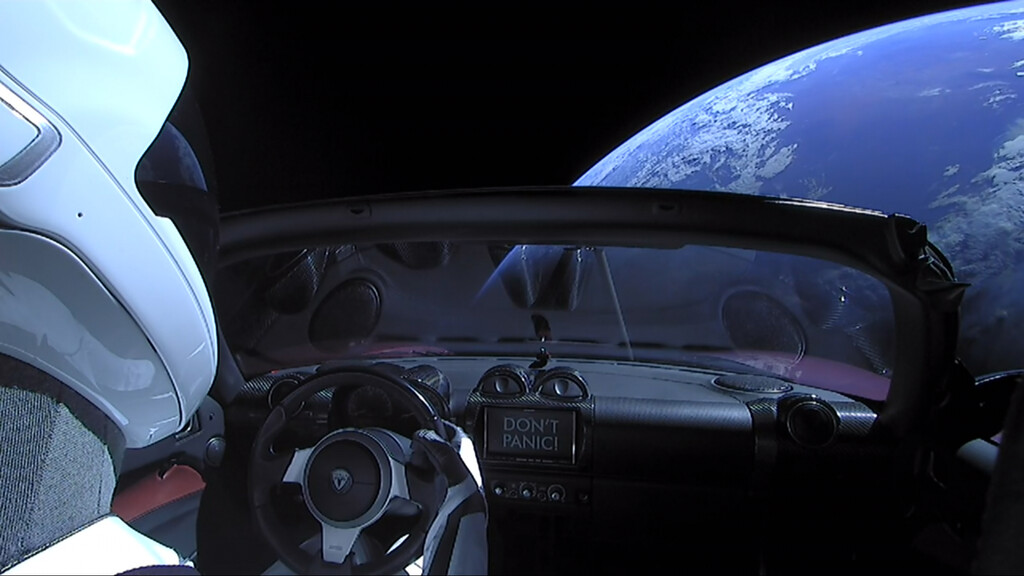
Moreover, the car has become a cultural phenomenon. It has inspired art, music, and countless memes. For many, it symbolizes the audacity of private space exploration and the merging of pop culture with science.
The 2025 Identification Mix-Up
In January 2025, the Minor Planet Center (MPC) of the International Astronomical Union announced the discovery of a new near-Earth object, designated 2018 CN41. However, just a day later, the MPC issued a correction: the object's orbit matched that of the artificial object 2018-017A, the Falcon Heavy upper stage with the Tesla Roadster.
This incident highlights the challenges of tracking objects in space. As more artificial objects are launched, distinguishing them from natural asteroids becomes increasingly important. The Roadster's misidentification underscores the need for better tracking and identification protocols.
What's Next for the Roadster?
The Roadster will continue its orbit for millions of years. Its future path is uncertain, but it poses no threat to Earth. In fact, it will likely never come close to our planet again. However, it serves as a reminder of humanity's growing presence in space. The background to this story is set out in Why Tesla's Roadster Stunt Was Marketing, Not a Car Launch. A related thread runs through Tesla Roadster: The 1.9-Second EV That Still Isn't Here. Earlier coverage in Elon Musk Documentary Reveals Six Shocking Truths shows how the argument developed.
As space traffic increases, the lessons learned from tracking the Roadster will be invaluable. They will help in developing strategies for planetary defense and space debris management. A closer look at the same subject appears in SpaceX Avoids Labor Lawsuits with Unexpected Legal Maneuver. Anyone following the wider picture can start with SpaceX Rocket Crashes into Moon: What It Means for Space Debris. The same theme surfaces in SpaceX Gets Military Space Tracking Data: National Security Concerns, which takes a different angle.
Key Takeaways
- The Tesla Roadster was launched in 2018 as test cargo for the Falcon Heavy.
- It orbits the Sun between Earth and Mars, not Earth.
- In 2025, it was briefly misidentified as a near-Earth asteroid.
- The car symbolizes private space exploration and pop culture.
- Tracking artificial objects is crucial for space safety.
Comparing Orbits: Roadster vs. Earth and Mars
| Object | Orbit Type | Distance from Sun (approx.) | Orbital Period |
|---|---|---|---|
| Tesla Roadster | Heliocentric elliptical | 0.99 - 1.67 AU | ~1.5 years |
| Earth | Heliocentric circular | 1 AU | 1 year |
| Mars | Heliocentric elliptical | 1.38 - 1.67 AU | ~1.9 years |
Note: AU stands for Astronomical Unit, the average distance from Earth to the Sun. Context on how this played out before sits in SpaceX to Attempt Full Starship Recovery and Reuse. A companion piece, SpaceX Starfall: The Future of Space Package Delivery, approaches the same subject from another angle.
FAQ
Is the Tesla Roadster still in space?
Yes, the Tesla Roadster and Starman are still in space, orbiting the Sun. They are expected to continue this journey for millions of years.
Will the Roadster ever return to Earth?
No, the Roadster's orbit does not bring it back to Earth. It will continue to orbit the Sun and may eventually collide with Earth or another planet, but not for millions of years.
Why was the Roadster mistaken for an asteroid?
The Roadster's orbit is similar to that of some near-Earth asteroids, leading to a brief misidentification by the Minor Planet Center in 2025. This highlights the challenges of tracking artificial objects in space.
What is Starman?
Starman is a mannequin wearing a SpaceX spacesuit, placed in the driver's seat of the Tesla Roadster. It was included as a fun and symbolic passenger for the test flight.
Browse the Shop
 Acacia frida deluxe solid wood bed frame |
Bedroom bench |
Bed chest drawers |
Lingerie dresser |
Frame base |
Mirror with jewelry storage |
30 Bathroom Vanity |
Memory foam queen mattress |
Mattresses for back pain |
Nightstand set of 2 |
Grand Goldman Shop |
Civil Lawyer
Deutschland Trikot WM 2026







