

Google has mapped the brain of a fruit fly, and the community has already trained it to play Doom and Super Mario 64. This isn't a joke—it's a remarkable demonstration of how open scientific data can be used in unexpected ways.
The project, a decade-long effort by the HHMI Janelia Research Campus and Google Research, produced the most complete neuronal map of an adult Drosophila melanogaster to date. The map, called a connectome, shows every neuron and synapse in the fly's brain. It's a huge leap for neuroscience, and the internet did what it does best: turned it into a game.
Find Original, High-end Home Decor that spark conversation at Grand Goldman Shop.
What Exactly Did Google Map?
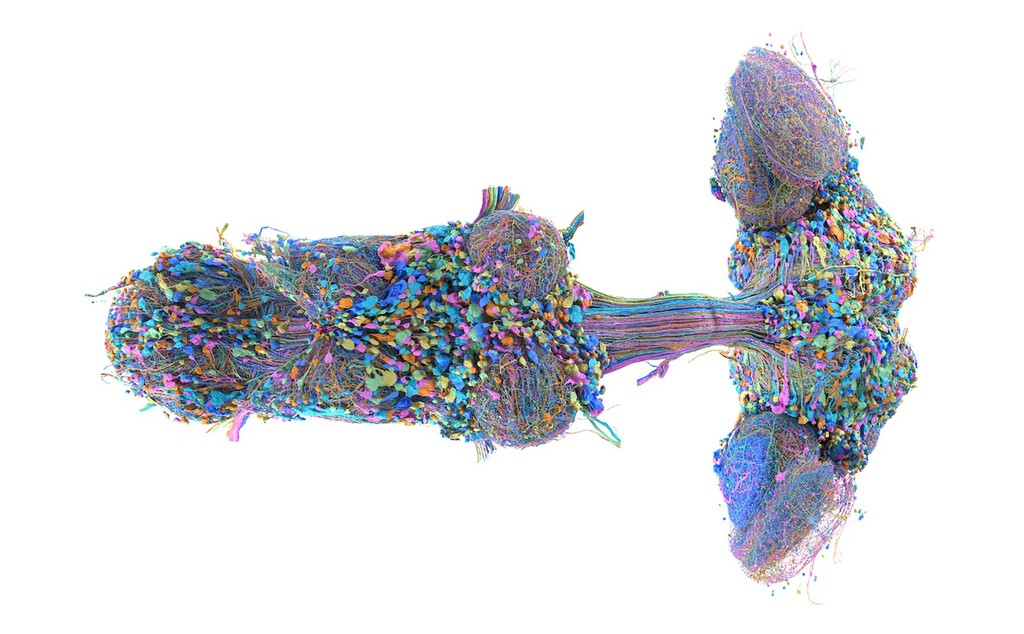
The fruit fly brain is tiny—about the size of a poppy seed—but it contains roughly 100,000 neurons and millions of connections. To map it, researchers sliced the brain into ultra-thin sections, imaged each slice at high resolution, and then used AI to stitch the images into a 3D model. The result is a wiring diagram that shows how every neuron connects to every other neuron.
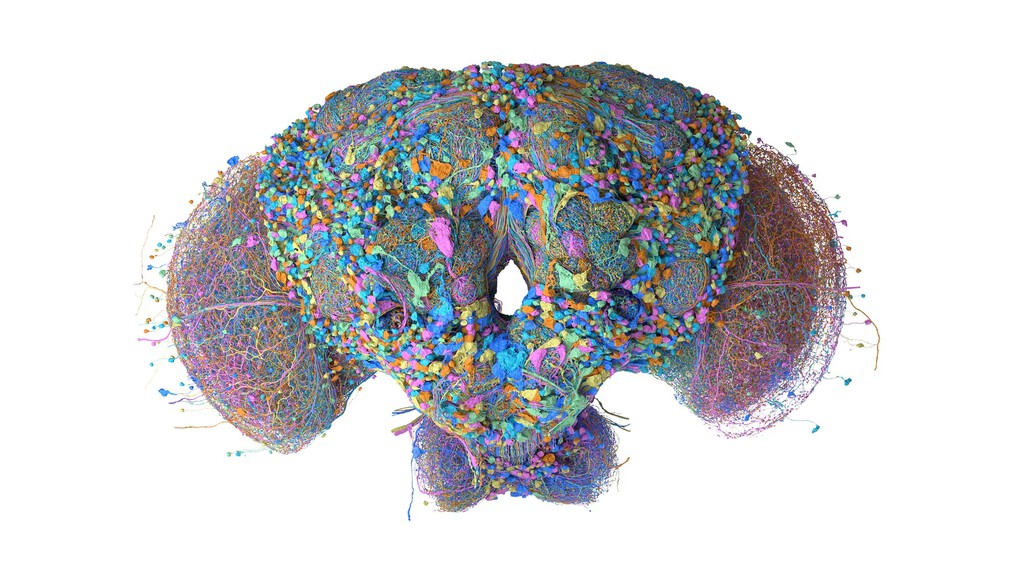
Google published the map on September 3rd, and it's freely available for anyone to explore. The map is color-coded: blue segments, for example, handle specific processing tasks. It's like having the source code for the fly's nervous system.
Why the Fly Brain Matters for Neuroscience
Understanding the fly brain is a stepping stone to understanding our own. The fly is a model organism—its brain is simpler, but many of the basic principles of neural computation are shared across species. By studying how the fly processes sensory information, learns, and behaves, researchers can gain insights into how our brains work.

This connectome is particularly valuable because it's complete and precise. Previous maps were partial or lower resolution. With this data, scientists can simulate the fly's brain activity and test hypotheses about neural circuits.

How the Community Trained the Brain to Play Games
Almost immediately after the data was released, developers and hobbyists began experimenting. The idea: use the connectome as the basis for a neural network and see if it can learn tasks. One popular project involved training the digital brain to play classic games like Doom and Super Mario 64.
These games are often used in AI research because they require real-time decision-making, spatial reasoning, and motor control—all things a brain, even a fly's, might handle. By connecting the fly's neural network to a game interface, the community created a quirky but fascinating testbed for the connectome.
What Can We Learn from a Fly Playing Doom?
While a fly playing Doom might seem silly, it's actually a clever way to probe the network's capabilities. It tests whether the connectome contains the circuitry for learning and adaptation. If the digital brain can improve at the game, it suggests that the map captures something fundamental about how neural circuits process information.
Of course, the fly brain isn't actually playing the game—it's a simulation. But the exercise highlights the potential of connectomes for AI and robotics. Someday, similar maps might inform the design of more efficient neural networks.
Key Takeaways
- Google and Janelia Research Campus released the most complete connectome of an adult fruit fly brain.
- The map is open to the public and has already been used to train a digital brain to play Doom and Super Mario 64.
- Understanding the fly brain could lead to insights about human neuroscience and AI.
- The project demonstrates the power of open data and community innovation.
- While the games are fun, they also serve as a test of the connectome's completeness and functionality.
Comparing the Fly Brain to Other Model Organisms
The fruit fly is one of many model organisms used in neuroscience. Each has its own advantages. The table below compares the fly connectome to other well-studied organisms.
| Organism | Neurons | Connectome Status | Notable For |
|---|---|---|---|
| Fruit fly (Drosophila) | ~100,000 | Complete (2024) | Learning, memory, and now gaming |
| Nematode (C. elegans) | 302 | Complete (1986) | First complete connectome |
| Mouse | ~70 million | Partial | Mammalian model |
| Human | ~86 billion | In progress | Ultimate goal |
The fly strikes a balance between complexity and manageability, making it ideal for connectomics. The background to this story is set out in Google Maps: 5+1 secrets every driver should know -How to activate them. A related thread runs through Google Maps Border Dispute: Ceuta and Melilla Sovereignty. Earlier coverage in Google Maps Images Reveal Massive Gaza Devastation Scale shows how the argument developed.
What's Next for the Fly Brain Project?
The release of the connectome is just the beginning. Researchers are already using it to study specific behaviors, such as how flies navigate, find food, and avoid predators. The map also provides a foundation for building computational models of the brain. A closer look at the same subject appears in UK Motorists Can Now See Live Fuel Prices on Google Maps. Anyone following the wider picture can start with Google Maps Ceuta and Melilla Border Sparks EU DSA Review. The same theme surfaces in Waze brings a feature that will make you forget about Google Maps, which takes a different angle.
Meanwhile, the community continues to push boundaries. Some are exploring whether the connectome can be used to control robots or to solve optimization problems. The possibilities are endless, and the fly brain is now a playground for innovation. Context on how this played out before sits in 20 Things Found On Google Maps That Are Just Too Disturbing. A companion piece, Oriental Fruit Fly Spotted in Italy: What You Need to Know, approaches the same subject from another angle.
FAQ
What is a connectome?
A connectome is a comprehensive map of neural connections in the brain. It shows how neurons are wired together and is essential for understanding how the brain processes information.
Why did the community train the fly brain to play games?
It's a way to test the connectome's functionality and to explore its potential for learning and adaptation. Games provide a challenging and measurable task for neural networks.
Can the fly brain actually play Doom?
Not in a literal sense. The connectome is used to create a simulated neural network that is then trained to play the game. It's a simulation, not a real fly.
How does this research benefit humans?
Understanding the fly brain helps us understand fundamental principles of neural computation, which can inform research on human brain disorders and the development of AI.
Browse the Shop
 Acacia frida deluxe solid wood bed frame |
Bedroom bench |
Bed chest drawers |
Lingerie dresser |
Frame base |
Mirror with jewelry storage |
30 Bathroom Vanity |
Memory foam queen mattress |
Mattresses for back pain |
Nightstand set of 2 |
Grand Goldman Shop |
Civil Lawyer
Deutschland Trikot WM 2026







