

Is Mars habitable? New research suggests that even the most indestructible creature on Earth—the tardigrade—cannot survive in Martian soil. This finding has significant implications for the search for extraterrestrial life and future human colonization of the Red Planet.
Tardigrades, also known as water bears, are microscopic animals renowned for their ability to withstand extreme conditions. They can survive the vacuum of space, intense radiation, and extreme desiccation. Because of these superpowers, they are often used in space research to study the limits of life. However, a recent study reveals that simulated Martian soil is toxic to these resilient creatures.
Find Original Home Decor sparking conversation at Grand Goldman Shop.

Why Tardigrades Are Key to Space Exploration
Tardigrades have earned a special place in space missions. NASA and other space agencies frequently send them to space to test the effects of harsh environments. Their near-indestructibility makes them ideal for studying how life might survive beyond Earth.
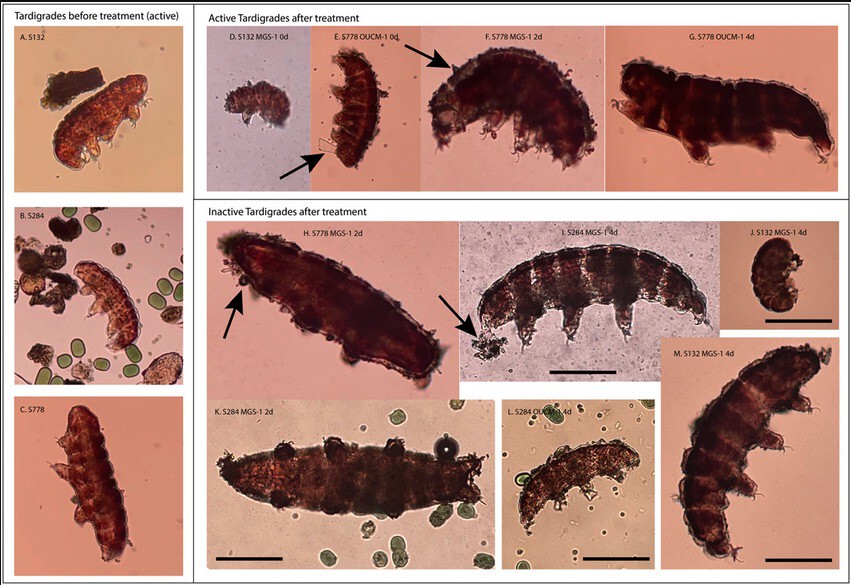
In this context, researchers wanted to see if tardigrades could survive in Martian soil. The goal was twofold: to assess whether they could help prepare cultivable soil on Mars, and to understand the risks if tardigrades escaped during a human mission.
The Experiment: Tardigrades vs. Martian Soil Simulant
The research team exposed two species of tardigrades—Hypsibius exemplaris and Ramazzottius S778—to a simulated Martian soil called MGS-1. This simulant is designed on Earth to mimic the properties of actual Martian regolith.
The results were grim for Hypsibius exemplaris: after just two days of exposure, no individuals survived. The Ramazzottius species fared slightly better, with some individuals surviving. However, the overall conclusion was clear: Martian soil is hostile to tardigrades.
What Makes Martian Soil Toxic?
The researchers noticed something crucial: when they washed the soil simulant, the damage to tardigrades decreased significantly. This suggests that a soluble chemical compound in the soil is responsible for the toxicity.
The prime suspect is a class of chemicals known as perchlorates. These compounds are found in Martian soil and are known to be toxic to many organisms. Perchlorates are highly oxidizing and can disrupt biological processes.
This finding is consistent with previous studies that have shown perchlorates to be toxic to bacteria and plants. It also raises questions about the habitability of Mars for any life form, not just tardigrades.
Implications for Mars Colonization
If tardigrades—some of the toughest organisms on Earth—cannot survive in Martian soil, the challenge of establishing life on Mars becomes even greater. This has direct implications for human colonization efforts.
One of the goals of Mars exploration is to grow food on the planet. If the soil is toxic, future colonists would need to find ways to remove perchlorates or use hydroponics. The study also highlights the importance of planetary protection: if tardigrades cannot survive, the risk of contaminating Mars with Earth life is lower, but it also means that any life that might have existed on Mars would face similar challenges. The background to this story is set out in Mars Magma Discovery Suggests Hidden Habitable Potential. A related thread runs through Mars Ice Dust Miscalculation: What It Means for Habitability. Earlier coverage in Tardigrade DNA Shield: Human Cells Get Radiation Protection shows how the argument developed.
What This Means for the Search for Life on Mars
The search for life on Mars is a major focus of astrobiology. The discovery that Martian soil is toxic to even the hardiest Earthlings suggests that life on Mars, if it exists, must have evolved unique adaptations. A closer look at the same subject appears in Mars Magma Rivers Boost Habitability Prospects for Rocky Planets. Anyone following the wider picture can start with Science: latest articles. The same theme surfaces in Perseverance Finds Mars Dust Threatens Astronaut Suits, which takes a different angle.
It also underscores the need for careful analysis of Martian soil samples. Future missions, such as the Mars Sample Return, could provide more insights into the composition of the soil and its potential for supporting life. Context on how this played out before sits in Earth-Like Exoplanet Found with Atmosphere in Habitable Zone. A companion piece, Enceladus Habitability Boosted by Earth Microbes Survival, approaches the same subject from another angle.
Key Takeaways
- Tardigrades, known for surviving extreme conditions, cannot survive in simulated Martian soil.
- The toxicity is likely due to soluble compounds such as perchlorates.
- This finding has implications for Mars colonization and the search for extraterrestrial life.
- Future research should focus on mitigating soil toxicity for human missions.
- Planetary protection protocols must consider the resilience of extremophiles.
Comparison of Tardigrade Survival in Different Environments
| Environment | Survival | Notes |
|---|---|---|
| Space vacuum | Yes | Tardigrades can survive for days |
| High radiation | Yes | Can withstand doses hundreds of times higher than humans |
| Extreme desiccation | Yes | Enter tun state |
| Martian soil simulant (MGS-1) | No (for Hypsibius exemplaris) | All died within 2 days |
| Washed Martian soil simulant | Improved survival | Indicates soluble toxin |
FAQ
What are tardigrades?
Tardigrades, also known as water bears, are microscopic animals that can survive extreme conditions, including space vacuum, radiation, and desiccation. They are used in space research to study the limits of life.
Why is Martian soil toxic to tardigrades?
Martian soil contains perchlorates, which are soluble chemical compounds that are highly oxidizing and toxic to many organisms. When researchers washed the soil simulant, the toxicity decreased, indicating that perchlorates are the likely culprit.
What does this mean for human colonization of Mars?
If tardigrades cannot survive in Martian soil, growing food on Mars will be challenging. Future colonists would need to remove perchlorates or use alternative methods like hydroponics. This also affects planetary protection protocols.
Could there be life on Mars despite the toxic soil?
It is possible that any life on Mars would have evolved adaptations to cope with perchlorates. However, the toxicity makes it less likely that Earth-like life could survive. Future missions will need to study the soil in more detail.
Browse the Shop
 Acacia frida deluxe solid wood bed frame |
Bedroom bench |
Bed chest drawers |
Lingerie dresser |
Frame base |
Mirror with jewelry storage |
30 Bathroom Vanity |
Memory foam queen mattress |
Mattresses for back pain |
Nightstand set of 2 |
Grand Goldman Shop |
Civil Lawyer
Deutschland Trikot WM 2026







