

Buckyballs, the spherical carbon molecules often described as space footballs, have puzzled astronomers since their discovery in space in 2010. Now, the James Webb Space Telescope (JWST) has finally solved the mystery of their formation and organization in nebula Tc1, revealing a stunning hierarchical structure.
In 1985, scientists first synthesized fullerenes, spherical carbon molecules with potential uses in nanotechnology and superconductivity. A specific type, buckyballs (C60), consists of 60 carbon atoms arranged in hexagons and pentagons like a soccer ball. In 2010, buckyballs were found naturally around the dying star nebula Tc1. But until now, their exact distribution and role remained unclear.
Find Original Home Decor sparking conversation at Grand Goldman Shop.

James Webb Space Telescope Reveals Buckyball Secrets in Nebula Tc1
The new observations, led by a team of Canadian scientists, used JWST's unprecedented infrared sensitivity to peer deep into Tc1. They detected delicate rays, ethereal filaments, and glowing layers of gas along the nebula's edge. At the heart of the nebula, they found a curious inverted question-mark structure whose purpose is still unknown.
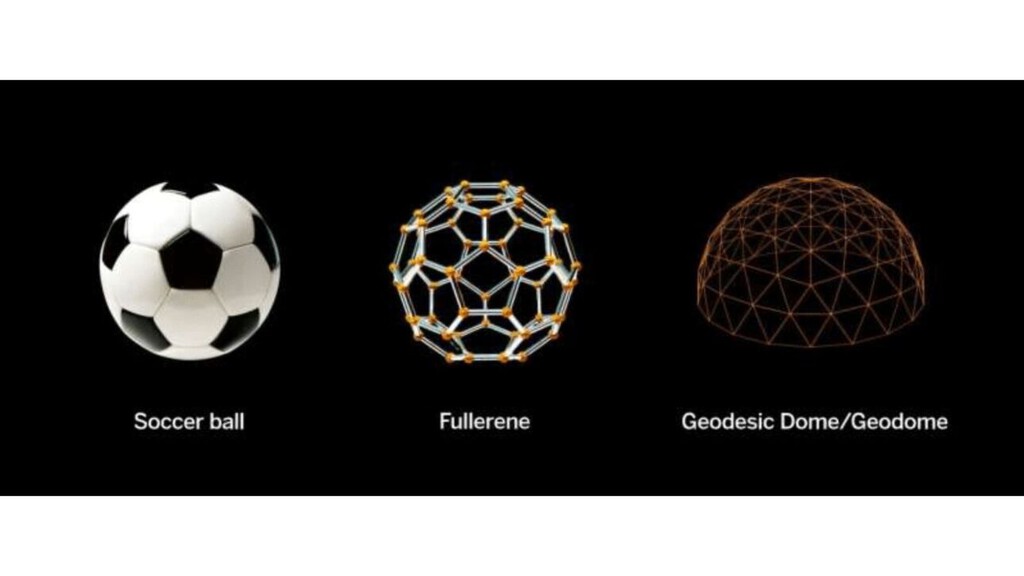
Most importantly, the buckyballs discovered in 2010 are not randomly scattered. They are perfectly organized into a larger hollow sphere, a massive structure that dwarfs the individual molecules. This suggests that buckyballs form in an orderly way as the star sheds its outer layers.
What Are Buckyballs and Why Do They Matter?
Buckyballs are among the largest molecules ever detected in space. Their stability and carbon-based nature make them important for understanding how complex organic molecules—possibly precursors to life—form in the harsh environment of space.
These molecules also have practical applications on Earth. Fullerenes are used in drug delivery, solar cells, and materials science. Understanding their natural formation in space could inspire new manufacturing techniques.
- Buckyballs are spherical carbon molecules with a soccer-ball shape, first synthesized in 1985.
- They were discovered in space in 2010 around the dying star nebula Tc1.
- JWST has now revealed that these molecules form a larger hollow sphere, indicating an organized process.
- The observations also uncovered delicate filaments and a mysterious inverted question-mark structure in the nebula's core.
- Understanding buckyballs in space could shed light on organic molecule formation and inspire terrestrial technologies.
How JWST Unraveled the Mystery
JWST's infrared instruments can penetrate dust that obscures visible light, allowing astronomers to map the distribution of buckyballs with unprecedented detail. The telescope's high resolution revealed that the molecules are not uniformly mixed but are concentrated in a shell around the nebula's center. Context on how this played out before sits in James Webb Solves the Mystery of Space Buckyballs in Nebula Tc1.
This shell likely formed as the dying star ejected its outer layers in pulses. The buckyballs then assembled in the cooling gas, perhaps catalyzed by shocks or ultraviolet radiation. The inverted question-mark structure might be a jet or a disk of material, but its exact nature remains a puzzle. The background to this story is set out in James Webb Space Telescope Maps 164,000 Galaxies in Epic Cosmic Survey. A related thread runs through Science: latest articles.
Comparison of Buckyball Observations
| Observation | Pre-JWST (2010) | JWST (Current) |
|---|---|---|
| Detection method | Spitzer Space Telescope | James Webb Space Telescope |
| Distribution of buckyballs | Unknown, assumed scattered | Organized in a hollow sphere |
| Nebula features resolved | Limited | Filaments, layers, inverted question-mark structure |
| Implications for formation | Unclear | Suggest orderly assembly in stellar outflows |
What This Means for Astronomy and Technology
The findings provide a new window into the chemistry of dying stars. Buckyballs may act as carriers of carbon and other elements, influencing the composition of interstellar material. They could also be precursors to more complex organic compounds. Earlier coverage in James Webb Analyzes Exoplanet LHS 3844b Surface Heat shows how the argument developed. A closer look at the same subject appears in James Webb Finds a Young Galaxy That Stopped Spinning Too Early.
On Earth, the insights might lead to better methods for producing fullerenes for industrial use. The organized shell structure suggests that buckyballs can self-assemble under the right conditions, a property that could be exploited in nanotechnology. Anyone following the wider picture can start with James Webb Lifts Galactic Gas Veil: How Baby Stars Shape Their Neighbors. The same theme surfaces in Meta Turns to Space Solar to Power AI Data Centers, which takes a different angle.
FAQ
What are buckyballs?
Buckyballs are spherical molecules made of 60 carbon atoms arranged in a pattern of hexagons and pentagons, resembling a soccer ball. They are a type of fullerene and were first synthesized in 1985.
Why are buckyballs important in space?
Buckyballs are among the largest molecules detected in space. Their presence around dying stars like Tc1 helps astronomers understand how complex carbon molecules form and survive in harsh environments, which could have implications for the origins of organic material.
What did the James Webb Space Telescope discover about buckyballs?
JWST revealed that buckyballs in nebula Tc1 are not randomly distributed but are organized into a larger hollow sphere. It also uncovered delicate filaments, glowing gas layers, and a mysterious inverted question-mark structure at the nebula's core.
Could buckyballs have practical applications on Earth?
Yes, fullerenes like buckyballs are already used in nanotechnology, drug delivery, and materials science. Understanding how they self-assemble in space could inspire new manufacturing techniques and applications.
Browse the Shop
 Acacia frida deluxe solid wood bed frame |
Bedroom bench |
Bed chest drawers |
Lingerie dresser |
Frame base |
Mirror with jewelry storage |
30 Bathroom Vanity |
Memory foam queen mattress |
Mattresses for back pain |
Nightstand set of 2 |
Grand Goldman Shop |
Civil Lawyer
Deutschland Trikot WM 2026







