

NASA has announced that the Nancy Grace Roman Space Telescope will launch on August 30, 2026, moving up from its previous target of May 2027. This rare acceleration highlights NASA's efficient resource management and could bring revolutionary astronomical discoveries sooner.
The Roman Space Telescope, often called Roman, is designed to unravel the mysteries of dark energy, exoplanets, and infrared astrophysics. Its earlier launch means the scientific community can start gathering data years ahead of schedule.
Find Original Home Decor sparking conversation at Grand Goldman Shop.

Why the Roman Space Telescope Launch Date Moved Up
Space agencies typically set optimistic launch dates and then delay them due to technical challenges or budget constraints. NASA, however, has managed to streamline processes and optimize resources, allowing the Roman mission to leapfrog its original timeline.
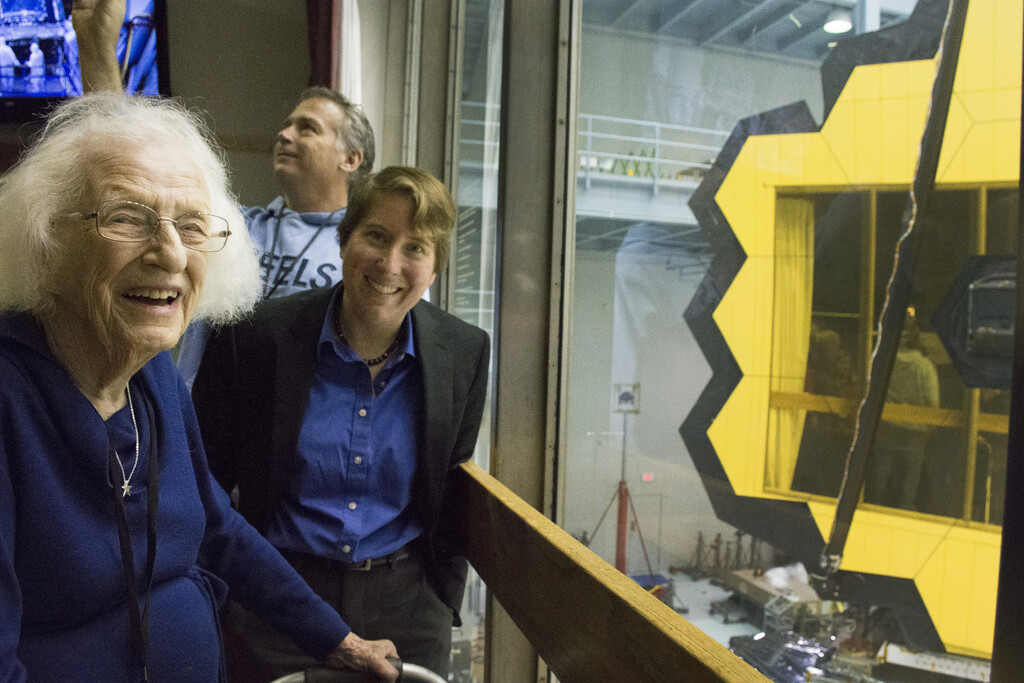
Initially, the launch was targeted for September 2026, but further efficiencies pushed it to late August. This acceleration is a testament to the hard work and dedication of the teams involved.
A Rare Feat in Space Exploration
Delays are common in space missions, so an accelerated schedule is noteworthy. It reflects NASA's commitment to advancing astrophysics and maximizing the science return of its missions.
- Launch date: August 30, 2026, from Kennedy Space Center.
- Rocket: SpaceX Falcon Heavy.
- Destination: Sun-Earth Lagrange point 2 (L2), about 1.5 million km from Earth.
- Mission duration: 5 years, with potential extension to 10.
- Key science: Dark energy, exoplanet microlensing, and infrared surveys.
What the Roman Space Telescope Will Do
Roman will complement the Hubble and James Webb space telescopes by providing a wide-field view of the universe. Its primary instrument, the Wide Field Instrument, will capture images 100 times larger than Hubble's in a single exposure.
This will enable scientists to map the distribution of galaxies and dark matter with unprecedented efficiency, shedding light on the accelerating expansion of the universe.
Complementing Hubble and James Webb
While Hubble observes in visible and ultraviolet light and James Webb focuses on infrared, Roman will excel at wide-field infrared surveys. Together, these telescopes will provide a multi-wavelength view of cosmic phenomena.
Roman's coronagraph instrument will also demonstrate technology to directly image exoplanets, a crucial step toward finding habitable worlds.
Why L2 Is the Ideal Location
Lagrange point 2 (L2) is a gravitational balance point about 1.5 million kilometers from Earth, where the Sun and Earth's gravity keep a spacecraft in a stable position relative to Earth.
This location allows telescopes to maintain a constant orientation away from the Sun, Earth, and Moon, keeping instruments cool and stable. James Webb also operates at L2, and Roman will join it there.
Benefits of L2 for Astronomy
At L2, the telescope's sunshield will block heat and light from the Sun and Earth, enabling sensitive infrared observations. This is essential for studying faint, distant objects.
| Telescope | Launch Date | Primary Mirror Size | Wavelength Range |
|---|---|---|---|
| Hubble Space Telescope | 1990 | 2.4 m | Visible, UV, near-infrared |
| James Webb Space Telescope | 2021 | 6.5 m | Infrared |
| Nancy Grace Roman Space Telescope | 2026 (planned) | 2.4 m | Infrared |
What This Means for Astronomy
The accelerated launch of Roman will allow astronomers to begin addressing fundamental questions about dark energy and exoplanets earlier than expected. The longer history behind the story is traced in Russia's Secret Satellite Network Could Disable GPS Across Europe.
Its wide-field surveys will identify thousands of exoplanets via microlensing and provide statistical samples of galaxies to study cosmic evolution. The background to this story is set out in NASA's Roman Space Telescope Launch: Surviving Budget Cuts. A related thread runs through NWSL 2027 Schedule: Early Start, World Cup Break Announced. Earlier coverage in Private Space Race Adds Lazuli Telescope to Study Exoplanets shows how the argument developed.
Broader Impact on Space Science
Roman's success could also inform the design of future missions, demonstrating the value of efficient project management and international collaboration. A closer look at the same subject appears in Swarm of Space Telescopes to Hunt Alien Life by 2040. Anyone following the wider picture can start with NASA Launch Facilities Too Old for Artemis Moon Missions. The same theme surfaces in Radiohead 2027 Australia Japan Tour Dates Announced, which takes a different angle.
NASA's partnership with SpaceX for the Falcon Heavy launch underscores the growing role of commercial space in scientific missions. Context on how this played out before sits in Empty Classrooms Converted to Community Hubs: Pilot Announced. A companion piece, Booker Prize Longlist 2026: Previous Winners Lead Risk-Taking, approaches the same subject from another angle.
FAQ
What is the Nancy Grace Roman Space Telescope?
The Roman Space Telescope is a NASA infrared observatory designed to study dark energy, exoplanets, and infrared astrophysics. It features a wide-field instrument and a coronagraph for exoplanet imaging.
Why is the launch date earlier than planned?
NASA optimized resources and streamlined processes, allowing the mission to be ready ahead of schedule. This is unusual as most space missions face delays.
How does Roman complement other telescopes?
Roman's wide-field surveys will complement Hubble's detailed visible-light observations and James Webb's sensitive infrared imaging, providing a broader view of the universe.
What is L2 and why is it important?
L2 is a gravitational balance point about 1.5 million km from Earth. It offers a stable, cold environment ideal for infrared telescopes, as the Sun, Earth, and Moon are always in the same direction.
As the launch date approaches, the scientific community eagerly anticipates the discoveries Roman will bring. With its advanced capabilities and earlier launch, the telescope is poised to revolutionize our understanding of the cosmos.
Browse the Shop
 Acacia frida deluxe solid wood bed frame |
Bedroom bench |
Bed chest drawers |
Lingerie dresser |
Frame base |
Mirror with jewelry storage |
30 Bathroom Vanity |
Memory foam queen mattress |
Mattresses for back pain |
Nightstand set of 2 |
Grand Goldman Shop |
Civil Lawyer
Deutschland Trikot WM 2026







