

Space food secret: tacos and hot sauce are the surprising stars of the Artemis II mission. As NASA prepares to send astronauts around the Moon, the crew's menu includes five hot sauces and taco fillings, a choice that reveals the careful engineering behind eating in microgravity.
Every item loaded onto the Orion spacecraft must justify its weight and volume. Fuel budgets are tight, and even water is rationed. Yet food is more than fuel—it's a morale booster and a critical part of mission success. That's why astronauts actively participate in menu planning, ensuring they get balanced nutrition and flavors they enjoy.
Find Original Home Decor sparking conversation at Grand Goldman Shop.

Why Space Food Isn't Just About Nutrition
During a space mission, everything onboard is carefully calculated, from fuel to the last drop of water. Food is no exception. The crew of Artemis II will rely on a menu designed weeks before launch, balancing nutritional needs with personal preferences.
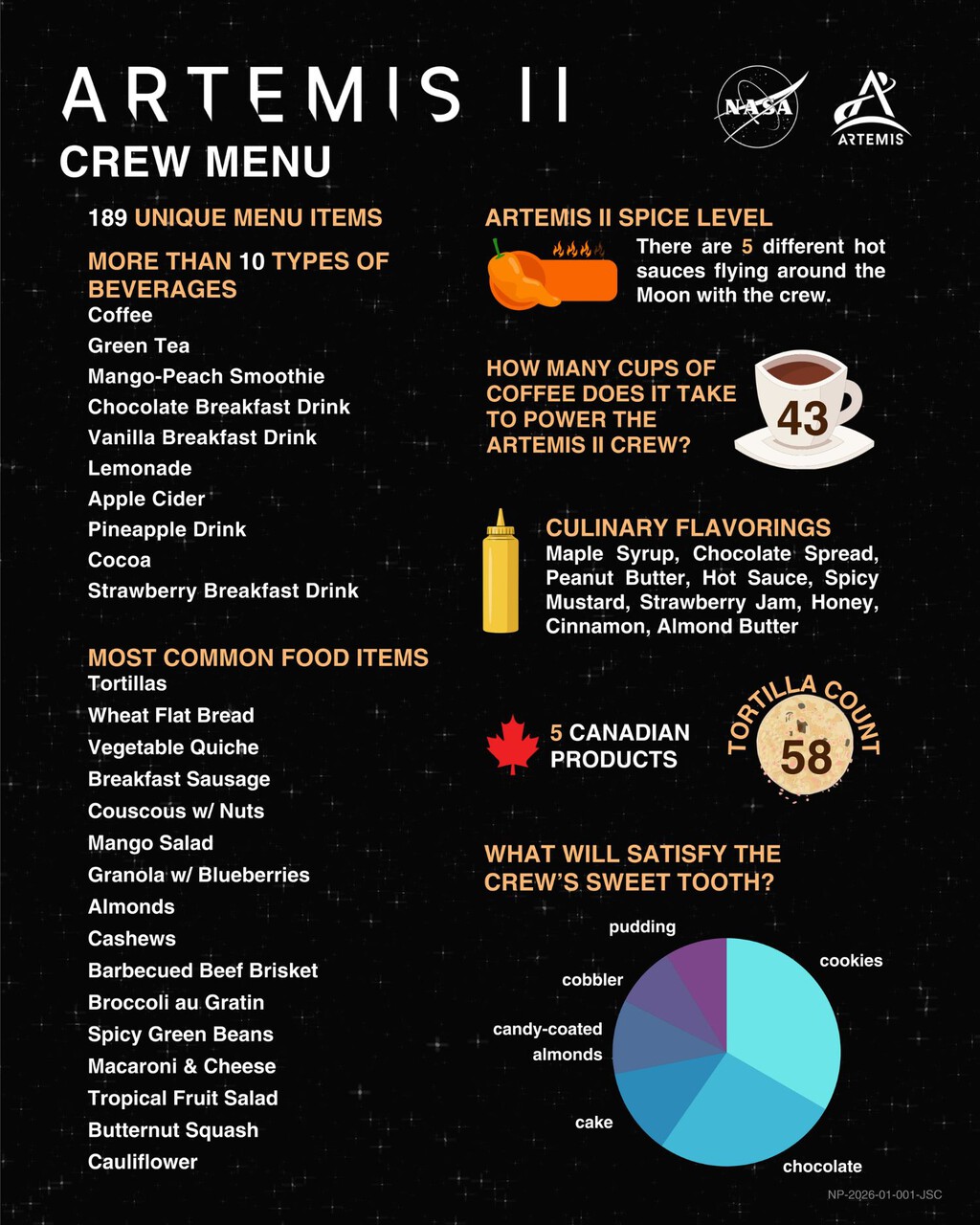
But preferences aren't just about taste. Familiar foods provide comfort and psychological support during long missions. Hot sauce, for instance, adds flavor to otherwise bland rehydrated meals and can make astronauts feel more at home.
The Challenge of Crumbs in Microgravity
In microgravity, crumbs are a serious hazard. They float around and can lodge in electronic equipment, causing malfunctions. Therefore, space foods must minimize crumbs—tortillas are preferred over bread slices for this reason.
Foods are also vacuum-sealed and often dehydrated to ensure safety and shelf life. Orion is equipped with a water dispenser that astronauts use to rehydrate meals directly in their pouches. This system saves weight and space while keeping food safe.
Astronaut Involvement in Menu Design
Astronauts play an active role in choosing their meals. They taste-test items and provide feedback, ensuring the final menu includes foods they genuinely like. This collaboration is crucial for maintaining morale on long-duration missions.
For Artemis II, the crew's input led to the inclusion of tacos and five hot sauces. These additions not only provide variety but also give astronauts a sense of control over their environment—a small but meaningful comfort in the confined space of a capsule.
What's on the Menu for Artemis II?
The Artemis II menu includes a mix of dehydrated and thermostabilized foods, along with tortillas, taco fillings, and a selection of hot sauces. Here's a breakdown of key considerations for space food:
- Crumb control: Tortillas replace bread to prevent floating crumbs.
- Weight and space: Dehydrated foods reduce mass and volume.
- Safety: Vacuum sealing and dehydration inhibit bacterial growth.
- Morale: Personal favorites like hot sauce boost crew spirits.
- Nutrition: Meals are balanced for energy and health.
Comparing Space Food Requirements
Not all space foods are created equal. The table below outlines how different food types meet mission constraints.
| Food Type | Crumb Risk | Weight | Preparation | Shelf Life |
|---|---|---|---|---|
| Tortillas | Low | Moderate | Ready to eat | Long |
| Dehydrated meals | Low | Low | Requires water | Very long |
| Thermostabilized pouches | Low | Moderate | Ready to eat | Long |
| Fresh fruit | Moderate | High | Ready to eat | Short |
As the table shows, dehydrated foods and tortillas are ideal for minimizing crumbs and weight, while fresh items are limited due to shelf life and weight. The background to this story is set out in NASA's Artemis II: Astronauts Use T-Shirts as Blinds on Orion. A related thread runs through Artemis II Splashdown: Orion Returns Astronauts to Lunar History. Earlier coverage in Artemis II Moon Flyby Photos: Why the Mission Already Matters shows how the argument developed.
What This Means for Future Missions
The Artemis II menu is a testbed for longer journeys to Mars. Lessons learned about food preparation, storage, and crew morale will inform future mission planning. Hot sauce might seem trivial, but it represents a broader effort to make space travel more human-friendly. A closer look at the same subject appears in Artemis II Astronauts Eat Nutella in Space: Real Video Revealed. Anyone following the wider picture can start with GoPro Cameras on Artemis II Stream the Moon Live From Space. The same theme surfaces in Artemis II Astronauts Return Changed by the Overview Effect, which takes a different angle.
As we look ahead to lunar bases and Mars expeditions, the ability to provide varied, enjoyable, and safe food will be essential. The tacos and hot sauce on Artemis II are a small step in that direction—one that astronauts can taste. Context on how this played out before sits in Artemis II Success but NASA's Ambitious Lunar Plan Faces Delays. A companion piece, NASA Artemis II Astronauts Make Video Calls from Deep Space, approaches the same subject from another angle.
FAQ
Why do astronauts bring hot sauce to space?
Hot sauce adds flavor to rehydrated meals, which can taste bland. It also provides a sense of comfort and normalcy, boosting morale during long missions.
Why are tortillas used instead of bread in space?
Tortillas produce fewer crumbs than bread. In microgravity, crumbs can float into equipment and cause damage, so tortillas are a safer choice.
How is food rehydrated on the Orion spacecraft?
Orion has a water dispenser that astronauts use to add water directly to dehydrated food pouches. This saves weight and space compared to carrying ready-to-eat foods.
Can astronauts request specific foods for their missions?
Yes, astronauts participate in menu planning and taste tests. Their feedback helps ensure the food is nutritious, safe, and enjoyable.
Browse the Shop
 Acacia frida deluxe solid wood bed frame |
Bedroom bench |
Bed chest drawers |
Lingerie dresser |
Frame base |
Mirror with jewelry storage |
30 Bathroom Vanity |
Memory foam queen mattress |
Mattresses for back pain |
Nightstand set of 2 |
Grand Goldman Shop |
Civil Lawyer
Deutschland Trikot WM 2026







