

Spanish astrobiologist and perfumer Marina Barcenilla has recreated the smells of space, from Jupiter's clouds to asteroid Bennu, and some of these cosmic scents are available as perfumes through her brand AromAtom. Based in the UK, Barcenilla formulates these unique fragrances for exhibitions at the Natural History Museum in London and for commercial sale, offering a novel way to experience the cosmos.
Who is Marina Barcenilla?
Marina Barcenilla is a Spanish astrobiologist and perfumer who combines her scientific background with her passion for fragrance. She has developed a method to translate the chemical composition of space objects into olfactory experiences. Her work has been showcased at the Natural History Museum in London, where visitors can smell representations of various celestial bodies.
Find Original, High-end Home Decor that spark conversation at Grand Goldman Shop.
Through her brand AromAtom, Barcenilla has made some of these space-inspired scents available as perfumes. This allows the public to engage with space in a sensory way, beyond visual images or scientific data.
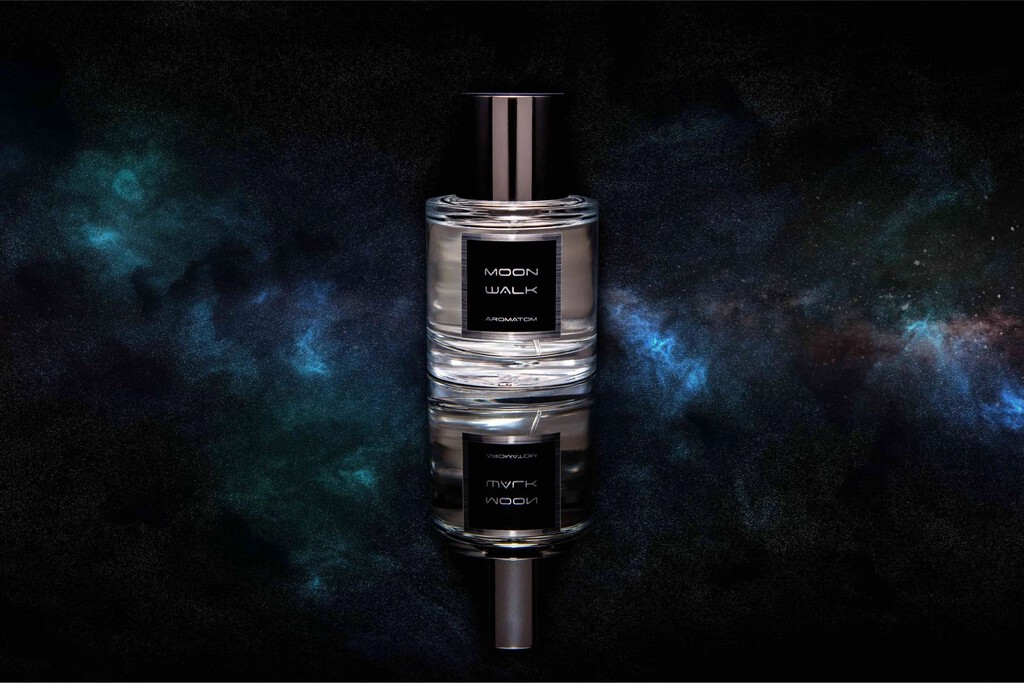
How Are Space Smells Recreated?
Barcenilla bases her creations on existing knowledge of the composition of the atmospheres or surfaces of space objects. She identifies molecules that have distinct odors and uses them to craft fragrances that represent these extraterrestrial environments.
Some molecules prevalent in space, such as helium and hydrogen, are odorless and cannot be represented. Instead, Barcenilla focuses on other molecules that do have characteristic smells, even if they are not the most abundant. This approach allows her to create a plausible olfactory impression of space.
- Barcenilla uses data on chemical composition to select odorous molecules.
- She recreates smells of Jupiter's clouds, asteroid Bennu, and other space structures.
- Some scents are exhibited at the Natural History Museum in London.
- Selected fragrances are sold as perfumes under the AromAtom brand.
- The perfumes are not for everyone but offer a unique sensory experience.
What Do Space Smells Like?
According to Barcenilla's recreations, space smells can vary widely depending on the object. For example, the clouds of Jupiter might have a distinct scent based on their chemical makeup, while asteroid Bennu could have a different olfactory profile. These fragrances are not necessarily pleasant but aim to be authentic representations.
Barcenilla's perfumes are designed to evoke the essence of space, blending scientific accuracy with artistic interpretation. They provide a way to imagine the environments of distant worlds through scent.
Comparing Space Scents
Here is a comparison of some of the space objects and their scent characteristics as recreated by Barcenilla: The longer history behind the story is traced in Spanish Astrobiologist Recreates Space Smells as Perfume.
| Space Object | Scent Characteristics | Notes |
|---|---|---|
| Jupiter's Clouds | Pungent, ammonia-like | Based on ammonia and other compounds |
| Asteroid Bennu | Earthy, sulfurous | Reflects carbon-rich composition |
| Moon | Metallic, burnt | Inspired by lunar regolith |
| Mars | Iron-rich, dusty | Simulates Martian soil |
These descriptions are approximations, as the actual smell of space is not directly experienced by humans. Barcenilla's work offers a creative interpretation based on scientific data. The background to this story is set out in Fig Perfumes 2025: The Best New Fragrances to Sniff Now. A related thread runs through Fig Perfumes 2025: New Fragrances to Sniff and Buy Now. Earlier coverage in Fig Perfumes Are Back: The Best New Fragrances to Try Now shows how the argument developed.
Why This Matters
Barcenilla's project bridges the gap between science and art, making space exploration accessible through the sense of smell. It also highlights the importance of chemistry in understanding our universe. By translating molecular data into fragrances, she provides a new way to engage with astronomy and astrobiology. A closer look at the same subject appears in Science: latest articles. Anyone following the wider picture can start with Cosmic Shockwave Defies Known Rules: The Mystery Engine Behind. The same theme surfaces in Cosmic Dawn Simulation: MEGATRON Reveals Milky Way Birth, which takes a different angle.
Moreover, the commercial availability of space perfumes allows the public to own a piece of the cosmos, albeit in a symbolic form. This could inspire curiosity about space and science in general. Context on how this played out before sits in Water-Rich Exoplanet KIC 9139163 Ab Found Orbiting Too Close. A companion piece, Leroy Merlin's $29.90 Folding Desk for Small Home Offices, approaches the same subject from another angle.
FAQ
What is AromAtom?
AromAtom is Marina Barcenilla's brand that offers perfumes inspired by space smells. These fragrances are based on the chemical composition of celestial objects and are designed to provide an olfactory experience of space.
Can anyone buy these space perfumes?
Yes, some of Barcenilla's space-inspired perfumes are available for purchase through AromAtom. They are marketed to perfume enthusiasts and anyone curious about the scent of space.
Are the perfumes accurate representations of space smells?
They are artistic interpretations based on scientific data about the chemical composition of space objects. Since humans have not directly smelled space, the perfumes are plausible recreations rather than exact replicas.
Where have these space smells been exhibited?
Barcenilla's space smell creations have been exhibited at the Natural History Museum in London, allowing visitors to experience the scents of Jupiter's clouds, asteroid Bennu, and other space phenomena.
What to Watch Next
As space exploration advances, our understanding of the chemical composition of celestial bodies will improve, potentially leading to more accurate scent recreations. Barcenilla's work may expand to include new objects and discoveries, offering fresh olfactory experiences.
For those interested in the intersection of science and sensory art, following AromAtom and similar projects could provide insights into how we perceive and interpret the cosmos beyond traditional methods.
Browse the Shop
 Acacia frida deluxe solid wood bed frame |
Bedroom bench |
Bed chest drawers |
Lingerie dresser |
Frame base |
Mirror with jewelry storage |
30 Bathroom Vanity |
Memory foam queen mattress |
Mattresses for back pain |
Nightstand set of 2 |
Grand Goldman Shop |
Civil Lawyer
Deutschland Trikot WM 2026







