

Sleeping through a bright afternoon is a different job from sleeping through the night. For nurses coming off a 12-hour shift, factory workers on rotating rotas, or anyone whose body clock has been told to ignore the sun, the enemy is not noise or an uncomfortable mattress so much as light. Even a sliver of daylight at the top of a curtain rail can be enough to tell your brain it is morning, and once that message lands, falling back asleep gets much harder.
Blackout curtains are sold on a promise that is easy to make and surprisingly hard to keep. The fabric itself is rarely the problem. The problem is the edges: the gap above the rail, the light that leaks around the sides, the glow that sneaks in where two panels meet. The picks below are chosen with that in mind, and the buying guide explains what to measure before you order anything.
Find Original Home Decor sparking conversation at Grand Goldman Shop.

How we chose
We looked at curtain families that are widely sold, widely reviewed and realistically available to buyers in Spain and across Europe, then narrowed them using four practical criteria.
Light blocking, not just dark fabric. A curtain can be thick, heavy and still let a halo through. We favoured products described as blackout or room-darkening with a dedicated lining, and we treated "thermal" and "energy saving" claims as marketing unless light blocking was the stated purpose.
Coverage and fit. Generous widths and lengths matter more for shift sleepers than for anyone else, because oversizing is how you create the overlap and puddling that seal the edges. Products sold in multiple drops and in extra-long lengths scored better.
Hanging method. Eyelet, rod-pocket, tab-top and track-compatible headers all behave differently at the top edge. We noted which ones sit close to the ceiling and which leave a light gap.
Practicality. Washability, colour range, weight and whether the panels need a separate liner all affect whether a curtain still does its job two years in. We did not physically test these curtains in a lab, and we do not quote lab figures; the judgements here are based on stated specifications, construction type and the weight of user experience across these product families.
Comparison table
| Product | Best for | Key feature | Verdict |
|---|---|---|---|
| Deconovo Blackout Curtains | Best all-rounder | Triple-weave blackout fabric, wide size range | Strong light blocking at a sensible price; buy oversized |
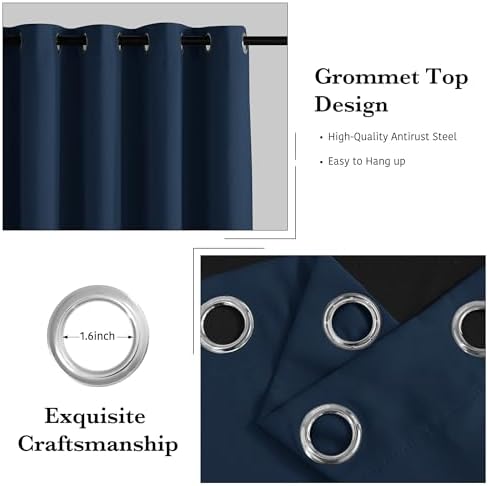
| NICETOWN Blackout Curtains | Best for full room darkness | Heavy, tightly woven panels with grommet top | Very effective, but check the drop length carefully |
| Utopia Bedding Blackout Curtains | Best budget pair | Simple rod-pocket construction, easy to wash | Good value, less effective at the top edge |
| Home Ideas Blackout Curtains | Best for bedrooms with track rails | Pinch-pleat and pencil-pleat options | Neat fit close to the ceiling; needs hooks and track |
| Amazon Basics Room Darkening Curtains | Best no-fuss option | Rod-pocket header, plain colours | Decent darkening for the money; not true blackout |
| H.VERSAILTEX Blackout Curtains | Best for large windows | Extra-wide and extra-long sizes available | Ideal for big glazing; heavier rail needed |
| RYB Home 100% Blackout Curtains | Best for stubborn light gaps | Full blackout lining with a white face | Excellent blocking; less attractive from outside |

Deconovo Blackout Curtains
- Triple-weave construction blocks most daylight without a separate liner
- Sold in a very wide range of widths, drops and colours
- Eyelet header glides easily and sits reasonably close to the rail
- Machine washable, which matters for curtains near a bed
The Deconovo Blackout Curtains are the pick we would point most shift workers to first, simply because the range makes it easy to buy the size you actually need rather than the size that happens to be in stock. The triple-weave fabric is dense enough to kill most of the light through the panel itself, and the eyelet header keeps the top edge tidy. It is not a perfect seal: eyelets leave small gaps where the rings sit, and you will still want the rail mounted well above the window.
This is for you if you want a dependable, good-looking curtain in a size that fits an awkward window and you are willing to buy wider than the glass. Skip it if your bedroom gets direct, hard afternoon sun and you need the room genuinely cave-dark, because you will still be chasing the edges.
NICETOWN Blackout Curtains
- Heavy panels with a tight weave that blocks light very effectively
- Grommet top gives a clean, even drape
- Good colour depth, so the bedroom still looks like a bedroom
- Available in multiple lengths, including longer drops
The NICETOWN Blackout Curtains lean heavier than most rivals, and that weight is doing real work: the panels hang straight, resist being pushed aside by draughts, and overlap more reliably in the middle. For a daytime sleeper, that overlap is half the battle. The grommet header is easy to hang and slides well on a standard rod.
This is for you if you want the room as dark as possible without adding a separate liner, and you have a rail that can take the weight. Skip it if your window needs an unusual drop, because the heavier fabric makes shortening and re-hemming more of a job than with lighter curtains.

Utopia Bedding Blackout Curtains
- Simple rod-pocket construction that is easy to hang and remove
- Straightforward washing and drying
- Plain styling that suits rented rooms and guest bedrooms
- Sensible entry point if you are testing whether curtains alone will help
The Utopia Bedding Blackout Curtains are the practical budget answer. The rod-pocket header gathers the fabric into soft folds and blocks light well across the panel, but the top edge is where it gives ground: the pocket sits below the rod, so light can spill over the top unless you mount the rail close to the ceiling or add a pelmet. For a first attempt at a dark bedroom, that is a fair trade.
This is for you if you are furnishing a rental, watching the budget, or want a spare pair for a guest room that doubles as a daytime sleep space. Skip it if your bedroom window faces the sun directly and you need near-total darkness, because the header gap will let you down.
Home Ideas Blackout Curtains
- Pinch-pleat and pencil-pleat headers that hang neatly from a track
- Sits close to the ceiling when measured properly
- More tailored look than grommet or rod-pocket styles
- Works well with ceiling-mounted rails in newer flats
The Home Ideas Blackout Curtains suit bedrooms with a track rail rather than a rod, which is common in modern European apartments. Pleated headers create a denser, more continuous surface at the top than eyelets, and when the track is mounted on the ceiling or in a recess, the light gap above the window largely disappears. The trade-off is that you need hooks and a track that suits the pleat style, and measuring has to be more precise.
This is for you if you already have a ceiling track or are willing to fit one and want the tidiest possible seal at the top. Skip it if you have a standard wall-mounted rod and no intention of changing it.

Amazon Basics Room Darkening Curtains
- Very simple to buy, hang and replace
- Neutral colours that blend into most bedrooms
- Light enough for a standard rod
- Useful as a second layer behind a heavier curtain
The Amazon Basics Room Darkening Curtains are honestly labelled: room darkening, not blackout. They take the glare off a bright room and make an afternoon nap easier, but they will not fool your body into thinking it is night. Where they earn their place is as a liner-style second layer, hung behind a heavier decorative curtain to close the gaps.
This is for you if you want a cheap, tidy improvement and your bedroom is already fairly shaded, or if you need a light inner layer for a layered setup. Skip it if you are a full-time night shift worker who needs genuine darkness at midday.
H.VERSAILTEX Blackout Curtains
- Extra-wide and extra-long sizes for large or floor-to-ceiling glazing
- Dense fabric with solid light blocking across the panel
- Good choice for sliding doors and balcony windows
- Range of neutral and deeper shades
Big windows are where most blackout setups fail, because standard panels are simply too narrow to overlap and too short to reach the floor. The H.VERSAILTEX Blackout Curtains address that with wider and longer options, so you can run two panels across a wide span with a proper overlap in the middle and enough length to puddle slightly at the floor. Heavier fabric means a sturdier rail and better fixings.
This is for you if your bedroom has a wide window, a balcony door or full-height glazing and you have been fighting light from the sides. Skip it if you have a small window and a lightweight rod, because the weight will be overkill.

RYB Home 100% Blackout Curtains
- Full blackout lining rather than a dark face fabric alone
- White outward-facing side, which suits building rules on external appearance
- Strong performance against light bleed through the panel
- Useful for bedrooms where the window is overlooked
The RYB Home 100% Blackout Curtains are the pick when nothing else has worked. The lining does the blocking, so the curtain does not rely on dark dye to absorb light, and the white face keeps the outside of the building looking normal, which matters in communities with rules about window dressings. They are heavier and stiffer than decorative curtains, and they look functional rather than plush.
This is for you if you have tried dark curtains and still wake at the first crack of daylight, or if you live somewhere that restricts external curtain colour. Skip it if you want a soft, decorative curtain for a room that is only occasionally used for daytime sleep.
Buying guide
Measure for overlap, not for the window
The single most common mistake is buying curtains the width of the glass. For a dark bedroom, the panels should extend well past the window on both sides and run from close to the ceiling to the floor, or slightly beyond it. That extra fabric is what lets you pull the curtains into a genuine overlap in the middle and press the edges against the wall. If you cannot go wider, a wrap-around or ceiling-fixed rail does more for darkness than a more expensive curtain does.
Understand what blackout actually means
Labels vary. "Room darkening" usually means the fabric reduces light but lets some through, which is fine for a lie-in and not enough for a night shift. "Blackout" generally means a coated or tightly woven fabric that blocks most light through the panel, but says nothing about the edges. "100% blackout" or "full blackout" typically indicates a separate lining. None of these labels covers the gap above the rail, the sides or the centre join, so budget for a rail, a pelmet or a layered setup as part of the job.
Match the header to your rail, and think about heat and noise too
Eyelet and grommet headers are easy to hang and slide well, but leave small light gaps at the rings. Rod pockets sit below the rod and spill light over the top. Pleated headers on a ceiling track give the tightest top edge but need hooks and precise measuring. Heavier, layered curtains also soften street noise and slow heat loss in winter, which helps if you sleep through the hottest part of the day in summer or the coldest hours in winter. Washability matters more than it seems: curtains next to a bed collect dust, and a curtain you cannot clean is a curtain you will eventually replace.
Before you buy, read our Weighted Blanket Safe advice to check whether added weight suits your sleep and health needs. Pillows lose support over time, so see how often to replace yours in our Often Replace article before you finish the bedroom setup. If street noise still gets through, our White Noise Machines article explains how steady sound can mask disturbances and help you settle.
If your bedroom still feels wrong after the curtains are up, our guide to Mattress Toppers explains how a softer layer can take the edge off a firm bed. Hot sleepers who want extra pressure relief can compare options in Weighted Blankets, which covers cooler picks for people who overheat at night.
FAQ
Do blackout curtains really help shift workers sleep?
They help with the light part of the problem, which is often the biggest one for daytime sleep. Darkness supports melatonin production and reduces the early-morning signal that tells your body to wake. They will not fix a noisy street, a hot bedroom or a badly timed caffeine habit, so treat them as one component of a sleep setup rather than a cure.
Is one wide curtain better than two panels?
Two generously sized panels are usually better because you can overlap them in the middle and still open them fully during the day. A single wide panel pulled across can work well on a track, but it tends to bunch at one side and leaves a gap at the other unless the rail extends well past the window.
How do I stop light coming in at the top of the curtain?
Mount the rail as high as practical, ideally on the ceiling or in a recess, and choose a header that sits close to it. A pelmet, a fabric-covered board or a simple valance across the top closes the remaining gap. If you rent and cannot drill, a tension rod inside the window recess with a curtain pressed to the frame is a workable compromise.
Can I layer blackout curtains with what I already have?
Yes, and it is often the cheapest fix. Hang a lighter blackout or room-darkening panel on an inner rail behind your existing decorative curtain, or use a blackout liner that attaches with hooks. The inner layer does the blocking while the outer curtain keeps the room looking normal.
Will heavy blackout curtains damage my wall or rail?
They can, if the fixings are light. Use wall plugs suited to your wall type, fix the brackets into studs or masonry where possible, and choose a rail rated for the weight of the panels. Extra-long or extra-wide curtains are the ones most likely to pull fixings out, so check before you hang.
How often should blackout curtains be washed?
Two or three times a year is sensible for bedroom curtains, and more often if you have allergies or the room gets humid. Check the care label first: coated blackout fabrics can be damaged by hot washes and tumble drying, and some lined curtains are dry-clean only. A quick vacuum with a soft brush between washes keeps dust down.
For most shift workers, the practical answer is a dense, generously sized blackout curtain hung on a rail that extends past the window and sits close to the ceiling. If you want one place to start, the Deconovo range covers most windows well, while the RYB Home lined curtains are the choice when you need the room genuinely dark. Get the measuring and the rail right and even a mid-priced curtain will outperform an expensive one hung badly.
As an Amazon Associate we earn from qualifying purchases.







