

China's push for semiconductor independence has produced a new consumer GPU, the LX-7G100 from Lisuan Tech, but early benchmarks show it struggling to match Nvidia's RTX 3060 from 2021. The card, priced at 3,299 yuan (about 420 euros), delivers only around 65% of the RTX 3060's performance, raising questions about its value proposition.
What Is the LX-7G100 and Why Does It Matter?
The LX-7G100 is Lisuan Tech's attempt to enter the consumer graphics card market, a sector long dominated by Nvidia, AMD, and Intel. The Chinese company, also known as Lishu Technology, designs semiconductors and graphics solutions for end users.
Find Original Home Decor sparking conversation at Grand Goldman Shop.

This launch is part of China's broader strategy to reduce reliance on foreign chip technology. However, the LX-7G100's performance suggests that Chinese GPU makers still lag significantly behind established players.
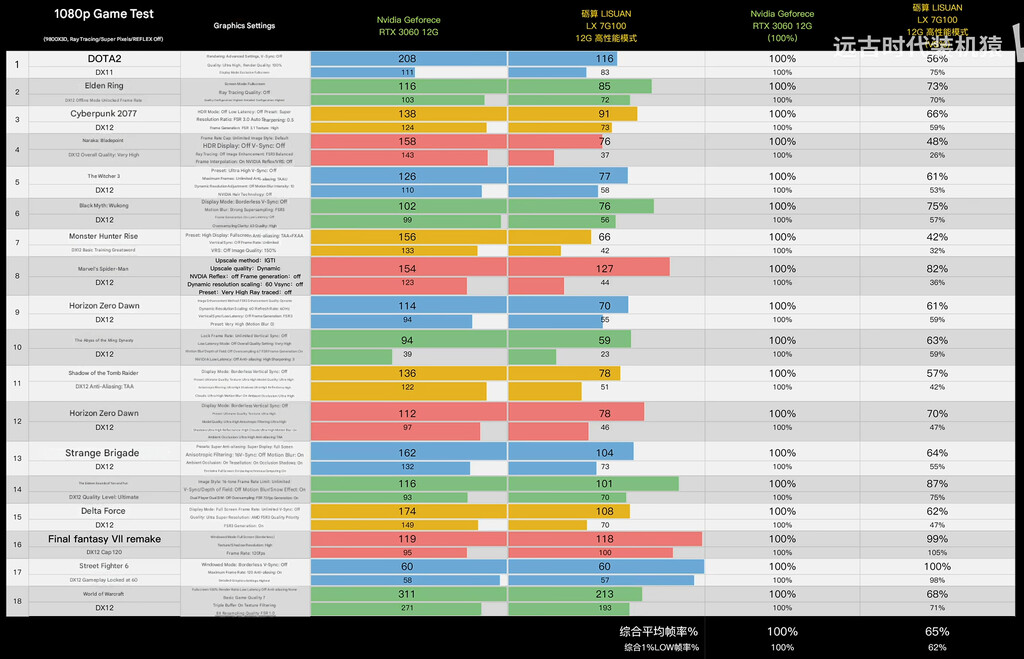
Performance vs. Nvidia RTX 3060: The Benchmark Gap
Reviewers who tested the LX-7G100 found that it competes more closely with the RTX 3060, a mid-range card from 2021, rather than newer offerings like the RTX 5060 Ti. Even against the older RTX 3060, the LX-7G100 falls short, delivering only about 65% of its rival's performance.
On paper, the LX-7G100 features a 7G106 GPU with 12 GB of memory, which should provide decent performance. However, real-world tests reveal a significant gap between specifications and actual output.
Price-to-Performance: A Tough Sell
At 3,299 yuan (approximately 420 euros), the LX-7G100 is priced higher than an RTX 5060 Ti, which typically retails for under 400 euros and offers far superior performance. This makes the LX-7G100 a hard sell for gamers seeking value.
The card's poor price-to-performance ratio is a critical weakness. Consumers expect a GPU at this price point to deliver at least RTX 5060 Ti-level performance, not something that trails the RTX 3060.
Specifications and What They Mean
The LX-7G100's 7G106 GPU and 12 GB of memory suggest it was designed for 1080p gaming and moderate workloads. However, the actual performance indicates that the architecture or drivers may be inefficient.
Without detailed technical reviews, it's unclear whether the bottleneck is hardware or software. But the 35% performance deficit compared to the RTX 3060 is substantial and cannot be ignored.
Implications for China's Semiconductor Ambitions
China has invested heavily in domestic chip production, aiming to achieve self-sufficiency in semiconductors. The LX-7G100 represents a step forward in that effort, but it also highlights the challenges. Context on how this played out before sits in China's LX-7G100 GPU Takes On Nvidia RTX 3060 But Falls Short.
Matching industry leaders like Nvidia requires not just hardware design but also software optimization, driver support, and ecosystem development. The LX-7G100's shortcomings underscore the gap that Chinese companies must close. The background to this story is set out in NVIDIA is considering the return of the Samsung Foundry-produced GeForce RTX 3060. A related thread runs through Nvidia RTX 5090 Shortage: Chinese AI Labs Are Stripping Gaming GPUs.
Key Takeaways
- The LX-7G100 delivers only about 65% of the RTX 3060's performance, despite being a newer release.
- Priced at 3,299 yuan (around 420 euros), it costs more than an RTX 5060 Ti while offering inferior performance.
- On paper, the 7G106 GPU and 12 GB of memory seem adequate, but real-world benchmarks reveal inefficiencies.
- The card highlights China's ongoing struggle to compete with established GPU manufacturers.
- Consumers are unlikely to embrace the LX-7G100 unless significant price cuts or performance improvements occur.
LX-7G100 vs. Nvidia RTX 3060: Side-by-Side Comparison
| Specification | Lisuan LX-7G100 | Nvidia RTX 3060 |
|---|---|---|
| GPU | 7G106 | GA106 |
| Memory | 12 GB | 12 GB |
| Launch Year | 2025 (estimated) | 2021 |
| Performance (relative) | ~65% of RTX 3060 | 100% (baseline) |
| Price (MSRP) | 3,299 yuan (~420 euros) | ~300 euros (at launch) |
What to Watch Next
Lisuan Tech may release driver updates to improve performance, but the hardware gap is likely too large to overcome. Future Chinese GPUs could benefit from lessons learned, but for now, the LX-7G100 serves as a cautionary tale. Earlier coverage in Technology: latest articles shows how the argument developed. A closer look at the same subject appears in Microsoft Surface Laptop Ultra: NVIDIA ARM Chip Powers New Era.
Buyers in China may still consider it for patriotic reasons or availability, but international consumers have little reason to choose it over Nvidia or AMD offerings. Anyone following the wider picture can start with Nvidia RTX Spark: Windows on ARM Laptops Take On AI. The same theme surfaces in Nvidia RTX Spark: The ARM Windows Laptop Chip Challenging Qualcomm, which takes a different angle.
FAQ
What is the LX-7G100?
What is the LX-7G100?
The LX-7G100 is a consumer graphics card from Chinese manufacturer Lisuan Tech, featuring a 7G106 GPU and 12 GB of memory. It is positioned as an alternative to Nvidia's RTX 3060.
How does the LX-7G100 compare to the RTX 3060?
How does the LX-7G100 compare to the RTX 3060?
The LX-7G100 delivers only about 65% of the RTX 3060's performance, making it significantly slower despite being a newer release.
Is the LX-7G100 worth buying?
Is the LX-7G100 worth buying?
At 3,299 yuan (around 420 euros), the LX-7G100 offers poor value compared to similarly priced cards like the RTX 5060 Ti, which outperforms it. Most gamers should avoid it unless they have specific reasons to support domestic hardware.
Why is China's GPU performance lagging?
Why is China's GPU performance lagging?
China's GPU industry is still catching up in areas like architecture design, driver optimization, and manufacturing processes. The LX-7G100 reflects these challenges, but continued investment may narrow the gap in the future.
Browse the Shop
 Acacia frida deluxe solid wood bed frame |
Bedroom bench |
Bed chest drawers |
Lingerie dresser |
Frame base |
Mirror with jewelry storage |
30 Bathroom Vanity |
Memory foam queen mattress |
Mattresses for back pain |
Nightstand set of 2 |
Grand Goldman Shop |
Civil Lawyer
Deutschland Trikot WM 2026







