

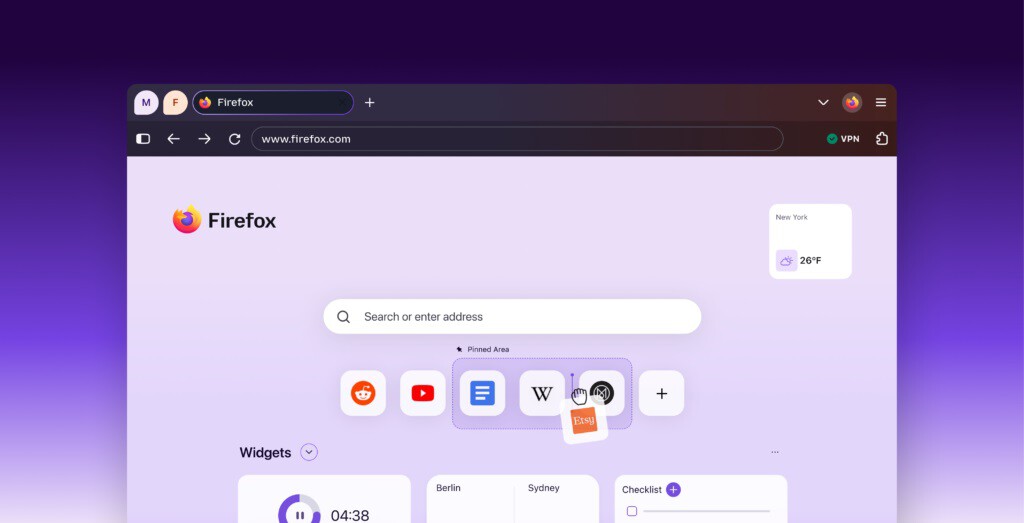
Firefox redesign is Mozilla's latest move to win over users who may not know or care about its underlying Gecko engine. The browser's version 157 brings a fresh look to desktop and mobile, aiming to make Firefox more appealing to the average user.
In an interview with Ars Technica, Ajit Varma, Firefox's head, explained why this redesign matters and why users should be excited. The update includes new colors, icons, and themes across the browser, from tabs to toolbars.
Find Original, High-end Home Decor that spark conversation at Grand Goldman Shop.
Why Mozilla Felt the Need for a Firefox Redesign
Firefox has long been the go-to browser for privacy-conscious users, but that identity hasn't translated into mass adoption. Chrome dominates the market, and Chromium, the engine behind it, powers most competitors, including Microsoft Edge.
Firefox runs on its own Gecko engine, making it one of the few real alternatives. However, according to Varma, most people don't know the difference between Chromium, Blink, or Gecko, and many can't distinguish a browser from a search engine.
Defending the open web doesn't seem to resonate with the average user. So Mozilla is trying a different approach: a visual overhaul that makes Firefox feel modern and inviting.
What's New in Firefox 157
The redesign touches every part of the browser. Tabs, toolbars, and menus have been updated with a fresh color palette and new icons. Themes have been revamped to give users more customization options.
But it's not just about looks. Mozilla hopes the new design will attract users who might otherwise default to Chrome or Edge without considering alternatives. The goal is to make Firefox a compelling choice from the first glance.
- New color scheme across the entire browser interface.
- Updated icons for tabs, bookmarks, and settings.
- Refreshed themes for personalization.
- Consistent design on desktop and mobile.
- Modern look to compete with Chromium-based browsers.
Gecko: The Technical Advantage Most Users Overlook
Gecko is Firefox's secret weapon, but it's also a challenge. As a independent engine, Gecko ensures diversity in the browser market and prevents a monoculture that could stifle innovation.
However, the technical merits of Gecko are lost on most users. They care about speed, compatibility, and ease of use. Mozilla's challenge is to communicate these benefits without getting bogged down in jargon.
The redesign is a step in that direction. By making Firefox more visually appealing, Mozilla hopes to get users in the door, where they can then discover the browser's other advantages.
How Firefox Compares to Chrome and Edge
When choosing a browser, users often compare features, performance, and privacy. Here's how Firefox stacks up against its main competitors.
| Feature | Firefox | Chrome | Edge |
|---|---|---|---|
| Engine | Gecko | Blink (Chromium) | Blink (Chromium) |
| Privacy Focus | High | Moderate | Moderate |
| Open Source | Yes | Yes (Chromium) | Yes (Chromium) |
| Market Share | Low | High | Medium |
| Customization | High | Moderate | Moderate |
Firefox's emphasis on privacy and customization sets it apart, but Chrome's dominance and Edge's integration with Windows give them an edge in sheer numbers.
The Challenge of Marketing an Open Web
Mozilla's mission to promote an open web is admirable, but it's a tough sell. Most users don't understand the technical details and simply want a browser that works.
Varma acknowledged this in his interview, noting that the average user doesn't know what a browser engine is. That's why the redesign focuses on the user experience rather than technical specs.
Still, Mozilla can't abandon its core message. The open web is under threat from consolidation, and Firefox is one of the few independent voices left. Balancing these priorities is a delicate act. Context on how this played out before sits in Firefox Redesign: Mozilla's Play to Win Users Beyond Gecko.
What This Means for the Future of Browsing
Firefox's redesign is more than a cosmetic update; it's a strategic move to stay relevant. If successful, it could slow the march toward a Chromium-dominated web. The background to this story is set out in Technology: latest articles. A related thread runs through Convertible Laptops in 2026: Evolution, Market Trends, and Future Outlook.
For users, the update offers a chance to try a different browser that prioritizes privacy and choice. For Mozilla, it's a bet that a fresh face can attract new users and keep the open web alive. Earlier coverage in Apple Blocks AI Agents Over Security and Privacy Concerns shows how the argument developed. A closer look at the same subject appears in Meta's Muse AI: The Hidden Cost of Delegating Your Life.
Only time will tell if the redesign pays off. But for now, Firefox 157 is a bold statement that Mozilla is not giving up. Anyone following the wider picture can start with AI in Spain: Why It's Boosting Jobs, Not Destroying Them. The same theme surfaces in Smart TV Fatigue: Why Users Are Fed Up With Spying and Updates, which takes a different angle.
FAQ
What is the Firefox redesign?
The Firefox redesign is a visual overhaul introduced in version 157, featuring new colors, icons, and themes across desktop and mobile. It aims to modernize the browser's look and attract new users.
Why is Mozilla redesigning Firefox now?
Mozilla wants to appeal to users who may not know or care about browser engines like Gecko. The redesign makes Firefox more visually appealing to compete with Chrome and Edge.
Does the redesign affect Firefox's privacy features?
No, the redesign is primarily cosmetic. Firefox continues to prioritize privacy and runs on the Gecko engine, offering an alternative to Chromium-based browsers.
Will the redesign help Firefox gain market share?
It's too early to tell. The redesign may attract new users, but Chrome's dominance is strong. Mozilla hopes the fresh look will encourage more people to try Firefox.
Browse the Shop
 Acacia frida deluxe solid wood bed frame |
Bedroom bench |
Bed chest drawers |
Lingerie dresser |
Frame base |
Mirror with jewelry storage |
30 Bathroom Vanity |
Memory foam queen mattress |
Mattresses for back pain |
Nightstand set of 2 |
Grand Goldman Shop |
Civil Lawyer
Deutschland Trikot WM 2026










