

The Nvidia RTX 5090 shortage has taken a bizarre turn: Chinese AI factories are reportedly disassembling brand-new gaming graphics cards to harvest their GPU chips and GDDR7 memory for custom AI server boards. This industrial-scale teardown is diverting supply away from gamers and into the booming artificial intelligence market.
Seeing an RTX 5090 in stock is rarer than spotting a unicorn. Retailers receive tiny shipments while prices skyrocket, and a significant portion of the supply appears to be ending up in the hands of data centers—not gamers. According to a report from HKEPC, Chinese factories are desoldering GPU chips and memory modules from new cards and reassembling them onto custom boards designed for AI servers.
Find Original Home Decor sparking conversation at Grand Goldman Shop.

Why Chinese AI Factories Are Stripping RTX 5090 Cards
The RTX 5090 is a powerful gaming card, but its underlying GPU and GDDR7 memory are also ideal for AI workloads. With demand for AI compute exploding, Chinese server builders are willing to pay a premium for these components—even if it means buying complete graphics cards and tearing them apart.
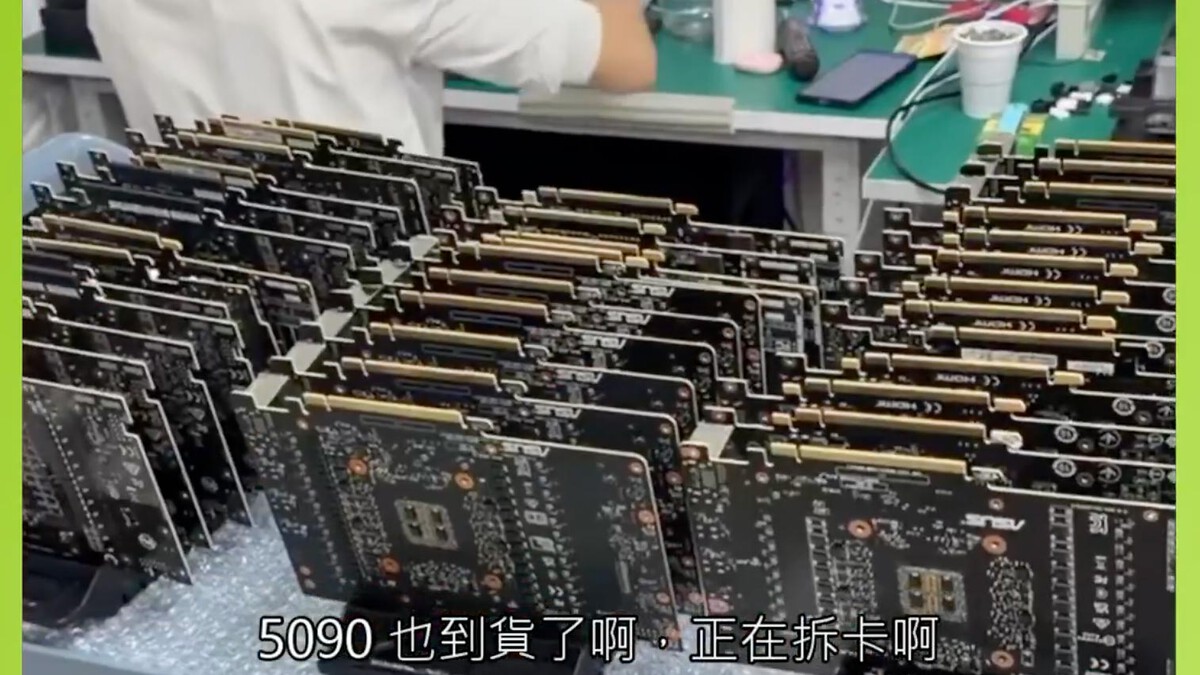
Videos circulating online show workers desoldering the GPU and memory modules, then mounting them onto custom PCBs. To fit into the tight, hot confines of AI servers, assemblers add turbine-style cooling systems. Estimates suggest Chinese workshops can transform thousands of RTX 5090 cards daily.
There's just one problem: Chinese industry is not supposed to have access to these cards in the first place. US export controls restrict the sale of high-performance GPUs to China, but the black market and third-party channels are finding ways around the rules.
The Paper Trail: US Retailers Tighten Rules
In the United States, retailers like Micro Center have started requiring some buyers to sign a declaration promising not to export the graphics cards outside the country. The store even asks for proof of identity and may limit quantities per customer.
These measures are meant to keep the cards in the hands of gamers and legitimate users, but they are easily circumvented. Scalpers and middlemen can still acquire cards through various channels and ship them overseas, where demand from AI labs is insatiable.
- Supply diversion: A large share of RTX 5090 inventory is being redirected to AI data centers, leaving gamers empty-handed.
- Industrial teardown: Chinese workshops desolder GPU and memory chips from new cards to build custom AI server boards.
- Export controls: US restrictions aim to prevent China from accessing advanced chips, but enforcement is challenging.
- Retailer response: Stores like Micro Center require buyers to sign no-export declarations, with limited effectiveness.
- Price impact: Scarcity and diversion drive prices well above MSRP, making the RTX 5090 unaffordable for most gamers.
What This Means for Gamers and PC Builders
For gamers, the RTX 5090 is becoming a phantom product. Even if you have the budget, finding one in stock is a challenge. The situation is reminiscent of the crypto mining boom, when GPUs were snapped up for Ethereum mining, leaving gamers frustrated.
This time, the culprit is AI. The insatiable demand for compute power from companies developing large language models and other AI applications is driving up prices and squeezing supply. Nvidia's priority is to serve data center customers, who pay far more per chip than gamers.
PC builders may need to adjust their expectations. The RTX 5090 might remain scarce for months, and alternative cards like the RTX 5080 or previous-generation models could become more attractive. However, those are also affected by the overall GPU shortage.
Nvidia's Balancing Act: Gaming vs. AI
Nvidia has become the world's most valuable chip company largely on the back of AI demand. Its data center business now dwarfs gaming, and the company is allocating more wafer capacity to AI accelerators like the H100 and H200. The RTX 5090, while important for the gaming brand, is a lower priority.
The company has not publicly commented on the teardown reports, but it faces a dilemma: cracking down on exports could hurt its relationships with partners, while lax enforcement risks further diversion and reputational damage.
| Graphics Card | Primary Use | Approx. MSRP | Availability |
|---|---|---|---|
| Nvidia RTX 5090 | Gaming, AI | $1,999 | Very limited |
| Nvidia RTX 5080 | Gaming | $999 | Limited |
| Nvidia H100 (data center) | AI | $25,000+ | Allocated to cloud providers |
| AMD Radeon RX 8900 XT | Gaming | $999 | Moderate |
What to Watch Next
Several developments could ease or worsen the situation. Nvidia may increase production of the RTX 5090, but that depends on wafer supply from TSMC and the company's willingness to divert capacity from AI chips. US authorities could tighten export controls further, but enforcement remains difficult. The background to this story is set out in Chinese AI Chips Face 50% Price Surge as HBM Memory Shortage Bites. A related thread runs through Anthropic Exposes Chinese AI Labs Copying Claude at Scale. Earlier coverage in Huawei Expands AI Into Drug Discovery With Chinese Pharma Partners shows how the argument developed.
Consumers should also watch for policy changes. If the US government decides to restrict sales of consumer GPUs more strictly, it could reduce the flow to China but also create more bureaucracy for legitimate buyers. Meanwhile, AMD and Intel could seize the opportunity to gain market share if Nvidia fails to supply gamers. A closer look at the same subject appears in Ulanqab: The Chinese City Powering AI Data Centers. Anyone following the wider picture can start with AMD Buys World Labs for $8.2B to Challenge Nvidia in AI. The same theme surfaces in Technology: latest articles, which takes a different angle.
For now, the RTX 5090 remains a trophy for those who can find one—and a stark example of how the AI boom is reshaping the PC hardware landscape. Context on how this played out before sits in Netflix Ad Revenue Miss Triggers Layoffs and Executive Shakeup.
FAQ
Why is the Nvidia RTX 5090 so hard to find?
The RTX 5090 is hard to find because demand from AI data centers is diverting supply away from gamers. Chinese factories are reportedly buying new cards and stripping them for components, while US retailers struggle to keep stock.
What are Chinese factories doing with RTX 5090 cards?
They are desoldering the GPU chips and GDDR7 memory modules from new cards and reassembling them onto custom boards for AI servers. This allows them to build AI hardware despite export restrictions.
Is Nvidia doing anything to stop this?
Nvidia has not publicly commented on the teardown reports. The company faces a balancing act between serving AI customers and maintaining its gaming brand, while US export controls aim to prevent China from accessing advanced chips.
Will the RTX 5090 shortage end soon?
It's unlikely to end soon. The AI boom shows no signs of slowing, and Nvidia's production capacity is stretched. Gamers may need to wait months or consider alternative graphics cards.
The RTX 5090 shortage is a symptom of a larger shift in the tech industry. As AI continues to dominate, gamers may find themselves competing for scarce resources. For a deeper look at how the RTX 5090's discontinuation rumors affect the market, check out our analysis of the Nvidia RTX 5090 discontinued leak and what it means for gamers.
Browse the Shop
 Acacia frida deluxe solid wood bed frame |
Bedroom bench |
Bed chest drawers |
Lingerie dresser |
Frame base |
Mirror with jewelry storage |
30 Bathroom Vanity |
Memory foam queen mattress |
Mattresses for back pain |
Nightstand set of 2 |
Grand Goldman Shop |
Civil Lawyer
Deutschland Trikot WM 2026







