

Ancient clay figurines discovered in the southern Levant show that children as young as 15,000 years ago were already making crafts with clay, according to a new study. The research, led by the Hebrew University of Jerusalem, analyzed about 150 fragmented pieces from three sites in the historical region of Palestine, dating between 15,000 and 11,600 years ago.
The findings offer a rare glimpse into the lives of Natufian hunter-gatherers, who formed some of the first permanent settlements in the region long before the advent of agriculture or pottery. The study was published in the journal Archaeological and Anthropological Sciences and reported by Science News.
Find Original Home Decor sparking conversation at Grand Goldman Shop.

What the Clay Figurines Reveal
The pieces were recovered from 40 kilograms of clay collected at the sites. Among the fragments, researchers identified 15 recognizable figures of birds, gazelles, and humans. But the most striking discovery came from the fingerprints left behind on about 60 of the pieces.
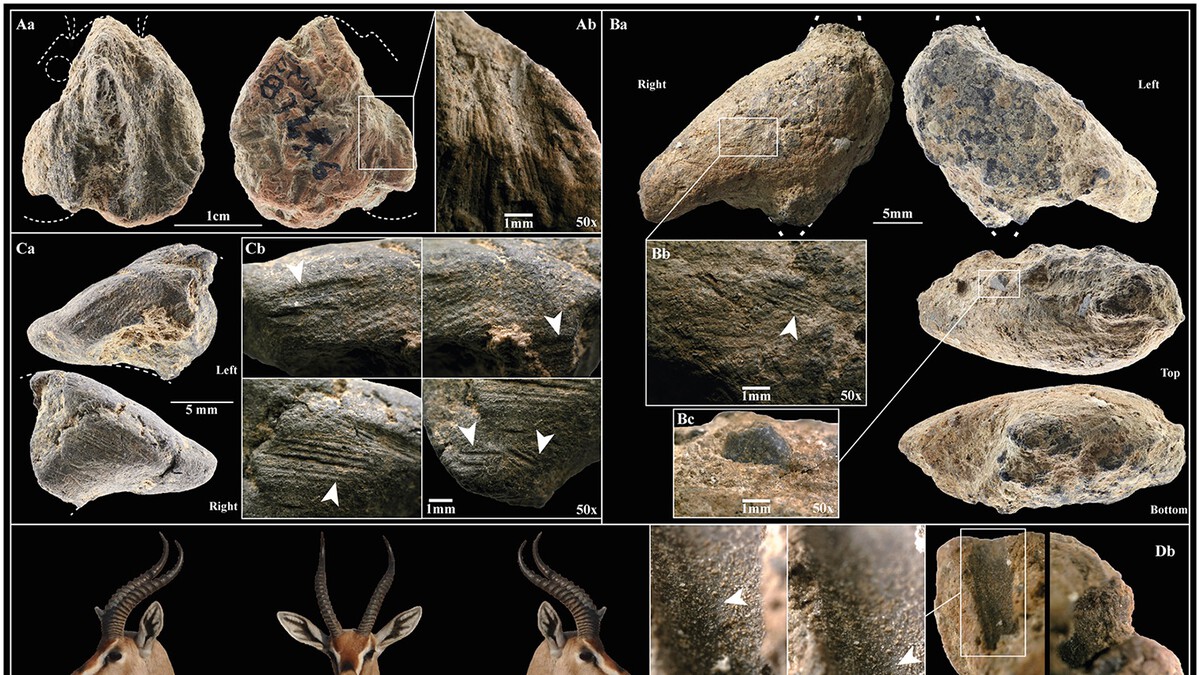
These fingerprints, preserved in the clay for millennia, indicate that both adults and children were involved in shaping the figurines. In one case, a human torso bears prints from both an adult and a child, suggesting a collaborative effort.
Fingerprints Tell the Story
Laurent Davin, the study's lead author, explained that the presence of children's fingerprints is not entirely surprising given the nature of clay modeling. However, it provides concrete evidence that children participated in craft activities alongside adults.
The researchers used advanced imaging techniques to analyze the fingerprints and determine the age of the individuals who made them. This kind of analysis is part of a growing field known as fingerprint archaeology, which aims to identify the age and sex of ancient artisans.
Why This Discovery Matters
This finding pushes back the timeline for children's involvement in craft production in the region. It also sheds light on the social dynamics of Natufian communities, suggesting that children were not merely passive observers but active participants in daily life.
Prior to this study, evidence of children's crafts in the ancient Near East was scarce. The new research indicates that clay modeling was a communal activity that involved all ages, possibly serving as a way to teach skills or to create objects for ritual or play.
- Children as young as 15,000 years ago made clay figurines alongside adults.
- The Natufians were hunter-gatherers who lived in permanent settlements before agriculture.
- Fingerprints on the clay provide direct evidence of children's participation.
- The study analyzed 150 fragments from three sites in the southern Levant.
- This is among the earliest evidence of childhood crafts in the region.
Understanding the Natufian Culture
The Natufians were a culture of hunter-gatherers who lived in the eastern Mediterranean region around 15,000 to 11,500 years ago. They are known for their early sedentary settlements, which predate the Neolithic Revolution and the rise of farming.
They built stone houses, stored wild grains, and created some of the earliest known art and ornaments. The clay figurines are part of this rich material culture, which also includes bone tools, beads, and engraved stones.
Clay Use Before Pottery
It is important to note that the Natufians did not yet make pottery. The clay figurines were shaped by hand and likely sun-dried or baked at low temperatures. The absence of pottery means that these objects were not containers but rather symbolic or decorative items.
The fact that children were involved in making these figurines suggests that the activity was not strictly utilitarian but may have had social or educational purposes. It could have been a way to pass on knowledge about the natural world, as many of the figures depict animals.
How the Study Was Conducted
The research team examined 150 clay fragments from three archaeological sites: Wadi Hammeh 27, Ain Mallaha, and Hayonim Cave. These sites are located in present-day Israel and the Palestinian territories.
Using a combination of microscopy and 3D imaging, the researchers identified fingerprints and analyzed their ridge patterns to estimate the age of the individuals. The analysis revealed that some prints belonged to children, likely between the ages of 4 and 12.
The study also compared the fingerprints with those of modern children to make the age estimates. This method has been used in other archaeological contexts but is still developing. The longer history behind the story is traced in Ancient Clay Figurines Reveal Children's Crafts 15,000 Years Ago.
| Site | Location | Age Range (years ago) | Key Findings |
|---|---|---|---|
| Wadi Hammeh 27 | Jordan Valley | 15,000–13,000 | Figurines with child fingerprints |
| Ain Mallaha | Hula Valley | 15,000–11,600 | Human and animal figures |
| Hayonim Cave | Western Galilee | 15,000–11,600 | Fragments with adult and child prints |
What This Means for Our Understanding of Childhood
The discovery challenges the assumption that children in prehistoric societies were only involved in simple tasks. Instead, it shows that they participated in creative and symbolic activities, possibly as part of their socialization. The background to this story is set out in How to Create Decorative Polymer Clay Crafts for Your Home. A related thread runs through Ideas for Making Crafts with Bamboo. Earlier coverage in AI-Proof Careers: Younger Workers Choose Traditional Crafts shows how the argument developed.
It also raises questions about the role of play and learning in hunter-gatherer societies. The figurines might have been toys, ritual objects, or practice pieces for future artisans. Without written records, it is difficult to know for sure, but the fingerprints provide a tangible connection to the children who made them. A closer look at the same subject appears in Trending: latest articles. Anyone following the wider picture can start with Sweden's Ancient Carved Feet: 3,000-Year-Old Rock Contracts. The same theme surfaces in Ancient Humans Made Beds and Changed Them 200,000 Years Ago, which takes a different angle.
This research adds to a growing body of evidence that children were active agents in prehistoric communities, not just passive recipients of culture. Similar findings have been made in other parts of the world, such as in the cave paintings of France and Spain, where children's handprints are common. Context on how this played out before sits in Europe's First Rich Didn't Inherit Wealth: They Earned. A companion piece, Prehistoric Mining Uncovered in Catalonia's Pyrenees at 2,235 Meters, approaches the same subject from another angle.
FAQ
What did the study find?
The study found that 15,000-year-old clay figurines from the southern Levant were made by both adults and children, as evidenced by fingerprints preserved in the clay.
Who were the Natufians?
The Natufians were a culture of hunter-gatherers who lived in the eastern Mediterranean region around 15,000 to 11,500 years ago. They are known for their early permanent settlements and rich material culture.
Why is this discovery important?
It provides some of the earliest evidence of children's involvement in craft production in the ancient Near East, shedding light on the social and educational practices of prehistoric communities.
How were the fingerprints analyzed?
Researchers used microscopy and 3D imaging to examine the ridge patterns of the fingerprints and compared them with those of modern children to estimate the age of the individuals.
Browse the Shop
 Acacia frida deluxe solid wood bed frame |
Bedroom bench |
Bed chest drawers |
Lingerie dresser |
Frame base |
Mirror with jewelry storage |
30 Bathroom Vanity |
Memory foam queen mattress |
Mattresses for back pain |
Nightstand set of 2 |
Grand Goldman Shop |
Civil Lawyer
Deutschland Trikot WM 2026







