

China's infinite sci-fi novel, 'Illumine Lingao' (临高启明), has been written collectively since 2009 and shows no signs of ending. This massive collaborative work, with millions of words across thousands of chapters, has become a cultural and political phenomenon, inspiring over 1,400 derivative works and serving as a subtle tool of national ambition.
What Is 'Illumine Lingao'?
'Illumine Lingao' is a science fiction novel that began as a discussion on SC BBS, China's oldest military forum, in 2006. The premise: over 500 Chinese citizens from the 21st century travel through a wormhole to 1628, during the decline of the Ming Dynasty. They settle in Lingao County on Hainan Island and launch an industrial revolution to make China reach modernity before Europe.
Find Original Home Decor sparking conversation at Grand Goldman Shop.

The novel is unique because it has no single author. Hundreds of contributors, mostly engineers, technicians, and military history enthusiasts, have added chapters, technical corrections, and subplots over nearly two decades. This collective writing process has created a sprawling narrative that reflects the technical and historical obsessions of its contributors.
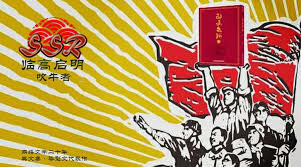
Why It Matters: A Political Weapon?
The novel's core theme—China overtaking Europe through technological superiority—resonates with contemporary political narratives. It taps into a sense of historical grievance and national pride, imagining a scenario where China corrects the mistakes of the past. The collaborative nature of the project also mirrors China's approach to innovation: collective effort towards a common goal.
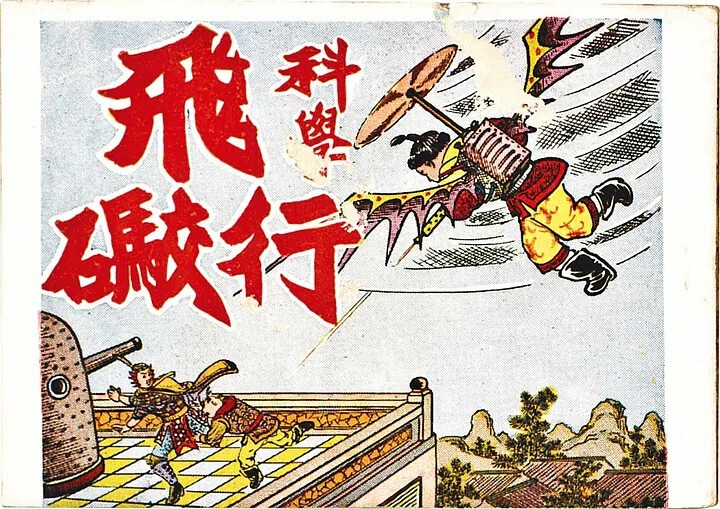
While not officially endorsed, the novel has inspired a subculture of tech enthusiasts and has been cited in discussions about China's technological rise. Its influence extends beyond literature, shaping how some view China's role in global history and its future ambitions.
Key Takeaways
- Collective authorship: Over 500 contributors have shaped the novel since 2009.
- Historical revisionism: The story imagines China industrializing before Europe to alter global power dynamics.
- Cultural impact: It has spawned 1,400+ derivative works, including fan fiction and games.
- Political undertones: The narrative aligns with China's tech-driven national rejuvenation rhetoric.
- Untranslated: Despite its scale, it remains unknown to Western audiences.
How the Novel Compares to Other Collaborative Works
| Feature | 'Illumine Lingao' | Other Collaborative Novels |
|---|---|---|
| Start year | 2009 | Varies (e.g., 2000s) |
| Number of contributors | 500+ | Usually fewer than 100 |
| Word count | Millions | Typically under 1 million |
| Derivative works | 1,400+ | Rarely over 100 |
| Political theme | Strong (China vs. Europe) | Often neutral |
The Cultural and Political Significance
The novel's popularity reflects a broader trend in China: the use of speculative fiction to explore national identity and future aspirations. It also highlights the role of online communities in shaping cultural products. The fact that it remains untranslated suggests it is primarily for domestic consumption, reinforcing its role as an internal narrative.
Moreover, the novel's focus on engineers and technical details mirrors China's emphasis on STEM education and industrial policy. It celebrates practical knowledge as a means to national power, a theme that resonates with government messaging. The background to this story is set out in Booker Prize 2025: M John Harrison Wins for Sci-Fi Novel. A related thread runs through Ian Rankin on Political Crime Fiction and His New Novel. Earlier coverage in Murakami's Sci-Fi Novel Hard-Boiled Wonderland Hits London Stage shows how the argument developed.
What to Watch Next
As China continues to assert its technological prowess, works like 'Illumine Lingao' may gain more attention. Watch for potential adaptations into other media, such as games or films, which could amplify its reach. Also, observe how the Chinese government might leverage such cultural products to promote its agenda. A closer look at the same subject appears in EJ Swift Wins 2026 Arthur C Clarke Award for Science Fiction. Anyone following the wider picture can start with Best Recent Science Fiction, Fantasy and Horror Books. The same theme surfaces in M John Harrison's Booker Win: Science Fiction Gains Literary, which takes a different angle.
For now, the novel remains a fascinating case study of collaborative creativity and political storytelling, a testament to the power of collective imagination in shaping national narratives. Context on how this played out before sits in M John Harrison's Booker Win: Science Fiction Breaks Literary Barriers. A companion piece, TV Writers' Rooms: Succession's Jesse Armstrong on Collaborative, approaches the same subject from another angle.
FAQ
What is 'Illumine Lingao' about?
It's a Chinese sci-fi novel where 500 modern Chinese travel to 1628 to industrialize China before Europe, altering history.
Who wrote 'Illumine Lingao'?
It has no single author; hundreds of contributors, mostly engineers and history buffs, have written it collectively since 2009.
Why is it considered a political weapon?
Its theme of China surpassing Europe through technology aligns with nationalist narratives and has inspired a subculture of tech enthusiasts.
Has it been translated?
No, it remains untranslated into Western languages, limiting its reach outside China.
Browse the Shop
 Acacia frida deluxe solid wood bed frame |
Bedroom bench |
Bed chest drawers |
Lingerie dresser |
Frame base |
Mirror with jewelry storage |
30 Bathroom Vanity |
Memory foam queen mattress |
Mattresses for back pain |
Nightstand set of 2 |
Grand Goldman Shop |
Civil Lawyer
Deutschland Trikot WM 2026







