

Juan Roig, the president of Spanish supermarket chain Mercadona, has made a bold statement: paying taxes is something to be proud of. In a recent speech, Roig emphasized that companies must pay taxes because it is "very good and very healthy," and it is a reason for pride. His comments come as he remains one of Spain's wealthiest individuals and leads a company with billions in revenue.
Roig's stance challenges the common narrative that taxes are a burden. Instead, he frames them as a civic duty and a hallmark of a well-functioning business. For entrepreneurs and business leaders, his words offer a refreshing perspective on corporate responsibility.
Find Original, High-end Home Decor that spark conversation at Grand Goldman Shop.
Who is Juan Roig and Why His Words Matter
Juan Roig is not just any businessman. He is the fourth richest person in Spain, with an estimated net worth of around €7.9 billion, according to Fortune. Only Amancio and Sandra Ortega (Inditex) and Rafael del Pino (Ferrovial) rank higher. Roig also helms Mercadona, one of Spain's largest companies by revenue.

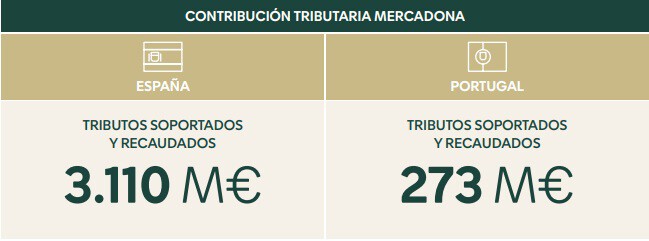
In 2025 alone, Mercadona brought in €41.858 billion, with 95% of that revenue coming from the Spanish market. Such figures give Roig's opinions significant weight. When he speaks about taxes, people listen—not just because of his wealth, but because he leads a company that contributes substantially to public coffers.
The Case for Paying Taxes Proudly
Roig has consistently argued that business owners should "come out of the closet" about their profits and feel proud of paying taxes. He believes that acknowledging success and contributing to society through taxes is a sign of health, not shame. This view contrasts with the often-defensive posture of some business leaders who emphasize tax minimization.
For Roig, taxes are not just a legal obligation but a moral one. They fund public services and infrastructure that enable businesses to thrive. By paying taxes, companies like Mercadona help sustain the very society that supports their success.
Why This Matters for Business and Society
Roig's remarks come at a time when corporate tax practices are under scrutiny. Multinationals often face criticism for aggressive tax avoidance, which erodes public trust. Roig's stance offers a counter-narrative: that paying taxes can be a source of pride and a competitive advantage in building a trustworthy brand.
His comments also highlight the role of large companies in funding public goods. In Spain, where Mercadona generates a significant portion of its revenue, the company's tax contributions support healthcare, education, and infrastructure. Roig's pride in paying taxes reflects a broader commitment to social responsibility.
Moreover, Roig's perspective could influence other business leaders. By normalizing tax payments as a positive, he challenges the stigma sometimes associated with high tax bills. This shift in mindset could encourage more transparent and responsible corporate behavior.
Key Takeaways from Roig's Stance
- Taxes as a civic duty: Roig views paying taxes as a healthy and necessary contribution to society.
- Pride in success: Business owners should not hide their profits but embrace them as a sign of a job well done.
- Corporate responsibility: Large companies like Mercadona have a significant role in funding public services.
- Leadership by example: Roig's public stance may encourage other executives to adopt similar transparency.
- Trust and reputation: Paying taxes fairly can enhance a company's image and build stakeholder trust.
Comparing Tax Contributions: Mercadona vs. Other Spanish Giants
To understand the scale of Mercadona's contribution, consider the following comparison based on available data. While exact tax figures for each company vary, the table below illustrates revenue and approximate tax contributions for context. The longer history behind the story is traced in Juan Roig on Paying Taxes: A Point of Pride for Business.
| Company | Revenue (2025) | Approx. Tax Contribution | Leader |
|---|---|---|---|
| Mercadona | €41.858 billion | Not disclosed, but significant | Juan Roig |
| Inditex | Not specified in source | Not specified | Amancio Ortega |
| Ferrovial | Not specified in source | Not specified | Rafael del Pino |
Note: The table is for illustrative purposes; exact tax contributions are not provided in the source article. The background to this story is set out in Karen Asks Young Soldier To Work For Her Because She Pays Taxes, Gets Put Down By The Soldier For Touching Him. A related thread runs through Adani Pays No Company Tax Despite $1bn Coal Revenue. Earlier coverage in Adani Pays No Tax Despite $1bn Revenue from Queensland Coalmine shows how the argument developed.
What to Watch Next
As tax policies evolve and public scrutiny of corporate practices intensifies, Roig's stance could become more influential. Other business leaders may face pressure to follow suit, especially in Spain where Mercadona's example carries weight. Additionally, Roig's continued advocacy for responsible tax behavior could shape the debate around corporate taxation in Europe. A closer look at the same subject appears in Adani Pays No Company Tax Despite $1bn Revenue from Queensland. Anyone following the wider picture can start with Mercadona Ordered to Rehire Employee After Surveillance and Dismissal. The same theme surfaces in Australia Tax Shake-Up: ATO Reveals 27% of Big Firms Pay Zero Tax, which takes a different angle.
For now, Roig remains a vocal proponent of paying taxes with pride. His message is clear: success and tax contributions go hand in hand, and there is no shame in either. Context on how this played out before sits in Trending: latest articles. A companion piece, Why Tattoos Are the Norm: A Sociologist Explains Body Art, approaches the same subject from another angle.
FAQ
What did Juan Roig say about paying taxes?
Juan Roig stated that paying taxes is "very good and very healthy" and something to be proud of. He encourages business owners to be open about their profits and tax contributions.
Why is Juan Roig's opinion significant?
Roig is the fourth richest person in Spain and leads Mercadona, one of the country's largest companies by revenue. His views carry weight among business leaders and the public.
How does Mercadona's revenue compare to its tax contributions?
Mercadona reported €41.858 billion in revenue for 2025, but exact tax figures are not disclosed. The company's tax contributions are likely substantial given its size.
What impact could Roig's stance have on other businesses?
Roig's public advocacy for paying taxes proudly may encourage other business leaders to adopt more transparent and responsible tax practices, enhancing trust and social responsibility.
Browse the Shop
 Acacia frida deluxe solid wood bed frame |
Bedroom bench |
Bed chest drawers |
Lingerie dresser |
Frame base |
Mirror with jewelry storage |
30 Bathroom Vanity |
Memory foam queen mattress |
Mattresses for back pain |
Nightstand set of 2 |
Grand Goldman Shop |
Civil Lawyer
Deutschland Trikot WM 2026










