

LG's smart home future may not involve installing yet another app, but rather talking to your house via Telegram. That's the vision Noh Beom-jun, Senior Vice President of LG Electronics HS AI Home Solution Business Development, shared in an interview at IFA. He argues that the current smart home experience is a mess of proprietary apps and ecosystems, and LG wants to change that with its ThinQ Claw and ThinQ ON interfaces.
The Problem: App Overload and Fragmented Ecosystems
Let's be honest: home automation has become a jungle of proprietary apps and different ecosystems. Despite efforts like Matter, users find themselves trapped in menus, interfaces, and connections between devices from different manufacturers that don't always play nice.
Find Original, High-end Home Decor that spark conversation at Grand Goldman Shop.
Consider this: you open one app to turn on the living room lights, switch to another to check the washing machine, and need a third to view the baby monitor camera. And that's before you factor in the confused look from guests when you explain they need to install an app just to lower a blind or remember the exact voice command.
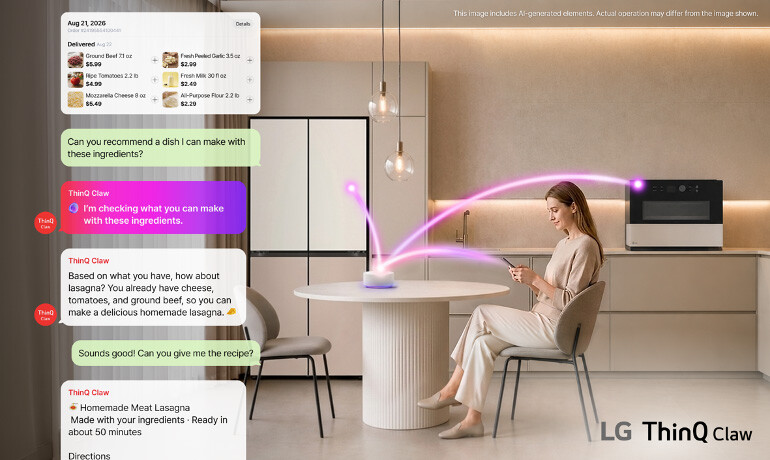
Instead of making life easier, smart home tech has filled our phones with folders of icons and passwords we use only occasionally. This fragmentation is the core problem LG aims to solve.
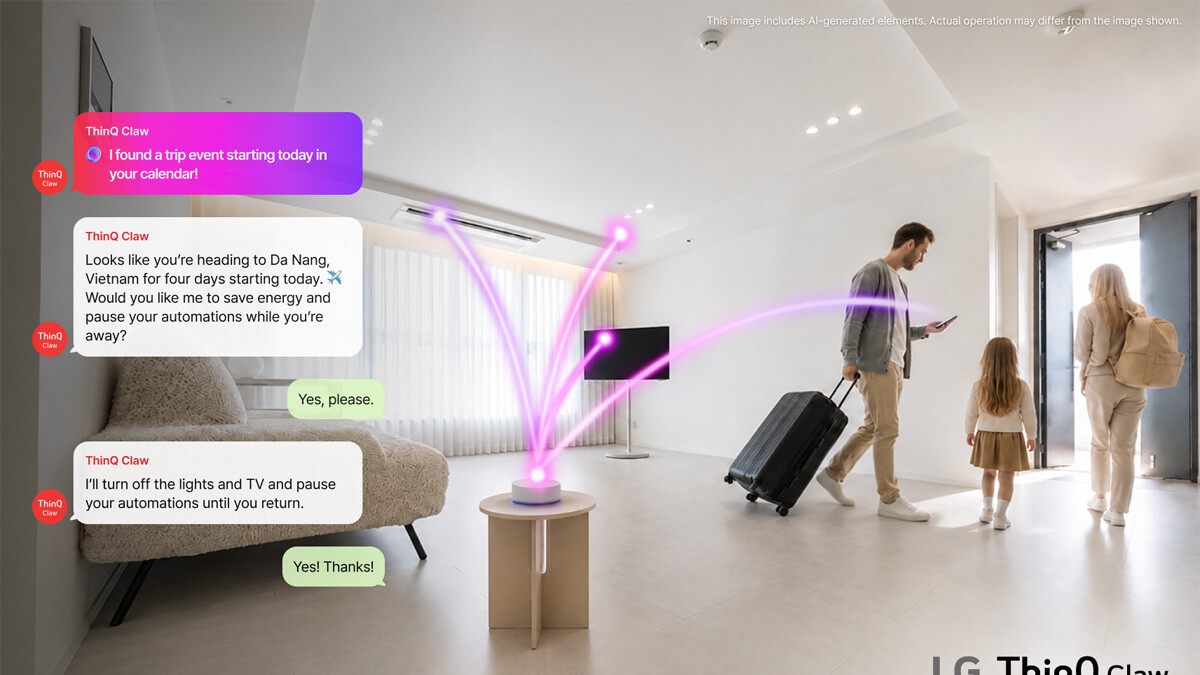
LG's Two-Pillar Approach: ThinQ Claw and ThinQ ON
LG's central proposal is divided into two pillars based on interaction format: ThinQ Claw for text and ThinQ ON for voice. Both are designed to simplify control and reduce dependence on multiple apps.
ThinQ Claw is a text-based interface that likely integrates with messaging platforms like Telegram, allowing users to control their home through chat. ThinQ ON is a voice-powered hub that centralizes commands. Together, they represent LG's bet on more natural, conversational interactions with smart devices.
How ThinQ Claw Works
While details are still emerging, ThinQ Claw appears to be a chat-based interface that lets you send commands via text. The idea is to meet users where they already are—in messaging apps—rather than forcing them to open a dedicated smart home app.
This approach could significantly lower the barrier to entry for guests and family members who don't want to install another app. Imagine texting your home to turn off the lights or check the thermostat.
ThinQ ON: Voice as the Interface
ThinQ ON focuses on voice control, presumably through a hub device that listens for commands. Voice is a natural way to interact, but it has its own challenges, like accuracy and privacy.
LG's goal is to make voice commands more intuitive and less reliant on exact phrasing. The company envisions a future where you can speak naturally to your home without memorizing specific commands.
Why This Matters for the Smart Home Industry
LG's move reflects a broader recognition that the smart home industry has a usability problem. Consumers are tired of juggling multiple apps and ecosystems. By offering text and voice interfaces that work across devices, LG hopes to stand out.
This could also pressure other manufacturers to adopt more open standards or risk being left behind. If LG succeeds, it might accelerate the shift toward more unified smart home experiences. The background to this story is set out in Xiaomi Mi Smart Space Heater S: Smart Heater for Large Rooms. A related thread runs through Smart Furniture for a Modern Home. Earlier coverage in Smart and Versatile Measuring Tools shows how the argument developed.
Key Takeaways from LG's Smart Home Vision
- App fatigue is real: Users are overwhelmed by multiple proprietary apps for different devices.
- ThinQ Claw and ThinQ ON aim to simplify control via text and voice, respectively.
- Telegram integration could make smart home control more accessible and social.
- Matter alone isn't enough: Interoperability standards help, but user experience remains fragmented.
- LG's approach signals a shift toward conversational interfaces in home automation.
Comparing Smart Home Control Methods
| Control Method | Pros | Cons | Examples |
|---|---|---|---|
| Dedicated Apps | Full control, rich features | App overload, fragmentation | LG ThinQ, SmartThings |
| Voice Assistants | Hands-free, natural | Privacy concerns, command accuracy | Alexa, Google Assistant |
| Text/Chat Interfaces | Accessible, familiar | Limited to text input | ThinQ Claw (Telegram) |
| Unified Hubs | Centralized control | Additional hardware | ThinQ ON, SmartThings Hub |
What to Watch Next
As LG rolls out ThinQ Claw and ThinQ ON, the key questions are: Will they support third-party devices? How secure are these interfaces? And will consumers embrace chat-based control? A closer look at the same subject appears in Smart Switch DIY Installation Guide. Anyone following the wider picture can start with Trending: latest articles. The same theme surfaces in Dyson Cordless Vacuum Sale: 5 Models at Record Low Prices, which takes a different angle.
The success of these initiatives could reshape how we interact with our homes. If LG can deliver a seamless experience, it might finally make the smart home truly smart—and simple. Context on how this played out before sits in Aldi's Smart Security Camera: 15 Euro Home Protection. A companion piece, No-Code Online Store: Launch Your Ecommerce Site for Under €6/Month, approaches the same subject from another angle.
FAQ
What is ThinQ Claw?
ThinQ Claw is LG's text-based interface for controlling smart home devices, potentially integrated with messaging apps like Telegram. It aims to simplify control by letting users send commands via chat instead of opening a dedicated app.
How does ThinQ ON differ from ThinQ Claw?
ThinQ ON is LG's voice-based interface, likely a hub that listens for spoken commands. ThinQ Claw is text-based, while ThinQ ON focuses on voice interaction, offering two distinct ways to control your smart home.
Will LG's new interfaces work with non-LG devices?
LG hasn't specified full details, but the goal is to reduce fragmentation. Given industry trends, it's likely they will support some third-party devices, possibly through Matter or other partnerships. However, confirmation is pending.
Why is LG focusing on Telegram for smart home control?
Telegram is a widely used messaging app, so integrating smart home control there meets users where they already are. It eliminates the need to install another app and makes control more accessible to guests and family members.
Browse the Shop
 Acacia frida deluxe solid wood bed frame |
Bedroom bench |
Bed chest drawers |
Lingerie dresser |
Frame base |
Mirror with jewelry storage |
30 Bathroom Vanity |
Memory foam queen mattress |
Mattresses for back pain |
Nightstand set of 2 |
Grand Goldman Shop |
Civil Lawyer
Deutschland Trikot WM 2026










