

The Spain housing market opened 2026 with a puzzling contradiction: home sales are falling while prices continue to climb at a double-digit pace. According to the National Statistics Institute (INE), transactions dropped 2.6% in the first quarter compared to a year earlier, yet prices show no sign of cooling. This unusual combination has left buyers, sellers, and analysts scratching their heads.
What’s Happening with Home Sales in Spain?
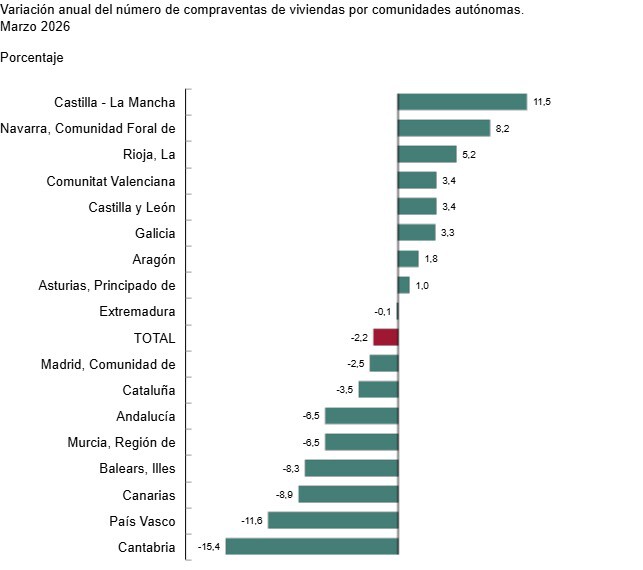
After a strong finish to 2025, the market has cooled in terms of transaction volume. The first quarter of 2026 recorded three consecutive months of declining sales, culminating in a 2.2% year-over-year drop in March with 61,295 transactions. New-build sales fell even more sharply, down 10.2% for the month and 5.3% for the quarter. Overall, the January-to-March period saw 178,473 home purchases, a 2.6% decrease from the same period in 2025.
Find Original Home Decor sparking conversation at Grand Goldman Shop.

This decline might seem like a natural response to soaring prices, but the story is more nuanced. Despite fewer sales, demand remains structurally strong due to household formation outpacing new construction.
Why Are Prices Still Rising?
The key driver is a persistent supply shortage. Spain is creating households at a much faster rate than it is building new homes. This imbalance keeps upward pressure on prices even as transaction volumes dip. The market is not experiencing a demand collapse; rather, it is facing a lack of available properties that meet buyers’ needs.
Additionally, the drop in new-build sales is particularly concerning because it exacerbates the supply crunch. With fewer new homes coming to market, competition for existing stock remains fierce, supporting price growth.
Key Takeaways for Buyers and Investors
- Sales are down but not out: The 2.6% decline is modest and partly seasonal, not a crash.
- New-builds are lagging: A 10.2% drop in new-home sales signals supply constraints ahead.
- Prices remain resilient: Double-digit growth persists due to fundamental supply-demand mismatch.
- Household formation outpaces construction: This structural gap will keep the market tight.
- Watch for regional variations: Some areas may see sharper declines, but overall pressure remains.
What’s Driving the Supply Shortage?
Spain’s housing supply has struggled to keep up with demand for years. Construction levels remain below pre-2008 crisis levels, and regulatory hurdles slow new developments. Meanwhile, demographic trends, including immigration and younger adults forming new households, continue to boost demand.
The result is a market where even a slight drop in transactions doesn’t translate into lower prices. Sellers retain pricing power, especially in desirable urban areas and coastal regions.
How Does Spain Compare to Other Markets?
Spain’s situation is not unique; many European countries face similar supply constraints. However, Spain’s price growth stands out. The table below compares recent trends in selected markets. The background to this story is set out in Spain Housing Prices Hit Record High Despite Falling Sales. A related thread runs through Australia House Prices Fall Nationwide: Market Downturn Spreads. Earlier coverage in Prime London Home Prices Fall: 8 in 10 Now Sell Below Asking Price shows how the argument developed.
| Country | Q1 2026 Sales Change (YoY) | Price Growth (YoY) |
|---|---|---|
| Spain | -2.6% | Double-digit |
| Germany | -1.8% | Moderate single-digit |
| France | -0.5% | Low single-digit |
| Italy | +0.3% | Stable |
While sales volumes are softening across many markets, Spain’s price growth is more pronounced, reflecting its acute supply shortage. A closer look at the same subject appears in Australian Home Prices Fall 2.5% – Why Good News Isn't Selling. Anyone following the wider picture can start with Spain's Broken Housing Market Makes Used Homes a New Luxury. The same theme surfaces in Spain Housing Prices: Why Labor Shortage Keeps Costs High, which takes a different angle.
What to Watch Next
Looking ahead, the market’s trajectory will depend on whether supply can catch up. If construction accelerates, price growth may moderate. But if the supply gap persists, prices could continue to rise even as sales volumes fluctuate. Buyers should monitor interest rates and lending conditions, which affect affordability. Sellers, meanwhile, may need to adjust expectations if demand weakens further. Context on how this played out before sits in UK House Prices August 2024: Biggest Fall Since 2018. A companion piece, Tablets in 2026: Why Sales Are Falling and What Comes Next, approaches the same subject from another angle.
FAQ
Why are home sales falling in Spain?
Will prices drop if sales continue to decline?
What is causing the supply shortage?
Is now a good time to buy in Spain?
Browse the Shop
 Acacia frida deluxe solid wood bed frame |
Bedroom bench |
Bed chest drawers |
Lingerie dresser |
Frame base |
Mirror with jewelry storage |
30 Bathroom Vanity |
Memory foam queen mattress |
Mattresses for back pain |
Nightstand set of 2 |
Grand Goldman Shop |
Civil Lawyer
Deutschland Trikot WM 2026







