

Claude Opus 4.8, Anthropic's latest frontier model, isn't just another benchmark champion—it's a significant step toward AI that openly admits its own uncertainty. Released just 41 days after Claude Opus 4.7, this update signals Anthropic's push for models that are not only more capable but also more transparent about their limitations.
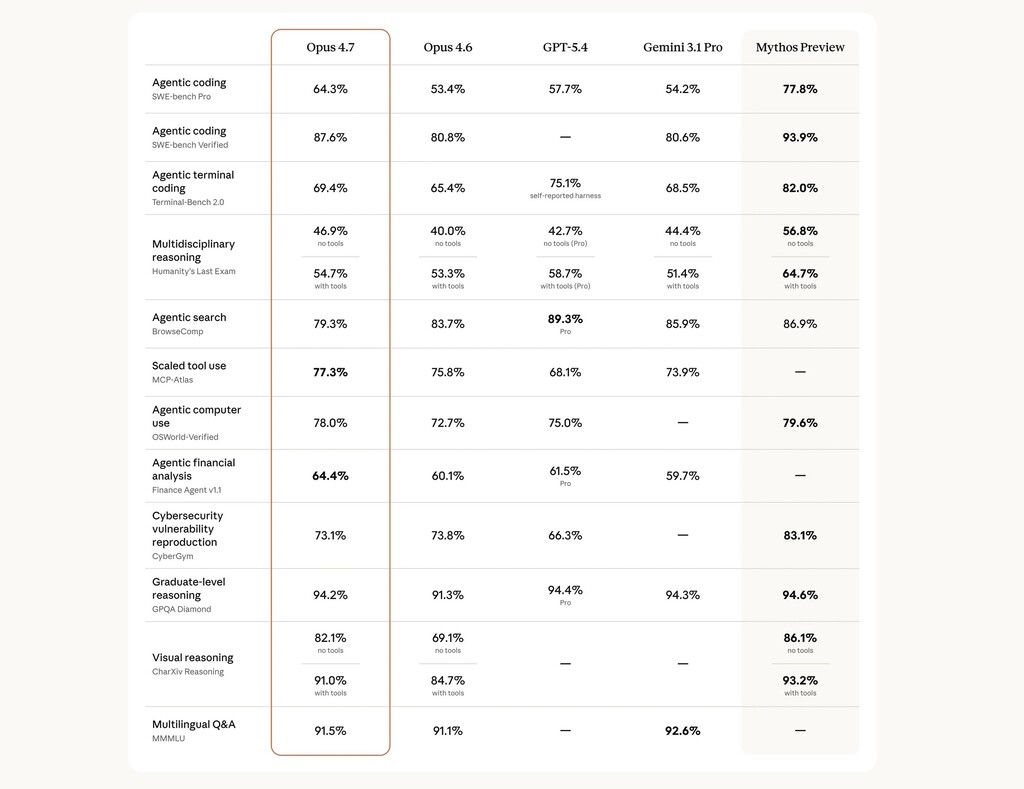
While the model sets new records on most benchmarks, its real breakthrough lies in its honesty. According to Anthropic's internal tests, Opus 4.8 outperforms both its predecessor and competitors like GPT-5.5 and Gemini 3.1 Pro, except on TerminalBench 2.1 where GPT-5.5 slightly leads. But the headline isn't the scores—it's the model's newfound self-awareness.
Find Original Home Decor sparking conversation at Grand Goldman Shop.

Why Claude Opus 4.8's Honesty Matters More Than Benchmarks
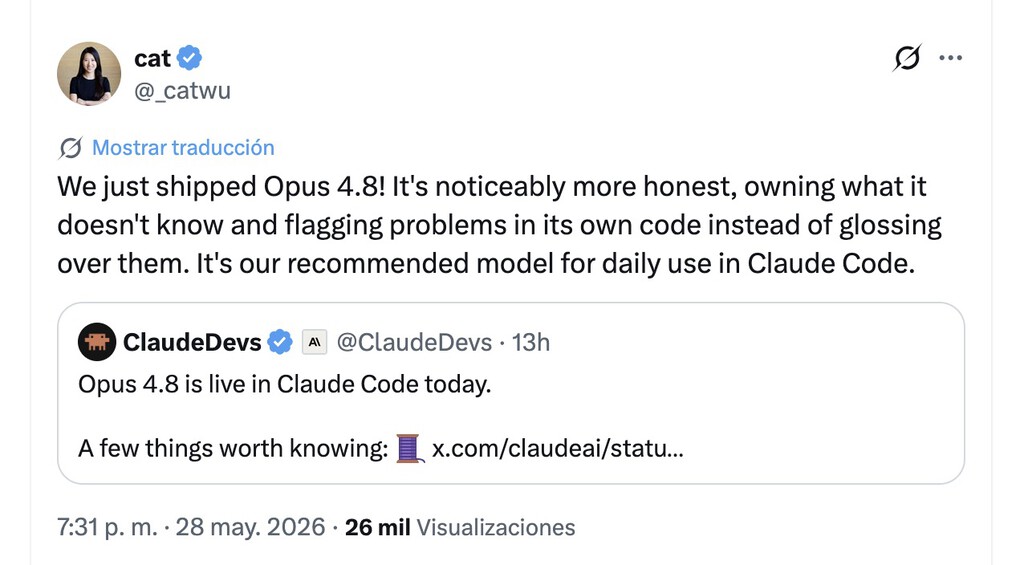
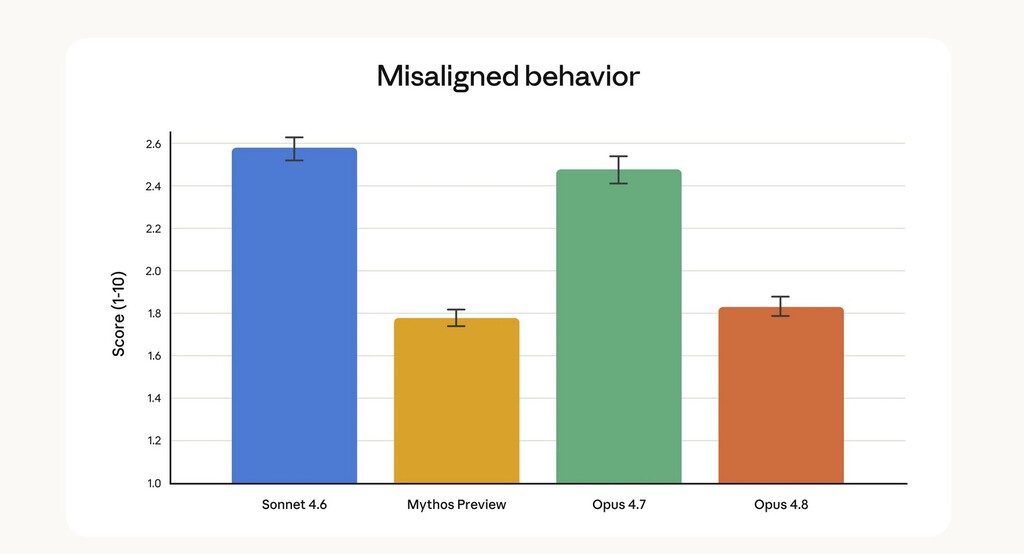
Boris Cherny, head of Claude Code at Anthropic, emphasized that Opus 4.8 doesn't just code better; it's "significantly more honest about its own work." The model now tells you when it's unsure and detects its own mistakes instead of prematurely declaring success. This shift could redefine how we trust and collaborate with AI.
Catherine Wu, another Anthropic engineer, highlighted this new "personality" as a core feature. In an era where AI is increasingly integrated into critical tasks, an honest model reduces the risk of overconfidence and errors. It's a move toward AI that knows what it doesn't know—a principle reminiscent of Socrates.
How Opus 4.8 Stacks Up Against the Competition
Anthropic's published benchmarks show Opus 4.8 leading across most tests, though GPT-5.5 edges it out on TerminalBench 2.1. Interestingly, Anthropic didn't compare it to the recent Gemini 3.5 Flash, perhaps to focus on more direct rivals. Still, the pattern is clear: each new model surpasses its predecessor, but Opus 4.8's honesty sets it apart.
The table below summarizes key comparisons based on available data:
| Model | Benchmark Performance | Honesty Feature |
|---|---|---|
| Claude Opus 4.8 | Leads most benchmarks; slightly behind GPT-5.5 on TerminalBench 2.1 | Admits uncertainty, detects own errors |
| Claude Opus 4.7 | Lower scores across the board | Less transparent about confidence |
| GPT-5.5 | Best on TerminalBench 2.1 | Not highlighted |
| Gemini 3.1 Pro | Outperformed by Opus 4.8 on most tests | Not highlighted |
What This Means for Users and Developers
For developers relying on AI for coding or decision-making, Opus 4.8's honesty translates to fewer hallucinations and more reliable outputs. When the model says "I'm not sure," you know to double-check. This is especially valuable in high-stakes fields like healthcare, finance, and legal analysis.
Businesses integrating AI can also benefit from reduced risk of overconfident errors. By acknowledging its limits, Opus 4.8 fosters a more collaborative human-AI partnership. It's a shift from AI as an oracle to AI as a diligent assistant.
The Bigger Picture: Anthropic's Push for Ethical AI
Anthropic has long championed AI safety, and Opus 4.8's honesty aligns with that mission. By teaching models to recognize their own uncertainty, the company addresses a key challenge in AI alignment: ensuring systems don't mislead users. This could set a new standard for the industry.
Competitors may follow suit, but for now, Opus 4.8 stands out. Its rapid release after 4.7 suggests Anthropic is iterating quickly, possibly responding to feedback that 4.7 didn't meet expectations. The focus on honesty over raw performance is a bold bet that could pay off in user trust. The background to this story is set out in Claude Opus 5.5: The Affordable AI Model Everyone Is Talking. A related thread runs through Claude Opus 5.5: Faster, Cheaper AI With New Safety Limits. Earlier coverage in Grok 4.6 Cuts AI Agent Steps in Half vs Claude Opus shows how the argument developed.
What to Watch Next
Keep an eye on how Opus 4.8 performs in real-world deployments. Will its honesty hold up under pressure? Also, watch for responses from OpenAI and Google—will they prioritize transparency in their next models? Anthropic's move might spark a new race, not for benchmarks, but for trust. A closer look at the same subject appears in AI MRI Analysis Fail: Why Claude Opus 4.8 Missed a Torn Tendon. Anyone following the wider picture can start with Intel Chip Outperforms Apple M1 in Efficiency Benchmark. The same theme surfaces in AI Furniture Assembly Benchmark: GPT-6 Astra Hits 80% Accuracy, which takes a different angle.
As AI becomes more integrated into our lives, models that admit uncertainty will be crucial. Opus 4.8 is a step in that direction, and it's a development worth following. Context on how this played out before sits in GLM-5.2 Matches Claude Opus 4.8 in Cybersecurity, Experts Warn. A companion piece, Anthropic's $6.6 Million Per Employee: The Nvidia Benchmark, approaches the same subject from another angle.
FAQ
What is Claude Opus 4.8?
Claude Opus 4.8 is the latest AI model from Anthropic, released 41 days after Opus 4.7. It sets new benchmark records and introduces greater honesty about its own uncertainty.
How does Opus 4.8 compare to GPT-5.5 and Gemini 3.1 Pro?
According to Anthropic's benchmarks, Opus 4.8 outperforms both on most tests, except TerminalBench 2.1 where GPT-5.5 is slightly better.
Why is honesty in AI important?
Honesty reduces the risk of overconfident errors and builds trust. An AI that admits uncertainty helps users make informed decisions and avoid costly mistakes.
What did Anthropic engineers say about Opus 4.8?
Boris Cherny noted it's "significantly more honest about its own work," while Catherine Wu highlighted its new personality that acknowledges uncertainty.
Browse the Shop
 Acacia frida deluxe solid wood bed frame |
Bedroom bench |
Bed chest drawers |
Lingerie dresser |
Frame base |
Mirror with jewelry storage |
30 Bathroom Vanity |
Memory foam queen mattress |
Mattresses for back pain |
Nightstand set of 2 |
Grand Goldman Shop |
Civil Lawyer
Deutschland Trikot WM 2026







