

Madrid is set to face its most significant traffic challenge as the A-5 and M-30 connection closes for 43 days starting November 10. This closure marks a critical phase in the ambitious project to bury the A-5 highway as it enters the city, a move that will reshape the southwest of Madrid.
The city council has confirmed that from November 10 to December 23, no vehicles will be able to link the A-5 and M-30 through the current entry and exit tunnels. This intervention is described as a point of "no return" by the mobility department, as once completed, traffic will flow underground, paving the way for the second major phase of the project: the construction of a second tunnel.
Find Original Home Decor sparking conversation at Grand Goldman Shop.

Why the A-5 and M-30 Closure Matters
This closure is not just another roadwork; it's a pivotal moment in Madrid's urban mobility strategy. The project aims to reduce surface traffic, create new public spaces, and improve air quality. However, the immediate impact will be felt by thousands of commuters who rely on this connection daily.
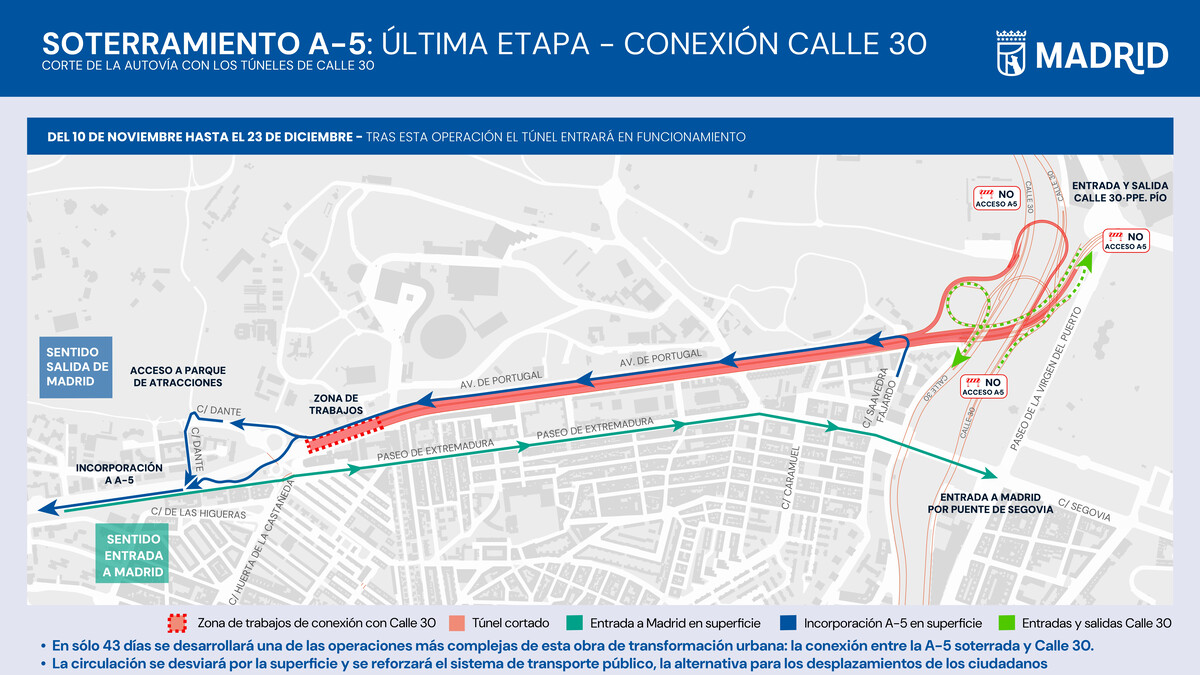
The A-5 is a major artery for vehicles entering Madrid from the southwest, and the M-30 is the city's main ring road. Closing their connection will force drivers to seek alternative routes, potentially causing congestion on parallel roads and increasing travel times.
What Drivers Need to Know
With the closure imminent, drivers must plan ahead. The city council is expected to announce detours and alternative routes, but commuters should anticipate delays and consider using public transport or adjusting their travel schedules.
- Dates: Closure from November 10 to December 23 (43 days).
- Impact: No direct connection between A-5 and M-30 via existing tunnels.
- Alternatives: Use other entry points to M-30, such as the A-42 or M-40, or switch to metro and bus services.
- Long-term benefit: Once completed, traffic will flow underground, freeing surface space for parks and pedestrians.
- Watch for updates: The city council will provide real-time information on detours and traffic conditions.
The Bigger Picture: Madrid's Urban Transformation
This closure is part of a larger project to bury the A-5 and revitalize the southwest of Madrid. The first phase, which includes the connection to the M-30, is expected to be completed by the end of the closure. After that, the second phase will begin, focusing on the construction of a second tunnel.
The project is reminiscent of other major urban renewal efforts, such as the burying of the M-30 in the 2000s, which transformed the city's riverfront. This time, the goal is to create a more sustainable and livable city, with less surface traffic and more green spaces.
Comparing the Closure Impact
| Aspect | Before Closure | During Closure | After Closure |
|---|---|---|---|
| Traffic flow | Direct A-5 to M-30 connection | No direct connection; detours required | Underground traffic flow |
| Surface space | Dominated by roads | Construction zones | Potential for parks and pedestrian areas |
| Travel time | Normal | Increased due to detours | Expected to improve with underground tunnels |
| Air quality | Moderate pollution | Worsened due to congestion | Improved with reduced surface traffic |
What to Watch Next
As the closure date approaches, the city council will release detailed traffic plans. Drivers are advised to stay informed through official channels and navigation apps. The success of this phase will determine the timeline for the second tunnel and the overall transformation of the area.
For those interested in how major infrastructure projects affect urban life, the Grand Goldman blog offers insights into similar developments. The car section provides analysis on how road changes impact drivers and communities. The background to this story is set out in Madrid Faces Critical A-5 Tunnel Milestone With Full Traffic Closure. A related thread runs through Madrid A-5 Tunnel Works: Traffic Chaos and What to Expect. Earlier coverage in Tokyo vs Madrid: How Japan Cuts Traffic Without Limits shows how the argument developed.
Moreover, the business blog examines the economic implications of such projects, from local commerce to logistics. Understanding these connections helps residents and entrepreneurs adapt to change. A closer look at the same subject appears in Spain's AVE Madrid-Barcelona Two-Year Closure Plan Explained. Anyone following the wider picture can start with Emir of Qatar's Private Jet So Large It Disrupted Palma Airport Traffic. The same theme surfaces in UK Air Traffic Disruption: How Travelers Are Affected, which takes a different angle.
As Madrid embarks on this ambitious endeavor, the coming weeks will be crucial in managing traffic and minimizing disruptions. With careful planning and public cooperation, the city can navigate this challenging period and emerge with a more modern and efficient transportation network. Context on how this played out before sits in Madrid Traffic Chaos: F1 Grand Prix, Roadworks and Metro Cuts. A companion piece, Madrid A-5 Tunnel Opening Set for December 23, 2025, approaches the same subject from another angle.
FAQ
What is the A-5 and M-30 closure?
It is a 43-day closure of the connection between the A-5 highway and the M-30 ring road in Madrid, starting November 10, to facilitate the burial of the A-5 and the construction of a tunnel.
Why is the closure necessary?
The closure is part of a major project to move traffic underground, reduce surface congestion, and create new public spaces. It is a critical step before the second phase of tunnel construction.
How can I avoid traffic during the closure?
Use alternative routes such as the A-42 or M-40, consider public transportation, and adjust travel times. Stay updated with real-time traffic information from the city council.
What are the long-term benefits?
Once completed, the project will reduce surface traffic, improve air quality, and free up space for parks and pedestrian areas, enhancing the quality of life in Madrid.
Browse the Shop
 Acacia frida deluxe solid wood bed frame |
Bedroom bench |
Bed chest drawers |
Lingerie dresser |
Frame base |
Mirror with jewelry storage |
30 Bathroom Vanity |
Memory foam queen mattress |
Mattresses for back pain |
Nightstand set of 2 |
Grand Goldman Shop |
Civil Lawyer
Deutschland Trikot WM 2026







