

Steve Jobs spent the last five years of his life designing the Venus yacht, a superyacht that combined his obsession with detail and Philippe Starck's bold vision. But the boat almost never reached the open sea—not because of a technical flaw or a storm, but because of a legal dispute over an unpaid bill.
The Venus yacht was impounded in Amsterdam's port by court order, blocking its maiden voyage. The man behind the blockade was designer Philippe Starck, who had worked closely with Jobs on the project. His claim went far beyond a simple invoice: it was a story of overconfidence with Jobs.
Find Original Home Decor sparking conversation at Grand Goldman Shop.

Steve Jobs' obsession with the Venus yacht
Jobs was as involved in the Venus yacht as he was in every Apple product. Just as he worked with Jony Ive on the iMac, MacBook, iPod, and iPhone, Jobs collaborated with Philippe Starck for years to define every detail of the Venus.
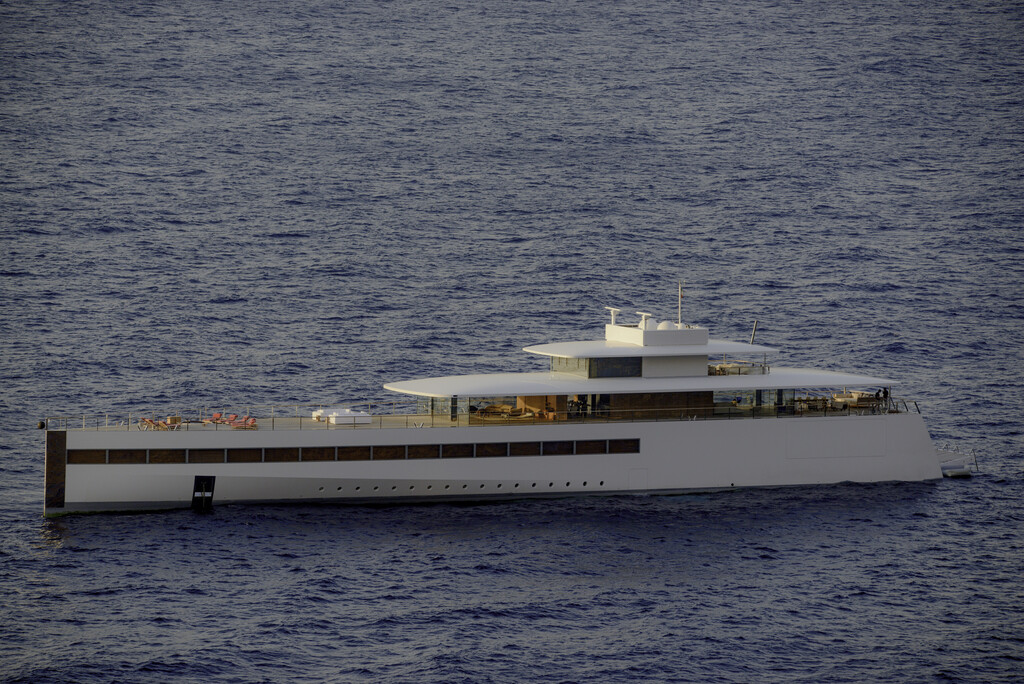
From the exterior silhouette to the interior woods, the goal was a result that combined elegance and technology in a way no other boat had achieved. Jobs wanted the yacht to reflect his minimalist philosophy and his passion for perfect craftsmanship.
The partnership between Jobs and Starck was built on trust and informal agreements. They settled on a fee of 6% of the total project cost for Starck's design work. Neither doubted what that deal meant—until it came time to pay.
The unpaid bill that halted the Venus yacht
After Jobs' death in 2011, the Venus yacht was finally completed. But when it was ready to set sail, Starck filed a lawsuit claiming that Jobs' heirs had not paid what they owed. The dispute led to the yacht being seized in Amsterdam.
The impounding made headlines and left the yacht stranded. For Starck, the issue was not just about money; it was about feeling betrayed after years of collaboration. The lawsuit revealed how informal agreements can become problematic when the person who made them is no longer around.
The case was eventually resolved, and the Venus yacht was released. But the episode cast a shadow over what should have been a triumphant tribute to Jobs' design legacy.
Why the Venus yacht matters
The Venus yacht is more than a luxury vessel; it is a testament to Steve Jobs' perfectionism. Even in his final years, he poured his energy into creating something that would embody his vision of beauty and functionality.
It also highlights the challenges of informal business deals. Jobs was known for trusting his instincts and the people he worked with, often relying on handshake agreements. While this approach worked in many cases, it left room for misunderstandings—especially when large sums were involved.
For Starck, the dispute was a way to ensure his contributions were recognized and compensated. For Jobs' family, it was a reminder that even the most personal projects can become entangled in legal battles.
Lessons from the Venus yacht saga
- Informal agreements carry risks: Even trusted partnerships can lead to disputes when expectations are not clearly documented.
- Legacy projects need careful planning: Jobs' yacht was a passion project, but its completion required navigating complex legal and financial waters.
- Design collaboration requires clear terms: Starck's fee was based on a percentage, but the lack of a formal contract made enforcement difficult.
- Public perception matters: The impounding of the Venus yacht drew unwanted attention, showing how legal issues can overshadow a project's artistic value.
Comparing the Venus yacht to other famous superyachts
| Yacht | Owner | Length | Notable feature |
|---|---|---|---|
| Venus | Steve Jobs | ~80 meters | Minimalist design by Philippe Starck |
| Eclipse | Roman Abramovich | 162.5 meters | Missile defense system |
| Dilbar | Alisher Usmanov | 156 meters | Largest by gross tonnage |
| Octopus | Paul Allen | 126 meters | Research vessel with submarine |
The Venus yacht may not be the largest or most expensive, but its story is uniquely tied to Jobs' legacy. It represents his final design endeavor and the complexities that can arise even from the most carefully considered projects.
The aftermath and what we can learn
After the legal dispute was settled, the Venus yacht was delivered to Jobs' family. It has since been seen in various locations, serving as a floating monument to his vision. The episode serves as a cautionary tale about the importance of formalizing agreements, even among friends. The background to this story is set out in Steve Jobs vs. John Ternus: The Porsche 911 Story at Apple. A related thread runs through Apple Lisa: 7,000 Unsold Units Buried After Steve Jobs Refused. Earlier coverage in Sean Diddy Combs Attorneys Drop Music Mogul Over Unpaid Legal Bills shows how the argument developed.
For those interested in Jobs' design philosophy, the Venus yacht offers a glimpse into his mind. It combines the sleek aesthetics of Apple products with the luxury of a superyacht, a fitting tribute to a man who changed the way we interact with technology. A closer look at the same subject appears in Huawei's Richard Yu Recreates Steve Jobs' MacBook Air Envelope Stunt. Anyone following the wider picture can start with iPhone 17 Pro Steve Jobs Edition: Caviar makes it collectible with just 9 pieces. The same theme surfaces in Car: latest articles, which takes a different angle.
Ultimately, the story of the Venus yacht is one of passion, conflict, and resolution. It reminds us that even the most brilliant minds can overlook the finer points of business, and that trust must be paired with clarity to avoid costly misunderstandings. Context on how this played out before sits in UK Unpaid Carers Crisis: 1,500 Britons Quit Jobs Daily. A companion piece, Steve Jobs' Venus Yacht: The Unpaid Bill That Almost Sank, approaches the same subject from another angle.
FAQ
Who designed the Venus yacht?
The Venus yacht was designed by Steve Jobs in collaboration with Philippe Starck. Jobs was heavily involved in every detail, from the exterior silhouette to the interior woods.
Why was the Venus yacht impounded?
It was impounded in Amsterdam after Philippe Starck filed a lawsuit claiming that Jobs' heirs had not paid his design fee, which was 6% of the total project cost.
How was the dispute resolved?
The dispute was eventually settled, and the yacht was released to Jobs' family. The exact terms of the settlement were not made public.
What is the significance of the Venus yacht?
It represents Steve Jobs' final design project and his perfectionism. It also highlights the risks of informal business agreements and the importance of clear contracts.
Browse the Shop
 Acacia frida deluxe solid wood bed frame |
Bedroom bench |
Bed chest drawers |
Lingerie dresser |
Frame base |
Mirror with jewelry storage |
30 Bathroom Vanity |
Memory foam queen mattress |
Mattresses for back pain |
Nightstand set of 2 |
Grand Goldman Shop |
Civil Lawyer
Deutschland Trikot WM 2026







