

China has built a 100 kW floating solar platform using bamboo, marking a significant step in renewable energy innovation. The project, named Jilin-2, is installed off the coast of Yantai in Shandong province and represents the first floating solar platform of its kind to use bamboo as a primary material.
Developed by Yantai CIMC Raffles Ocean Technology Group, China Forestry Group Corporation, and Beijing Forestry University, the platform uses a composite made from bamboo fibers and wood. This approach departs from conventional materials like concrete, plastic, or steel, which are typically used in floating solar installations.
Find Original, High-end Home Decor that spark conversation at Grand Goldman Shop.

Why Bamboo for Floating Solar?
The marine environment presents unique challenges, particularly high humidity and salinity, which accelerate corrosion and increase maintenance costs. Traditional materials often struggle in these conditions, leading to higher operational expenses and shorter lifespans.
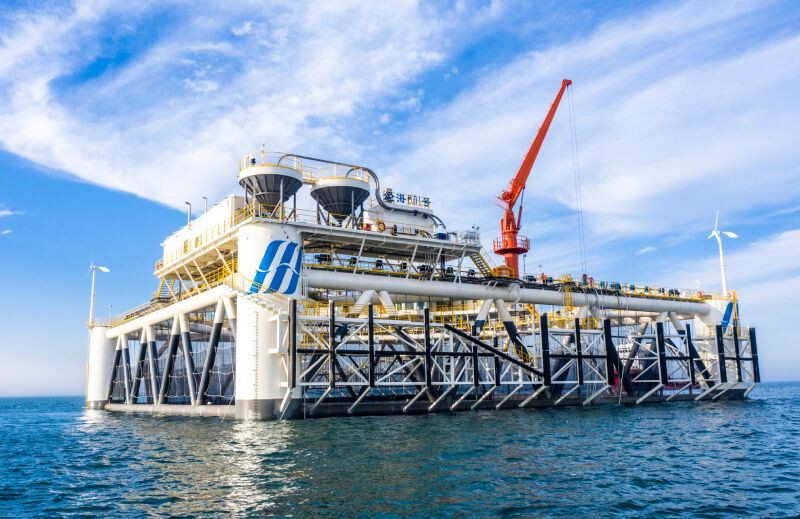
Bamboo, however, offers several advantages. The composite developed for Jilin-2 is specifically designed to provide high mechanical strength, low weight, and resistance to corrosion. According to the development team, these properties make it ideal for offshore applications.
The material, known as Sea Bamboo Pipe, is a pretensioned and fiber-reinforced wood-bamboo composite. It is used in the form of rolled bamboo tubes, which are assembled into the floating structure.
Key Features of the Jilin-2 Platform
- Capacity: 100 kW, sufficient to power dozens of homes.
- Location: Off the coast of Yantai, Shandong province, China.
- Material: Bamboo-wood composite (Sea Bamboo Pipe) with rolled bamboo tubes.
- Properties: High strength, lightweight, and corrosion-resistant.
- Partners: Yantai CIMC Raffles Ocean Technology Group, China Forestry Group Corporation, and Beijing Forestry University.
How Bamboo Compares to Traditional Materials
The choice of bamboo composite is notable because it addresses some of the key drawbacks of conventional floating solar platforms. The table below compares bamboo composite with common materials used in such applications.
| Material | Weight | Corrosion Resistance | Environmental Impact | Cost |
|---|---|---|---|---|
| Bamboo Composite | Low | High | Low (renewable resource) | Moderate |
| Steel | High | Low (requires coating) | High (energy-intensive) | High |
| Concrete | Very High | Moderate | High (CO2 emissions) | Moderate |
| Plastic | Low | High | High (non-biodegradable) | Low |
As the table shows, bamboo composite offers a balance of low weight, high corrosion resistance, and low environmental impact, making it an attractive option for marine environments.
Implications for China's Renewable Energy Goals
China is already a global leader in solar energy and plans for renewables to cover half of its energy consumption by 2030. The country has demonstrated its ability to deploy massive photovoltaic parks in diverse locations, from deserts to open sea and even space.
The Jilin-2 platform aligns with these ambitions by exploring new materials that could make offshore solar more sustainable and cost-effective. If successful, bamboo-based floating platforms could be scaled up and replicated in other coastal regions, reducing reliance on conventional materials.
Moreover, the use of bamboo—a fast-growing, renewable resource—supports China's broader environmental goals. Bamboo absorbs carbon dioxide efficiently and can be harvested without permanent damage to ecosystems. Context on how this played out before sits in China's 100 kW Floating Solar Platform Built with Bamboo.
Challenges and What to Watch Next
While the Jilin-2 platform is a promising pilot, several questions remain. The long-term durability of bamboo composite in saltwater conditions needs to be proven over years of operation. The scalability of the technology from 100 kW to megawatt-scale installations is also untested. The background to this story is set out in Volkswagen Job Cuts: 100,000 Loom as Profits Slump in China. A related thread runs through Modern Hand-Built Wooden Platform Bed.
Additionally, the cost-effectiveness of bamboo composite compared to established materials will determine its commercial viability. The project partners have not disclosed the exact cost of the platform or its expected lifespan. Earlier coverage in Energy Utilities: latest articles shows how the argument developed. A closer look at the same subject appears in Floating Wind Turbines off Costa Brava Spark Renewable Debate.
Nevertheless, the Jilin-2 project signals a willingness to innovate in the floating solar sector. As countries seek to expand renewable energy capacity, such material innovations could play a crucial role in overcoming environmental and economic barriers. Anyone following the wider picture can start with Flexible Solar Panels: 0.85mm Thin and Stick Anywhere. The same theme surfaces in Copenhagen Climate Adaptation: How the Danish Capital Is Building Islands, which takes a different angle.
FAQ
What is the Jilin-2 floating solar platform?
The Jilin-2 is a 100 kW floating solar platform installed off the coast of Yantai, Shandong province, China. It is the first such platform to be built using a bamboo-wood composite material.
Why is bamboo used in this floating solar platform?
Bamboo composite offers high mechanical strength, low weight, and resistance to corrosion, making it suitable for harsh marine environments. It is also a renewable resource with lower environmental impact than steel or concrete.
Who developed the Jilin-2 platform?
The project is a collaboration between Yantai CIMC Raffles Ocean Technology Group, China Forestry Group Corporation, and Beijing Forestry University.
What are the potential benefits of bamboo-based floating solar platforms?
They could reduce maintenance costs due to corrosion resistance, lower the carbon footprint of solar installations, and support China's renewable energy targets by enabling more sustainable offshore solar projects.
Browse the Shop
 Acacia frida deluxe solid wood bed frame |
Bedroom bench |
Bed chest drawers |
Lingerie dresser |
Frame base |
Mirror with jewelry storage |
30 Bathroom Vanity |
Memory foam queen mattress |
Mattresses for back pain |
Nightstand set of 2 |
Grand Goldman Shop |
Civil Lawyer
Deutschland Trikot WM 2026







